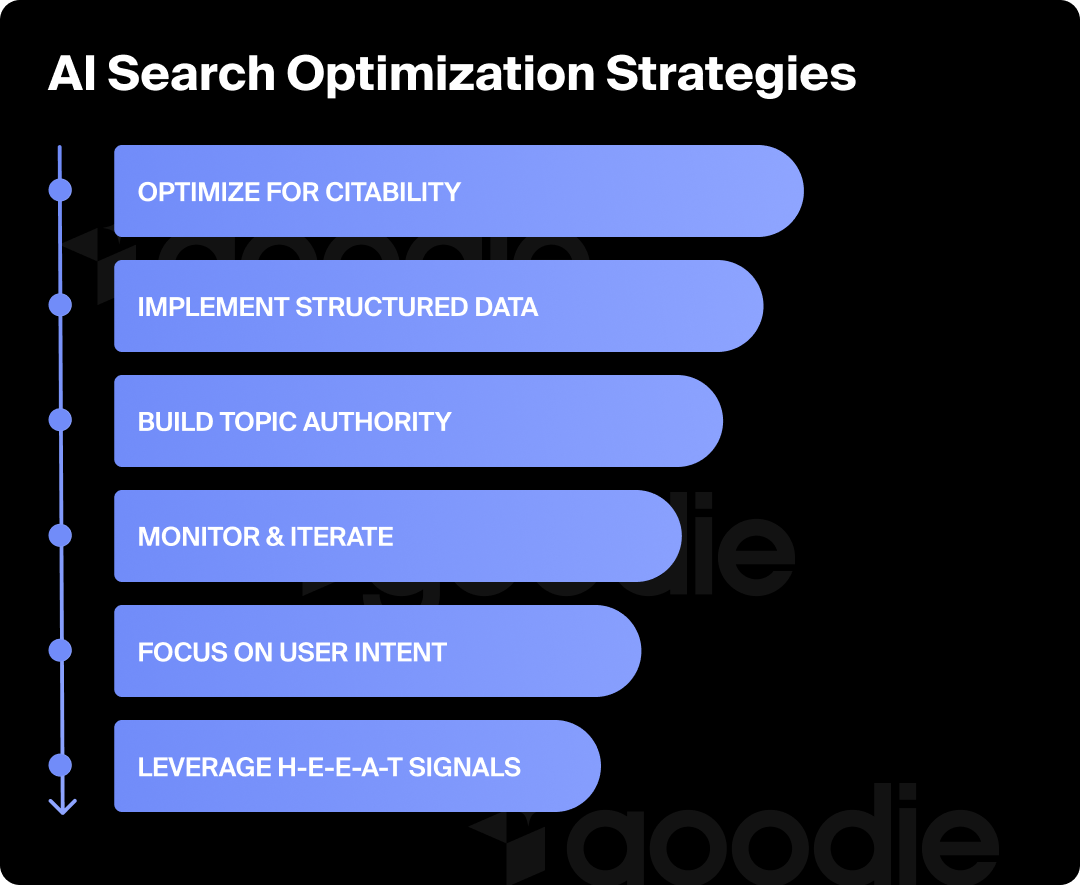
In the era of generative search, brand reputation is no longer defined solely by traditional search rankings. It is dictated by the synthesis of Large Language Models (LLMs). To maintain influence, businesses must shift from passive monitoring to an active, platform-driven pipeline for Tracking & Improving AI Brand Mentions.
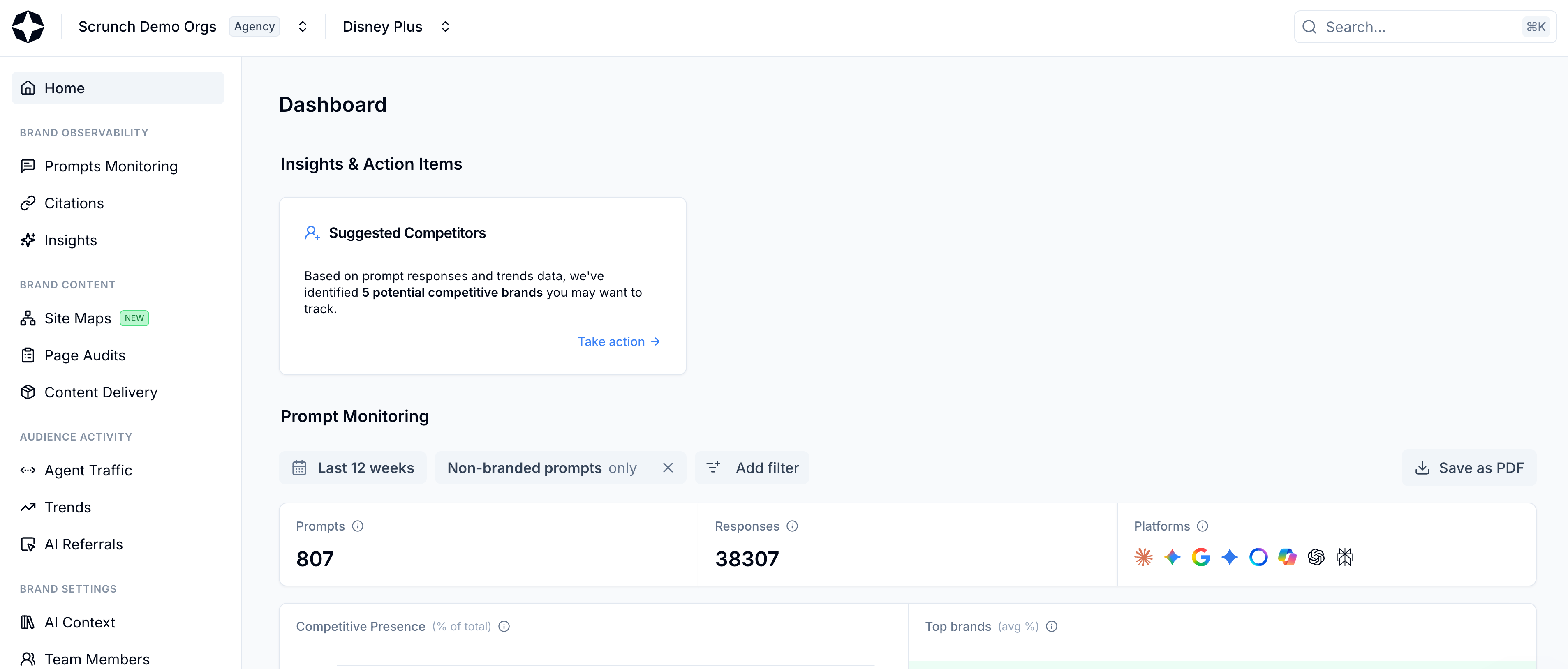
The Unified Metric Model: Standardizing Your AI Visibility Data
To manage brand performance across diverse AI ecosystems, you must establish a standardized measurement framework. Relying on organic traffic metrics is insufficient; you need to track specific indicators of AI-driven authority.
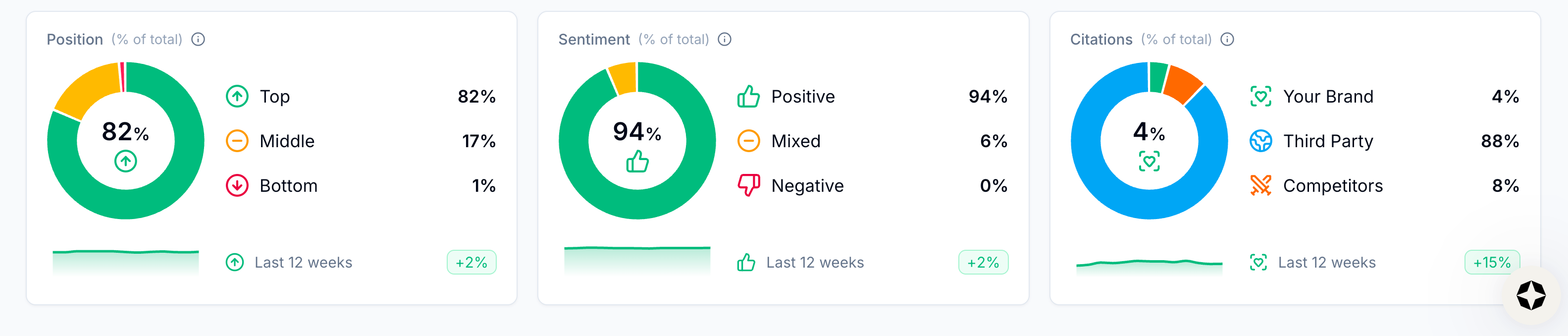
- Competitive Presence: The frequency with which your brand appears in AI-generated answers compared to direct competitors.
- Position: The prominence and placement of your brand within the model’s synthesized narrative.
- Sentiment: The qualitative association (positive, neutral, or negative) established by the AI regarding your brand.
- Citation Frequency: The rate at which AI models link back to your web properties as a authoritative source.
It is critical to distinguish between branded and non-branded search intent. A brand-name query measures recognition, while non-branded, intent-based queries (e.g., “best software for X”) measure your actual market authority and relevance within the ecosystem. Establishing a baseline visibility score across these dimensions allows you to identify true performance gaps.
Step 1: Establishing Aggregate Visibility via Executive Dashboards
The first phase of the operation is to gauge your macro-level standing. Using a centralized dashboard, you can track overall brand trend lines across primary AI search engines to see if your footprint is growing or shrinking.
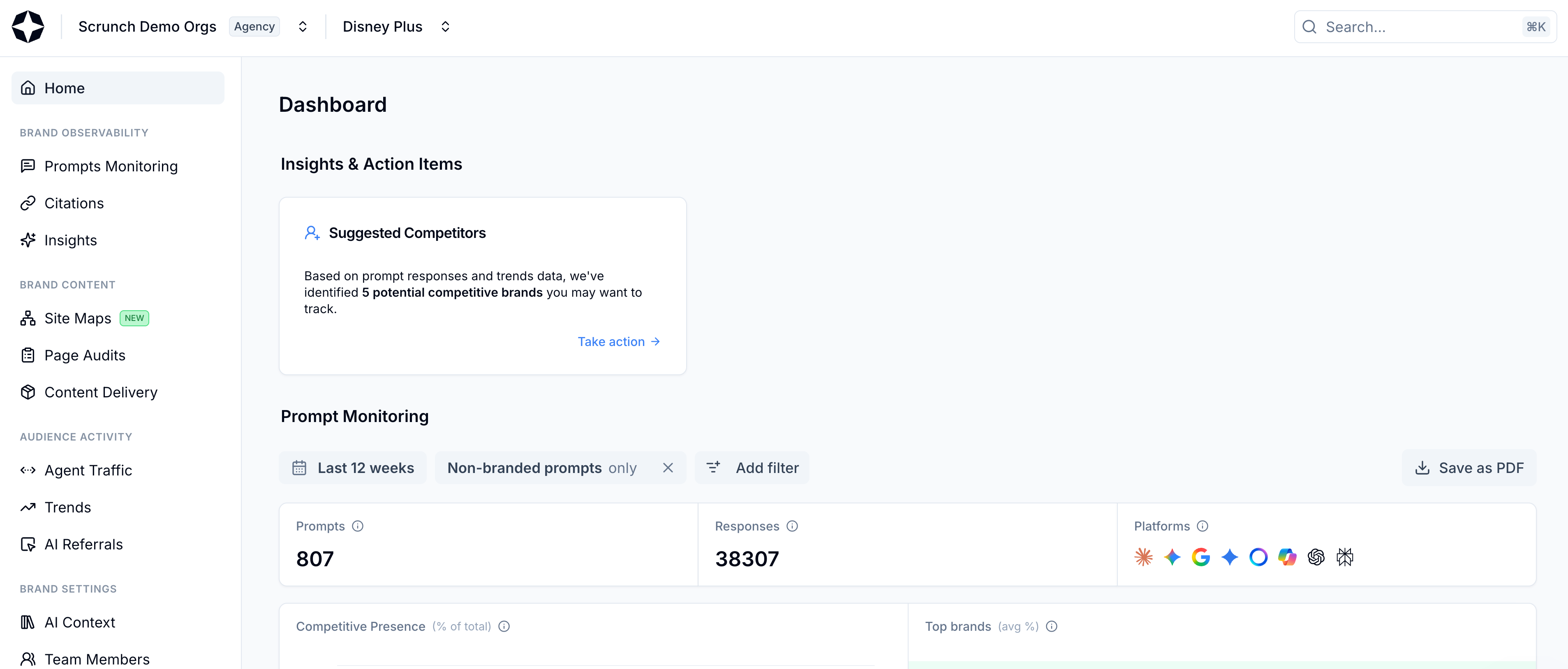
By utilizing aggregate view filters, you can isolate specific content performance and detect macro-level sentiment shifts. Monitoring these trends provides the executive-level intelligence needed to validate investment in AI-ready content strategies.
Step 2: Granular Diagnostics via Prompt-Level Monitoring
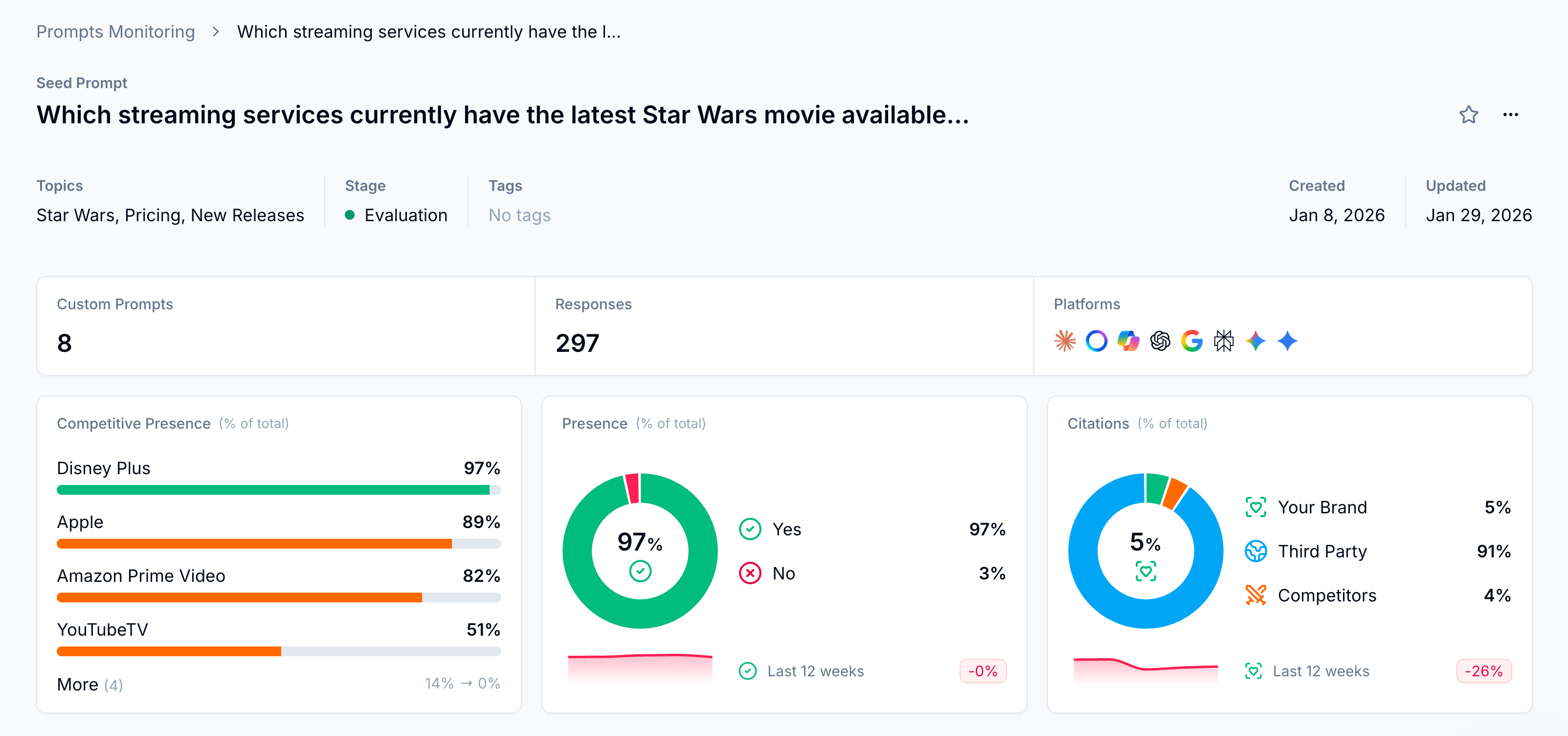
Aggregate data identifies the “what,” but prompt-level monitoring identifies the “why.” This diagnostic stage involves mapping specific queries—such as “What is X” or “Best solution for Y”—to funnel stages and user personas.
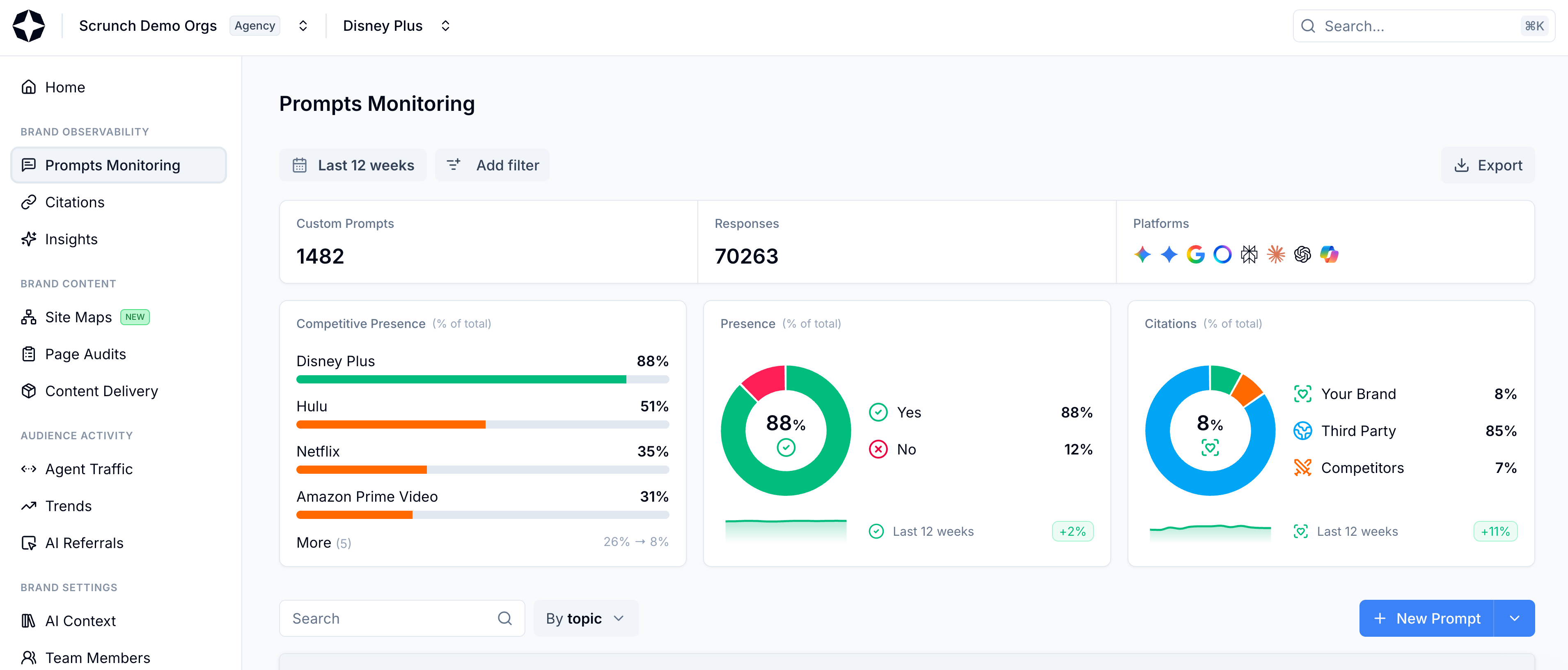
By analyzing citation source attribution at this level, you can determine if your most valuable content is effectively feeding the AI’s “ground truth.” If your brand is absent from high-intent prompts, this granular view allows you to see exactly where the information breakdown occurs.
Step 3: Segmentation and Filtering for Actionable Intelligence
Raw data is only valuable when segmented. By filtering your monitoring results by persona, intent, and competitive landscape, you can surface high-priority content gaps that are currently suppressing your visibility.
Utilize ‘Key Topics’ clusters to identify thematic areas where your brand authority is weak. Prioritizing optimization based on these clusters ensures your team focuses on the specific topics that will drive the highest impact on your AI search presence.
From Insights to Impact: The Proactive Optimization Lifecycle
Tracking is only the precursor to action. Your workflow should treat AI visibility as a continuous improvement loop:
- Sentiment Correction: If sentiment scores degrade in AI responses, initiate a rapid content refresh on your high-authority pages to provide the model with updated, fact-dense documentation.
- Automation Triggers: Link prompt-level data directly to your content production pipeline. When specific prompt gaps are identified, automatically trigger the creation of new assets that fill those topical voids.
- Review Cycles: Conduct visibility audits on a monthly cadence to track the efficacy of your content updates, shifting to a quarterly review for broader strategy adjustments.
By transforming visibility data into an automated feedback loop, you ensure your brand remains a primary source of truth in the evolving generative search landscape.