The Paradigm Shift: From Search Queries to Generative Answers
In the traditional digital landscape, search was a game of indexing pages and matching keywords to user queries. Today, we are in the era of generative AI search, where the primary interface is no longer a list of links, but a synthesized, comprehensive answer. AI models like ChatGPT, Perplexity, and Gemini act as curators, pulling information from diverse sources to provide direct, often authoritative, responses to complex questions.
For brands, this creates a fundamental shift. Keyword-focused SEO, while still relevant for driving site traffic, is no longer the primary driver of top-of-funnel visibility in these new ecosystems. Success now depends on achieving “AI-readiness”—the ability for your content to be accurately ingested, interpreted, and cited by large language models (LLMs). This is the new competitive advantage: positioning your brand not just as a search result, but as a primary source of truth within the AI-generated answer.
Anatomy of an AI Answer: How Models Source and Trust Content
When an AI model generates an answer, it isn’t just regurgitating data; it is determining which information is most relevant, authoritative, and concise. To be featured in these answers, your content must possess high “answerability.”
- Contextual Relevance: Models prioritize content that directly addresses the intent behind a user’s question, rather than just the literal words in the query.
- Authority and Expertise: AI systems prioritize information from sources they have identified as experts on specific topics. This is built over time through consistent, high-quality, and original insights.
- Conciseness and Clarity: LLMs favor content that can be easily parsed. Information that is logically structured and easy to digest has a higher probability of being used to construct a summary.
AI models avoid generic, derivative content. They are programmed to synthesize insights that offer genuine value, meaning your brand’s unique perspective and original data points serve as critical signals for citation and prominence.
Building a Content Ecosystem for Generative Visibility
To thrive in this environment, you must move away from isolated blog posts and toward a thematic, interconnected content ecosystem. This architecture helps AI models understand the depth and breadth of your expertise.
Strategies for Generative Success
- Focus on High-Intent Queries: Proactively create content that addresses the specific, complex questions your target audience asks throughout their decision-making process.
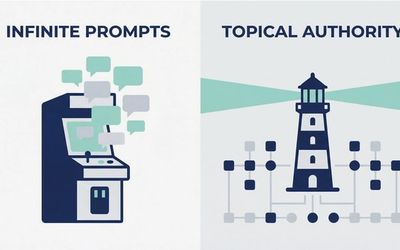
- Establish Topical Authority: Organize your content into clusters that cover a subject from every angle. By demonstrating comprehensive knowledge on a topic, you signal to AI models that your domain is a reliable resource.
- Structure for Model Readability: Maintain a balance between human-centric storytelling and logical information flow. Use clear headings, bullet points, and defined sections that allow an AI to quickly map the hierarchy of your information.
By building a robust web of related, expert-led content, you provide the context necessary for AI systems to trust and reference your brand consistently.
Moving Beyond Click-Through Rates: Measuring Impact in the AI Era
Traditional KPIs like organic traffic and click-through rates are insufficient for measuring success in generative AI. You need a new framework that tracks visibility and influence within AI environments.
- Answer Placement: Monitor whether your content is being featured in generative summaries or as a primary citation.
- Brand Mention Frequency: Track how often your brand is included by AI as a solution or an authoritative reference in relevant discussions.
- Sentiment Attribution: Observe how your brand is being described by AI, ensuring that the model’s generated summaries accurately reflect your brand positioning and values.
Shifting your focus to these metrics helps you understand the impact of your brand in spaces where users may never actually click through to your website.
Scaling Your AI-Ready Content Strategy with Automation
Maintaining visibility in a rapidly evolving AI search ecosystem requires speed and consistency. The sheer volume of high-quality, expert-led content needed to stay authoritative cannot be managed manually.
AI content platforms are essential for scaling these efforts. They allow you to maintain a consistent output of high-quality information, balance human expertise with scalable distribution, and quickly pivot your strategy as AI algorithms evolve. By leveraging automation, you can ensure your content pipeline is always optimized for the latest model requirements, effectively future-proofing your brand’s presence in the AI-driven search era.