You can have the best product, the most data, and the biggest advertising budget, but if you can’t tell a compelling story, none of it matters. The difference between a brand that fades into the background and one that becomes a cultural icon often comes down to the narrative structure they employ.
One of the most powerful ideas in marketing comes from Morgan Housel’s book Same as Ever, where he says, “Storytelling is leverage.” It’s a simple yet profound observation: no matter how great your marketing plan is, it’s always the best story that wins. Just look at companies like Nike, Apple, Disney, and Dove, whose storytelling has turned products into household names for decades. They do not just sell features; they sell a transformation.
But how do you craft the types of narratives that emotionally resonate and stick with your audience? It requires moving beyond generic messaging and tapping into the fundamental ways humans process information. In a recent episode of Marketing Against the Grain, we break down Vonnegut’s three story arcs and give brand storytelling examples of how you can apply them to your marketing strategy. We also dig into popular story archetypes and tactics for keeping your brand narrative authentic and compelling.
What is a Story Curve and Why is it Important for Marketing?
A story curve, also known as a story arc, maps the emotional highs and lows of a narrative. It is the visual representation of how a story moves from an initial state to a resolution. By understanding these shapes, marketers can better structure their content, campaigns, and messaging to engage audiences by tapping into their emotions at key moments.
The Psychology of Narrative
Humans are wired for stories. We have been using them for millennia to pass down wisdom and build community. When a brand uses a clear story curve, they aren’t just presenting information; they are inviting the customer to participate in a journey. This creates a sense of anticipation and relief that keeps the audience hooked until the final call to action.
Applying Arcs to Campaigns
Marketing campaigns are often too short to tell a full novel, but they can still follow the beats of an arc. A 30-second commercial or a series of social media posts can mirror the tension and release of a classic story. By mapping these beats, you ensure that your message has a beginning that grabs attention, a middle that builds tension, and an end that provides a satisfying resolution.
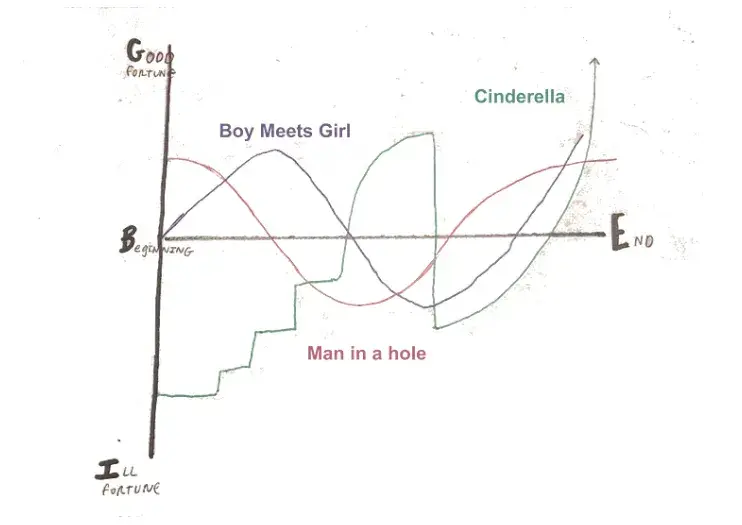
Kurt Vonnegut famously mapped out three of the most popular story arcs:
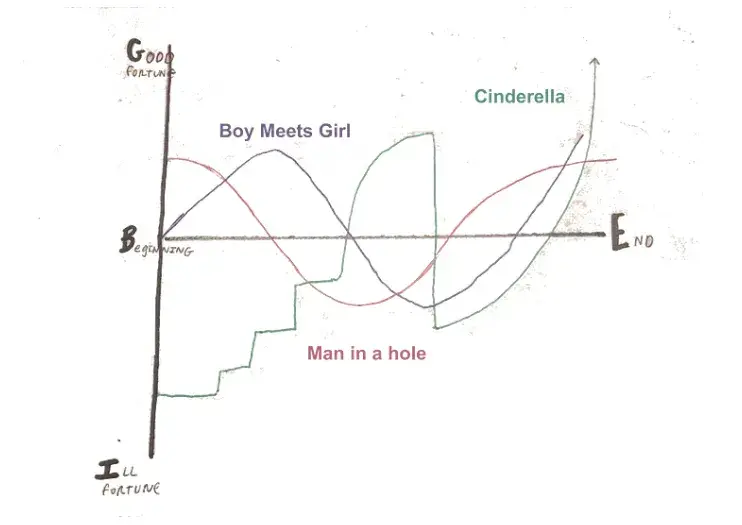
Vonnegut’s three story curves show how different narratives flow from one emotional point to another. Let’s break down these three story curves in more detail.
Story Curve #1: Man in a Hole
In this arc, the main character starts in a good situation, but something goes wrong, and they fall into trouble (“the hole”). After struggling to overcome the challenge, they emerge not just back to where they started — but in an even better position than before. This arc is the gold standard for problem-solution marketing. It validates the customer’s pain point while promising a brighter future.
This story curve is particularly popular in marketing due to its universal theme of overcoming adversity. For example, Nike’s first commercial in 1988 featured Walt Stack, an 80-year-old marathon and ultramarathon runner, reinforcing the message of pushing past limits to achieve greatness. The “hole” was the physical limitation of aging, and the “rise” was the triumph of the human spirit.
Story Curve #2: Boy Meets Girl
This arc begins with a person in an ordinary situation. They encounter something wonderful — whether a person, opportunity, or experience — but then they lose it. Through persistence, they eventually regain it, leaving the hero in a permanently improved state. In marketing, this is often used to highlight the “before and after” of a product experience.
This structure works exceptionally well for lifestyle brands or luxury goods. It emphasizes the value of the object or service by showing what life looks like without it. By focusing on the loss and the eventual reunion, the brand creates a powerful emotional hook that makes the product feel essential rather than optional.
Story Curve #3: Cinderella
This arc follows a person who begins in a very low or oppressive state. Through a series of fortunate events, often involving luck or external help (ex: a fairy godmother), they rise dramatically to infinite happiness or success. Also referred to as the “rags to riches” arc, this is one of the most enduring and popular narratives in Western storytelling.
In a business context, this is the classic “startup success” story. It is frequently used in B2B marketing to show how a small, struggling business used a specific tool or platform to achieve massive growth. It provides hope and a clear path forward for the audience, positioning the brand as the “fairy godmother” that enables the transformation.
Choosing the Right Story Curve for Your Brand
The key to effective storytelling in marketing is deciding which curve best aligns with your audience, industry, and company mission. You cannot force a narrative; it must feel like a natural extension of your brand’s identity. If you are a high-end, established brand, a “Cinderella” story might feel disingenuous, whereas a “Man in a Hole” narrative might feel too desperate.
Matching the Arc to the Audience
Consider where your audience is in their own journey. Are they currently in the “hole,” looking for a way out? Or are they in the “ordinary” phase, looking for a way to upgrade their experience? Matching your story curve to their current emotional state is the fastest way to build trust. If you misalign the arc, the message will feel disconnected from their reality.
The Apple Example
One of the most iconic examples of the “Man in a Hole” narrative is Apple’s “Think Different” campaign, which positioned Apple as the brand for misfits and rebels. At the time, Apple was a misfit, facing a challenging market that was dominated by traditional tech companies like Microsoft and IBM. Instead of emphasizing technical features of their product like everyone else was, Apple’s marketing team went the opposite direction, leaned into their underdog status, and embraced an emotional narrative: if you’re different, Apple is for you.
By turning adversity into strength and elevating it into a story, Apple went from being the brand for the overlooked to becoming synonymous with innovation and creativity. They didn’t just sell computers; they sold an identity that allowed their customers to feel like the heroes of their own “Man in a Hole” stories.
Tips for Improving Your Marketing Story Curve
Once you’ve identified the right story curve for your brand, the next step is to expand and refine it. A good story is only as good as its execution. Here are 4 tips to get you started on creating a more cohesive marketing narrative.
1. Follow a Story Archetype
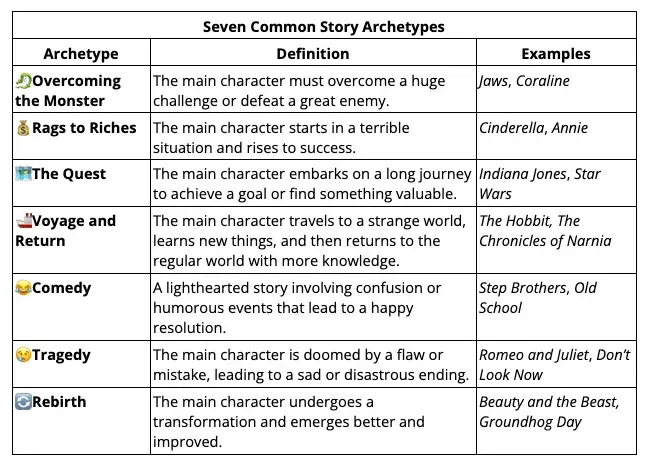
A story archetype is an expanded narrative structure that forms the more detailed backbone of your story. Think of it as the key plot points in a novel or the major beats of a film, which can then be mapped against the emotional journey of your story arc.
While there are seven major story archetypes, the two most commonly used in marketing are:
- The Quest: This archetype frames the customer as the hero, on a mission to achieve something valuable, like a new skill or growth, with the brand as the “guide” or tool that helps them along the way.
- Rebirth: Commonly used in B2B campaigns, this archetype shows a customer undergoing a significant transformation, like turning their business around or improving their team, using the brand’s product for success.
2. Sharpen Your Core Message
Your core message is the single most important takeaway you want your audience to remember. It should be a short, clear statement that conveys the emotion or belief you want to evoke. If your core message is too complex, the story will lose its impact. Every element of your content should serve to reinforce this central pillar.
Take Nike’s “Just Do It” campaign, for example. They didn’t bog down their messaging with product specifications or details — they gave you three simple words that perfectly captured the spirit of determination, while also pushing people to take action. This clarity is what allows the story to scale across dozens of different sports and demographics.
3. Check Emotional Resonance
Cross-check that your story arc, archetype, and core message align with your audience’s needs, emotions, and values. You can have a perfectly structured story, but if the emotions don’t land, the campaign will fail. Ask yourself: Does this story make the audience feel understood? Does it validate their struggles or celebrate their aspirations?
For example, Dove’s Real Beauty campaign didn’t just sell soap. It tapped into a deeper conversation about beauty standards and self-esteem. By rejecting unrealistic stereotypes and highlighting real women, Dove made its audience feel seen and understood. The emotional resonance was so strong that the product became secondary to the movement they created.
4. Double Down on Authenticity
Audiences can spot a contrived narrative from a mile away, so you need to tell them a story that your brand is qualified to tell. Authenticity in content creation is about consistency. If your marketing narrative promises one thing but your company culture or product delivery provides another, the story will collapse.
Patagonia is a great example of authentic brand storytelling. They don’t just talk about environmental sustainability; it’s built into everything they do, from their products to their activism. That’s why their environmental stories resonate: they live their values. When you tell a story that is backed by real action, you build a level of trust that no amount of advertising budget can buy.
To learn more about how to build an outstanding brand story, check out the full episode of Marketing Against the Grain below:





