The New Visibility Paradigm: AI Rank vs. AI Brand Tracking
The evolution of generative search has fundamentally shifted how brands measure digital success. Relying on legacy keyword rank trackers is no longer sufficient, as these tools fail to account for the synthesis of information occurring within Large Language Models (LLMs) and AI-driven search interfaces.
To navigate this landscape, brands must distinguish between two core metrics:
- AI Rank: This refers to the visibility and frequency with which your brand appears as a cited source or authority within AI-generated responses (e.g., Perplexity answers, Google AI Overviews). It measures your “citation share” for specific high-intent topics.
- AI Brand Tracking: This focuses on sentiment and mention frequency across the broader AI ecosystem. It analyzes how models “perceive” your brand, identifying whether your company is associated with positive, neutral, or negative narratives during information retrieval.
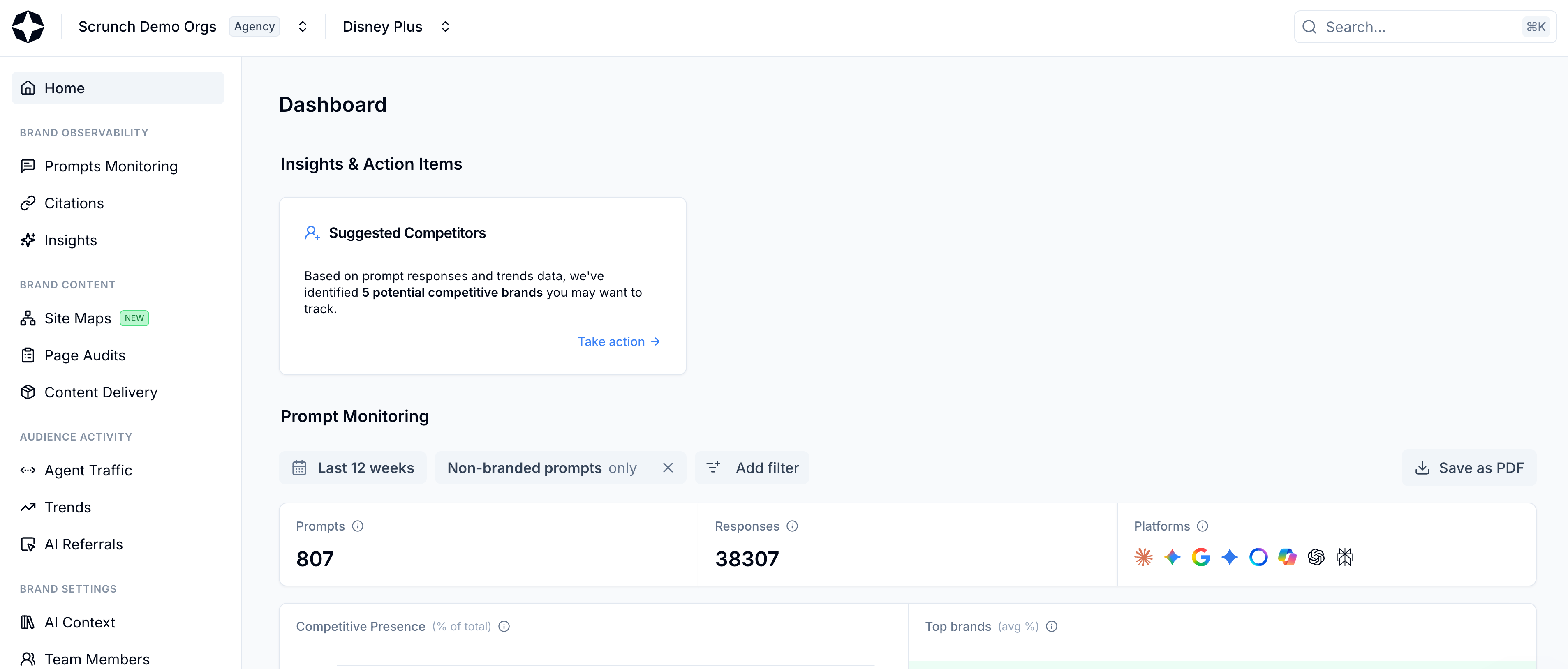
Traditional SEO keyword tracking measures a static link position on a SERP. In contrast, generative search tracking requires prompt-level visibility metrics, assessing how specific user queries influence the model’s decision to cite your brand. By prioritizing model-level metrics, organizations can move from passive monitoring to strategic influence.
Essential Benchmarks for Evaluating AI Tracking Platforms
As the market matures in 2026, selecting the right platform requires rigorous evaluation. Checking standard search engines is no longer enough; you need platforms capable of multi-layer monitoring.
Critical Evaluation Criteria
- Cross-Model Synthesis: Does the tool monitor performance across multiple LLMs? An ideal platform should provide visibility into how your brand is cited by different foundational models, as each may prioritize different information sources.
- Citation-Level Sentiment: Mere mention tracking is a vanity metric. You need deep-dive analysis that measures the context of your citations. Are you cited as a primary authority, or as a secondary reference? Is the sentiment favorable?
- Prompt Research Integration: Effective platforms should allow you to test and track how varying prompt structures influence the AI’s likelihood of citing your domain. This predictive capability is essential for long-term visibility.
7 Leading Tools for AI Brand Visibility and Rank Tracking in 2026
The current market offers several robust solutions for tracking brand mentions and generative visibility.
1. Nightwatch
- Overview: A versatile rank tracker that has expanded its capabilities to include modern AI search visibility features.
- Key AI-Specific Features: Granular location-based tracking and visual data dashboards for monitoring search changes.
- Pros: Highly intuitive interface and excellent reporting capabilities.
- Cons: Primarily built for search tracking; less focus on sentiment analysis than specialized AI tools.
- Strategic Use Case: Ideal for teams needing a reliable, all-in-one solution that blends traditional rank tracking with AI-ready metrics.
2. Otterly AI
- Overview: A focused platform designed to monitor AI-driven search results specifically.
- Key AI-Specific Features: Real-time alerting for changes in AI search snippets and citation tracking.
- Pros: Highly specialized and accurate in identifying generative search shifts.
- Cons: Narrower feature set compared to broader SEO suites.
- Strategic Use Case: Best for dedicated AISO (AI Search Optimization) initiatives.
3. Keyword.com
- Overview: A high-precision rank tracker that now offers dedicated AI tracking modules.
- Key AI-Specific Features: Automated tracking of AI Overviews and snippet visibility.
- Pros: Exceptional reliability and clean, data-driven reporting.
- Cons: Limited in terms of deep qualitative sentiment analysis.
- Strategic Use Case: Suitable for brands prioritizing data accuracy for high-volume keyword sets.
4. Scrunch AI
- Overview: A platform focusing on brand influence and visibility metrics in the age of AI.
- Key AI-Specific Features: Deep analytics on brand reach and authority within generative models.
- Pros: Strong focus on the ‘human’ element of AI-generated content.
- Cons: Learning curve for teams unaccustomed to influence-based tracking.
- Strategic Use Case: Excellent for PR and brand-heavy marketing departments.
5. Profound AI
- Overview: An intelligence platform built to understand brand positioning within AI results.
- Key AI-Specific Features: Comprehensive competitive benchmarking of brand citations.
- Pros: Provides deep actionable insights into competitor positioning.
- Cons: Can be resource-intensive for small teams.
- Strategic Use Case: Ideal for enterprise brands conducting high-stakes competitive analysis.
6. Brand24
- Overview: A established leader in social listening that has successfully pivoted to include AI citation tracking.
- Key AI-Specific Features: Broad coverage of brand mentions across both social and AI search platforms.
- Pros: Massive ecosystem integration and historical data depth.
- Cons: Generative search features are an extension of social monitoring, not the primary focus.
- Strategic Use Case: Best for holistic reputation management.
7. Hall AI
- Overview: A specialized tool that bridges the gap between content performance and AI visibility.
- Key AI-Specific Features: Advanced RAG (Retrieval-Augmented Generation) optimization insights.
- Pros: Highly technical and precise for RAG-based search environments.
- Cons: Best suited for brands with technical SEO or data engineering teams.
- Strategic Use Case: Recommended for SaaS and highly technical organizations.
Optimizing Your Stack: From Monitoring to Automated Visibility
Tracking is only the starting point. To truly secure your market share, you must close the loop between data discovery and content execution.
- Actionable Intelligence: Use your tracking data to identify “citation gaps”—topics where competitors are cited by AI but your brand is not.
- Automated Content Pipelines: Integrate these insights into your content creation workflow. By using AI-ready content platforms, you can automatically adjust your web assets to match the entities and contexts that models prefer.
- Visibility at Scale: Treat your tracking data as the primary signal for your publishing cadence. By aligning your content releases with high-performance prompt trends, you ensure your domain remains a preferred data source for the next generation of AI-powered answers.