Transitioning to an AI-First Content Marketing Strategy
You stare at your content calendar, watching the gap between your team’s output and the ever-accelerating pace of digital demand widen. The pressure isn’t just about cranking out more articles; it is the quiet exhaustion of knowing that traditional workflows cannot keep up. Many teams feel like they are running on a treadmill that keeps getting faster, desperately trying to maintain quality while fighting the clock. This tension is the birth pangs of a necessary operational evolution.
Developing an effective AI Content Strategy for the AI Era is not about replacing the creative spark that defines your brand. It is about shifting your foundation from manual labor to smart orchestration. By treating your editorial process as an engine rather than an assembly line, you can start setting the pace of the market. This transition to an AI-first framework allows your talented people to focus on strategy and nuance, leaving the heavy lifting of high-volume production to systems that improve with time.
Redefining Roles: Shifting from Writers to Editors and AI Strategists
Adopting an AI Content Strategy for the AI Era requires more than just installing new software; it necessitates a fundamental restructuring of your creative talent. The traditional “blank page” approach to content creation is fading. In its place, we see writers transitioning into editorial curators. Rather than spending hours drafting initial sentences, these professionals now direct the creative output of language models, selecting the best angles, verifying factual accuracy, and refining the tone to ensure it hits the mark with your audience.
The Rise of the AI Prompt Engineer
One of the most significant changes in your organizational structure is the emergence of the AI Prompt Engineer. This is no longer just a technical role for developers; it is a vital creative position. An AI Prompt Engineer acts as the bridge between human intent and machine execution. They understand the nuances of large language models, knowing how to frame context, define persona constraints, and set output parameters to get high-quality drafts on the first try.
When your team treats prompts as high-value intellectual property, they reduce the time wasted on trial and error. This role requires a unique mix of linguistic skill and logic—a talent for communicating human brand values in a way that an algorithm can accurately replicate and expand upon.
Maintaining the Human Touch
While AI produces text at scale, it lacks the lived experience and emotional depth of your brand voice. Human oversight remains the ultimate safeguard against generic, repetitive, or inaccurate content. Your editors are now the gatekeepers of brand integrity. They evaluate every piece of AI-generated work through the lens of your brand’s mission, ensuring the final output is not just readable, but resonant.
Think of this as a human-in-the-loop process. The machine does the heavy lifting of drafting and research, but the human provides the soul. Without this layer of expert review, your content risks feeling like an echo chamber of existing data, lacking the unique insight your audience seeks.
Evolving Your Organizational Structure
To succeed in this transition, you must reorganize your team to support these new workflows. Moving away from siloed writing tasks toward a collaborative, AI-integrated approach is the hallmark of effective operational change management.
| Traditional Content Role | AI-First Organizational Role | Key Responsibility |
|---|---|---|
| Staff Writer | Editorial Curator | Reviewing, fact-checking, and brand alignment |
| Content Manager | AI Prompt Engineer | Designing workflows and model instructions |
| SEO Specialist | Semantic Strategist | Optimizing for generative search and intent |
| Copy Editor | Quality Assurance Lead | Verifying accuracy and emotional resonance |
By clearly defining these roles, you avoid the confusion of who does what. You empower your team to act as conductors of an AI-powered orchestra, where the technology provides the speed, and your team provides the strategy.
The Content-as-Data Mindset: Preparing Your Infrastructure for AI
Treating content as structured data means shifting your perspective from viewing articles as finished products to seeing them as modular, machine-readable assets. In an AI-first content marketing environment, your content acts as the primary training set for LLMs and the factual bedrock for AI-powered search engines. By organizing your knowledge into a content-as-data framework, you ensure that AI can accurately parse, categorize, and recall your brand’s expertise during a user’s query.
Why Structure Matters for AI Interpretability
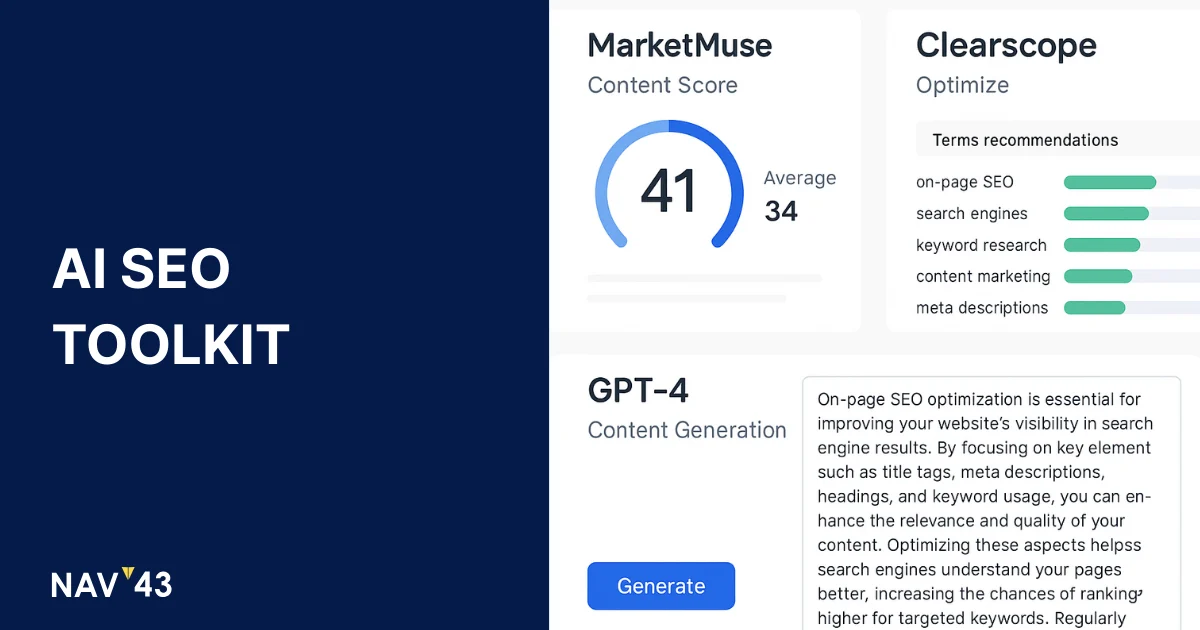
Modern AI models thrive on patterns, relationships, and clear hierarchies. When content is buried in prose without clear labeling, models struggle to identify core intent or factual accuracy. By implementing schema markup and standardized formatting, you act as a guide for these models. When your information is easily indexable, you increase the likelihood of your brand being cited as an authoritative source in AI-generated answers.
Creating a Foundation for Private AI Models
If you plan to train internal AI models on your company’s proprietary knowledge, the quality of your input data is paramount. Disorganized folders filled with dated documents serve as noisy data that can lead to hallucinations. To build a robust AI-ready content strategy, your organization must consolidate knowledge, normalize formats, and add contextual metadata to every asset.
The AI-Readiness Audit Checklist
Before you can scale, you need to know exactly what you are working with. Use this checklist to audit your existing library:
- Format Consistency: Are all your assets stored in a standardized digital format?
- Metadata Hygiene: Does each piece of content contain descriptive metadata, schema, and linking paths?
- Entity Mapping: Have you defined your brand’s core entities so the AI knows what your business represents?
- Redundancy Check: Have you removed outdated or conflicting information that might confuse a model?
- API Accessibility: Is your content management system configured to expose your data to LLM integrations?
Building the Operational Roadmap: A Step-by-Step Change Management Plan
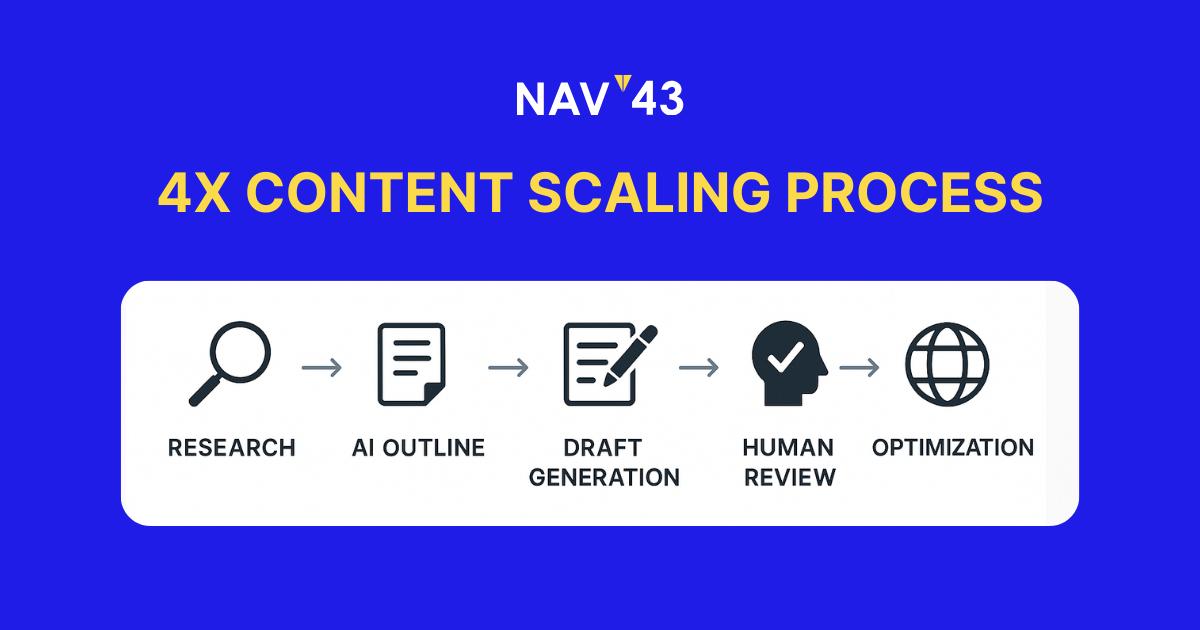
Transitioning to an AI-first framework requires a fundamental shift in how your team processes information. By implementing a structured operational change management plan, you can mitigate resistance and ensure your team remains agile.
Phase 1: Workflow Assessment and Bottleneck Identification
Map your existing content lifecycle. Many teams struggle because they attempt to automate broken processes. Audit your current production timeline—from brainstorming to publication. Document every hand-off, approval step, and software integration to create a baseline that defines how your team functions without AI.
Phase 2: Pilot Programs for AI-Human Collaboration
Avoid overhauling your entire strategy overnight. Run a controlled pilot program designed to test AI capabilities without risking your brand’s core output. Identify a low-stakes project, such as repurposing evergreen blog posts into social media threads. Use this to establish guardrails and build trust between your writers and the technology.
Phase 3: Scaling via Documentation and Training
Once your pilot programs demonstrate success, begin the formal rollout of your AI-ready content strategy. Scaling content production effectively requires internal documentation, including standardized prompt libraries and brand guidelines specifically tailored for generative AI outputs. Host collaborative workshops where team members can share their successes and frustrations.
Phase 4: Establishing a Continuous Feedback Loop
Your strategy is a living system that requires constant refinement. Create a dedicated feedback loop where team members report on the quality of AI-generated content. Conduct monthly reviews to analyze which prompts yield the best results, treating your AI Content Strategy for the AI Era as a constantly evolving experiment.
Redefining KPIs: Measuring Success in an AI-Driven Landscape
When your team shifts toward an AI-first content marketing model, relying on traditional metrics like total page views becomes counterproductive. These legacy figures fail to reveal if content provides value to an AI agent. To succeed in an AI Content Strategy for the AI Era, you must transition to performance indicators that track quality, authority, and machine-readability.
New Metrics for the AI Era
To gauge your effectiveness, integrate forward-looking KPIs. Start by tracking AI-generated visibility, which measures how often your brand appears in AI-driven search snapshots. Alongside this, utilize a semantic relevance score. This score assesses how well your content aligns with the user intent patterns recognized by large language models.
| Traditional KPI | AI-First Content KPI | Why it Matters |
|---|---|---|
| Total Word Count | Semantic Relevance Score | Measures alignment with query intent |
| Page Views | AI-Generated Visibility | Tracks presence in conversational search |
| Time Spent on Site | Content-as-Data Accuracy | Ensures machine-readable structured info |
| Cost per Article | ROI of AI-Content Workflow | Measures output quality vs. input time |
Measuring Cost-Efficiency vs. Impact
Your most crucial operational metric is the balance between cost-efficiency and quality. Monitor the cost per quality unit. If you double your output but engagement rates drop, you are sacrificing quality—a path that degrades brand trust. A successful strategy focuses on producing less, but better, content that serves as the foundation for your brand’s digital presence.
Successful adoption of an AI-first content marketing framework is less about the tools you purchase and more about the culture you cultivate. By automating the repetitive elements of research and drafting, you liberate your writers to focus on high-level strategy and nuanced storytelling. According to AEO/GEO, the future of your brand’s visibility depends on your ability to adapt today. Start by auditing your existing workflows and foster an environment where your team feels safe learning new skills. Your team’s creative potential flourishes under this new, hybrid paradigm.
AEO/GEO
Want to learn more?
Contact us for direct consultation and support.