The Emergence of Sora and Text-to-Video AI
OpenAI has introduced Sora, a new text-to-video AI model capable of generating high-quality video clips lasting up to one minute based on simple text prompts. As the industry shifts toward more sophisticated generative media, models like Sora represent a significant step in how machines interpret and translate natural language into visual content. This development highlights the rapid advancement of generative AI tools that move beyond static images to create complex, multi-subject scenes.
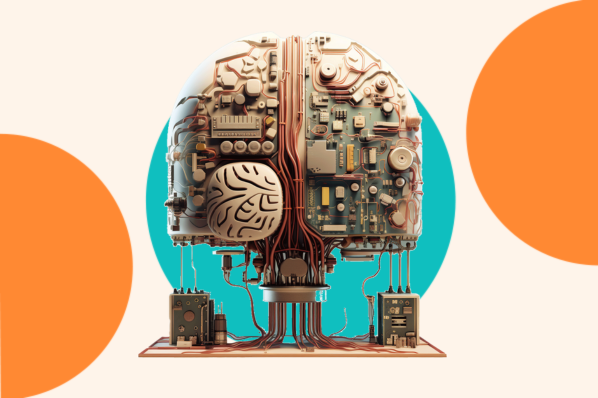
How Text-to-Video AI Functions
At its core, this technology operates by converting linguistic tokens into visual data through deep learning architectures. By training on vast datasets of video and text, the model learns the statistical correlations between descriptive language and visual patterns. When a user inputs a prompt, the system predicts the sequence of visual frames that best align with the provided description, effectively “dreaming” a scene into existence.
The Significance of Generative Media
The transition from static image generation to dynamic video represents a massive leap in computational complexity. Unlike a single frame, video requires temporal consistency, meaning that objects must remain recognizable and behave logically across multiple seconds of footage. This evolution in AI models allows for the creation of content that was previously accessible only through expensive CGI or professional film production, democratizing the ability to produce high-fidelity motion media.
Practical Implications for Content Creation
For creators, these tools offer a way to bridge the gap between imagination and execution. By providing a medium to quickly prototype visual ideas, generative AI allows for rapid iteration of storyboards, mood boards, and concept art. This shift changes the barrier to entry for video production, allowing individuals to focus on narrative and composition rather than the technical overhead of traditional animation or filming.
Current Limitations and Technical Challenges
While the promotional materials for Sora appear highly polished, the model currently faces technical hurdles that affect its output accuracy. One primary challenge involves the model’s grasp of cause-and-effect relationships within a video. For example, if a scene depicts a person drinking from a glass, the AI may fail to accurately simulate the water level decreasing as the person takes sips. These inconsistencies underscore the complexity of training models to maintain logical continuity across a temporal sequence.
Understanding Cause-and-Effect Failures
The inability to track physical interactions is a common bottleneck in current generative systems. Because these models are primarily pattern-matching engines, they often lack an underlying “world model” that understands the laws of physics. When a character interacts with an object, the AI may prioritize visual style over physical accuracy, leading to instances where objects clip through each other or disappear entirely.
Spatial Awareness and Directional Logic
Spatial awareness also presents a notable difficulty for the system. Engineers are actively working to improve the model’s understanding of directional movement, such as distinguishing between forward and lateral motion or left and right orientation. A frequently cited example involves a jogger on a treadmill whose movement appears to contradict the mechanics of the machine. These errors serve as a reminder that even advanced models require extensive calibration to achieve true-to-life performance.
Checklist for Evaluating AI Video Quality
When assessing the output of a model like Sora, consider the following factors:
- Temporal Consistency: Do objects maintain their size, color, and shape as they move across the frame?
- Physical Logic: Do interactions between characters and environments follow basic laws of physics?
- Spatial Integrity: Is the background perspective stable, or does it shift unnaturally as the camera moves?
- Temporal Continuity: Does the action flow logically from the start of the video to the end without jarring cuts or glitches?
| Feature | Current Status | Development Focus |
|---|---|---|
| Video Duration | Up to 60 seconds | Extending coherence |
| Cause and Effect | Experimental | Improving logical consistency |
| Spatial Awareness | In Development | Refining directional accuracy |
| Public Access | Restricted | Safety and red teaming |
Safety Protocols and Ethical Considerations
Because the combination of AI and video content introduces significant risks related to misinformation and deepfakes, OpenAI has implemented several safeguards before a wider release. The model is currently undergoing a red teaming phase, where specialized testers evaluate its potential for harm. This process is essential for identifying how the tool might be misused to create misleading or inappropriate content, including violent or deceptive imagery.
Addressing Misinformation and Deepfakes
The potential for creating realistic but fabricated video content is a primary concern for developers. To mitigate these risks, the system is designed to reject prompts that request the creation of content featuring real-world public figures or sensitive, harmful scenarios. By strictly defining the boundaries of what the model can generate, developers aim to prevent the proliferation of non-consensual imagery or political disinformation.
Transparency and Provenance
To address concerns regarding authenticity, the company plans to integrate technical measures such as C2PA metadata and specific detection tools. These features are intended to help viewers identify when a video has been generated by the model. By embedding digital watermarks or provenance data, the goal is to ensure that audiences can distinguish between authentic footage and AI-generated simulations, maintaining a level of trust in digital media.
The Role of Responsible Deployment
Responsible AI deployment involves a continuous cycle of testing, feedback, and policy adjustment. Before a public release, the model undergoes rigorous stress testing to identify edge cases where the safety filters might be bypassed. This iterative process ensures that as the technology becomes more capable, the safeguards protecting the public from potential misuse are equally robust and adaptive to new threats.
Future Implications for Creative Industries
Beyond technical testing, OpenAI has granted access to a select group of visual artists, designers, and filmmakers to gather feedback on the model’s creative potential. This collaboration aims to understand how such tools might support professional workflows rather than simply replacing them. For businesses with limited resources for video production, the ability to generate high-quality assets from simple prompts could offer new ways to visualize concepts or iterate on storyboards.
Augmenting the Creative Workflow
Rather than viewing AI as a replacement for human talent, many industry professionals see it as a powerful assistant. By automating the more tedious aspects of production—such as generating background plates or simple stock footage—creators can dedicate more time to high-level storytelling and artistic direction. This collaborative approach allows for a faster production cycle, enabling small teams to produce content that previously required large-scale studio infrastructure.
The Evolution of Creative Roles
Despite the potential benefits, the emergence of these tools often triggers concerns regarding the future of creative roles. Professionals in animation, design, and film frequently question whether such automation will diminish the value of human expertise. It is important to remember that these tools are currently in a restricted state, and their long-term impact on the job market remains speculative. As these technologies continue to evolve, the focus will likely remain on how they can augment, rather than replace, the nuanced decision-making and creative vision provided by human professionals.
Long-term Outlook for Generative Video
The true utility of Sora will become clearer once it moves beyond its initial testing phase and enters practical, real-world application. As the technology matures, we can expect to see it integrated into existing creative software suites, providing a more fluid experience for editors and directors. The ultimate goal is to create a tool that serves as a canvas for the human imagination, providing the technical foundation upon which artists can build complex, emotive, and meaningful visual narratives. The future of video production will likely be defined by the synergy between human intent and machine-generated efficiency.





