What is Semantic SEO for Generative AI? A Guide for Businesses
Moving Beyond Keywords: Why Your Content Strategy Needs a Makeover
For years, SEO was a game of “keyword matching.” If someone searched for “best coffee maker,” you filled your page with that exact phrase, hoping a search engine would link the two. It was like a game of Telephone—simple, repetitive, and prone to missing the actual meaning.
Today, AI search engines—like ChatGPT, Gemini, and Google’s AI-powered overviews—have changed the rules. They aren’t just looking for keywords; they are looking for meaning. This is where semantic SEO comes in.
Think of traditional SEO as searching for a book by its title alone. Semantic SEO is like having a librarian who understands exactly what you need. Instead of just matching words, AI search engines analyze the context and intent behind a query to deliver the most helpful answer. To win in this new era, your strategy must evolve from simply “stuffing keywords” to holding a full, intelligent conversation with the AI.
The Brains Behind the AI: Understanding Entities, Knowledge Graphs, and NLP
To understand how an AI “reads” your website, we need to look at three concepts: Entities, Knowledge Graphs, and Natural Language Processing (NLP).
- Entities: These are “things”—people, places, organizations, or concepts—that have a clear, unique meaning. Instead of seeing your website as a collection of keywords, AI treats your brand as a specific entity with its own reputation.
- Knowledge Graphs: Imagine a giant, interconnected map of human knowledge. Each “node” on this map is an entity, and the lines between them represent relationships (e.g., “Company X” manufactures “Product Y”).
- NLP: This is how the AI “reads” your content to figure out where you fit on that map.
Think of it like this: If you write a blog post about “baking,” the AI looks at the surrounding words like “flour,” “oven,” and “temperature.” By spotting these related concepts, it understands you are talking about the culinary art, not the construction process. The more clearly you define these relationships, the better the AI understands your brand’s true expertise.
Building Thematic Ecosystems: More Than Just ‘Topic Clusters’
To make your brand an AI-recognized expert, you need to stop writing isolated posts and start building Thematic Ecosystems.
An ecosystem is an authoritative content hub where every article serves a purpose and links back to the core subject. It’s not just about quantity; it’s about depth. When the AI sees that you cover a topic from every angle—answering the “what,” “how,” and “why”—it recognizes your brand as a reliable source of truth.
Practical tips for building your ecosystem:
- Identify your core pillars of expertise.
- Create comprehensive guides that answer common industry questions.
- Interlink your content to create a clear “knowledge path” for both readers and AI.
Practical Steps: Making Your Content ‘Readable’ for AI Search Engines
If you want the AI to cite your content, you need to make it easy for the machine to “parse” your expertise.
Use Structured Data (Schema)
Think of Schema markup as the “nutrition label” for your web pages. It tells the AI exactly what it is looking at—whether it’s a product, an article, or a local business. By adding these labels, you give the AI a shortcut to understanding your content’s structure without having to guess.
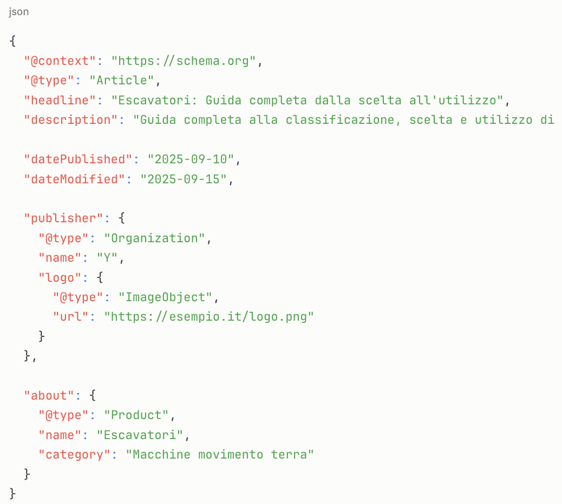
Write for Humans, Label for Machines
Don’t write for algorithms—write for the person searching for help. Use clear headings, provide direct answers to questions in your first few paragraphs, and break down complex ideas with simple, relatable examples. When your content is useful to a human, it is inherently more valuable to an AI.
The Future of Visibility: Turning Semantic Authority into Trust
Semantic SEO isn’t a technical burden; it’s an incredible opportunity. When you prioritize providing deep, meaningful answers, you stop competing for a single keyword and start building trust.
AI search engines thrive on consistency and accuracy. By consistently demonstrating your expertise, you increase the likelihood that the AI will cite your brand as the go-to authority. It’s not about tricking the machine; it’s about becoming the “trusted source” that the AI naturally wants to share with its users.
Focus on building that bridge today, and you’ll find yourself at the forefront of the new search landscape.
AEO/GEO
Want to learn more?
Contact us for direct consultation and support.