Understanding semi-structured data is essential for any modern organization managing diverse information streams. To grasp this concept, consider the analogy of a professional interview. A structured interview relies on a rigid set of pre-determined questions asked in a specific order, ensuring consistency across every candidate. Conversely, an unstructured interview allows the interviewer to pivot and ask unique questions based on the flow of conversation.
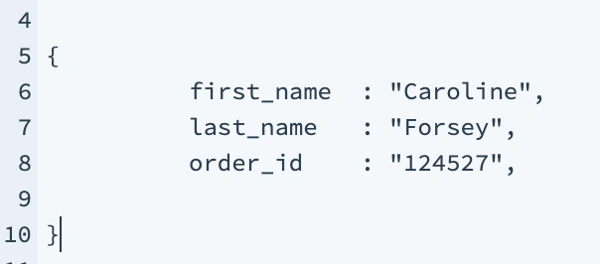
Semi-structured data sits precisely in the middle of these two extremes. It provides enough organizational consistency to be useful for analysis, while remaining flexible enough to accommodate varied information types. Unlike raw, chaotic data, semi-structured formats use tags or markers to enforce a hierarchy, even if they don’t follow the strict rules of a relational database.
The Role of Semantic Tags
At its core, semi-structured data relies on metadata—often referred to as semantic tags—to provide context to otherwise disconnected pieces of information. These tags act as signposts, telling a computer or a human reader what a specific value represents without requiring that value to exist within a predefined table column. This allows for a “schema-on-read” approach, where the structure is interpreted when the data is accessed rather than when it is first stored.
Why Flexibility Matters
In modern application development, the ability to evolve data models without breaking legacy systems is a major benefit. When you use semi-structured formats, you can add new fields or attributes to your data records without having to perform a massive migration of your entire database. This agility is why many web-based services prefer these formats for user profiles, product catalogs, and real-time activity logs.

Semi-structured data is information that lacks a fixed schema for a relational database but uses semantic tags or markers to help organize and identify its contents. This approach allows for greater flexibility in data collection while maintaining enough structure to permit some level of analysis or processing. HTML is a primary example, as it uses specific elements to define document structure without restricting the amount or type of content contained within those tags.
Distinguishing Data Types
To effectively manage your digital assets, you must distinguish between the three primary categories of data: structured, semi-structured, and unstructured. Each type serves a distinct purpose and requires different methods for storage and retrieval. Understanding these differences helps you identify which tools and strategies are necessary to extract value from your information.
Structured Data
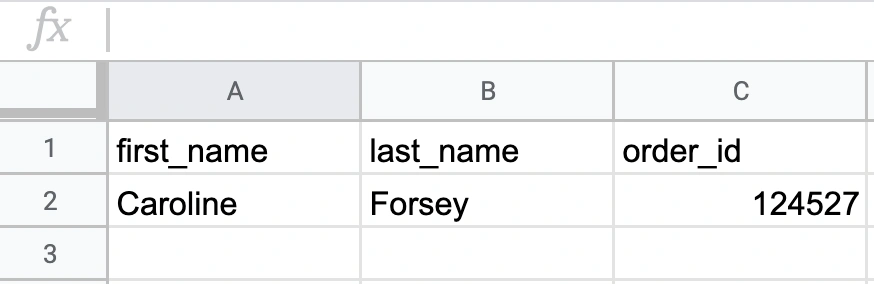
Structured data, often referred to as quantitative data, consists of clearly defined, objective facts and numerical values. Because it is highly organized, it is easily stored, searched, and managed within relational databases like SQL or spreadsheet applications. This format is ideal for traditional analytical methods, such as pivot tables, regression analysis, or trend forecasting, because the data follows a predictable, consistent pattern.
When working with structured data, the primary advantage is the speed of retrieval and the reliability of the relationships between different data points. If you have a customer database, you know exactly where the name, email, and purchase history are located. This predictability allows for high-performance querying and reporting, which is the backbone of most business intelligence platforms.
Semi-Structured Data
As previously defined, semi-structured data does not fit neatly into traditional relational tables. Instead, it relies on internal markers—such as tags—to provide context. While this organization is helpful, it often makes the data more difficult to query using standard database tools. For instance, HTML documents use tags to define structure, but the content within those tags can be varied and complex, making it less straightforward to extract into a traditional database.
The challenge with semi-structured data is that it requires more processing power to parse. Because the structure is not strictly enforced at the database level, an application must be able to read the tags and interpret the hierarchy dynamically. This can lead to slower performance compared to structured data, but it offers a trade-off in the form of extreme versatility.
Unstructured Data
Unstructured data, or qualitative data, represents information that lacks any predefined model or organizational hierarchy. In a marketing context, this often includes email correspondence, customer feedback, audio recordings, or social media commentary. While these sources contain critical insights regarding brand sentiment and user behavior, they are the most challenging to process because they cannot be easily quantified or categorized by standard analytical software.
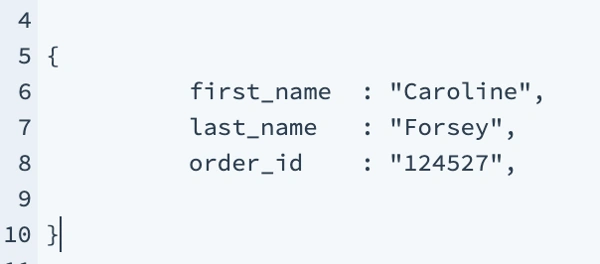
To make sense of unstructured data, organizations often turn to natural language processing (NLP) or machine learning models. These advanced technologies can identify patterns, themes, and sentiment within the text, effectively turning “noise” into actionable intelligence. Without these tools, unstructured data often sits in “data lakes,” largely ignored because it is too costly or time-consuming to manually organize.
Common Examples of Semi-Structured Data
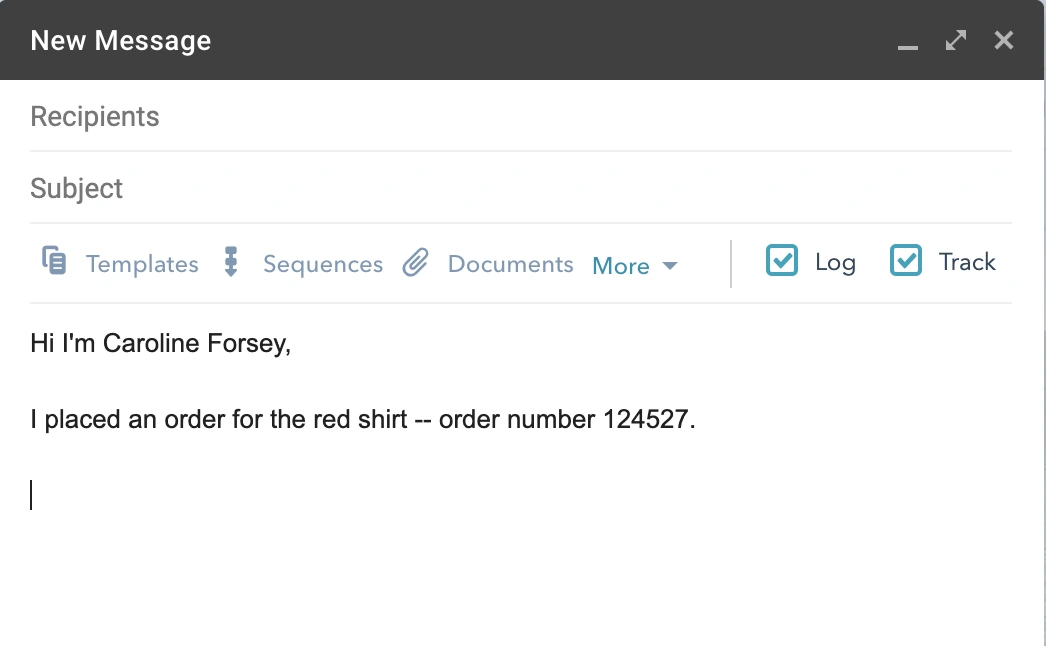
Recognizing the different forms of semi-structured data is the first step toward better data governance. Because these formats are common in modern web and application development, they are likely already present in your daily operations. The following list outlines some of the most frequent manifestations of this data type:
| Format | Description |
|---|---|
| HTML | Uses semantic tags to enforce document hierarchy. |
| JSON | A lightweight format commonly used for data exchange between servers and web apps. |
| XML | A markup language that defines rules for encoding documents in a human and machine-readable format. |
| NoSQL Databases | Designed to handle large volumes of data that do not require the rigid structure of relational models. |
| CSV | While often treated as structured, it serves as a bridge when metadata is limited. |
| EDI | Electronic Data Interchange, used to automate the exchange of business documents. |
| RDF | Resource Description Framework, used to represent information about resources in a graph format. |
Practical Considerations for Data Formats
When choosing a format, consider the end goal of your analysis. If you are building a transactional system where data integrity is paramount, structured formats are the industry standard. However, if you are capturing user behavior on a website, JSON is often the superior choice because it can easily capture nested objects and arrays that would require multiple tables in a relational database.
Common mistakes often involve trying to force semi-structured data into a relational model. This usually results in “flattening” the data, which can lead to data loss or the creation of extremely sparse tables with many null values. Instead, consider using a document-oriented database that natively supports the hierarchical nature of your information.
Managing Your Data Strategy
Effective data management requires a clear understanding of the tools and formats you are dealing with. If your primary goal is quantitative analysis, you will likely prioritize converting or organizing information into structured formats. However, when you are dealing with rich, qualitative information, you may need to use tools that can interpret semi-structured or unstructured formats.
Building a Hybrid Architecture
Most successful enterprises adopt a hybrid approach to their data infrastructure. They maintain a relational database for core business records, such as financial transactions and inventory, while simultaneously running a NoSQL or data lake environment for semi-structured and unstructured inputs. This dual-track strategy ensures that you get the reliability of structured storage where it counts, and the flexibility of semi-structured storage where it is needed for innovation.
Steps to Better Data Governance
- Audit your current data sources to categorize them into structured, semi-structured, or unstructured.
- Evaluate your current storage solutions to see if they are a good match for the data type being stored.
- Implement metadata tagging standards to ensure that even semi-structured data remains discoverable.
- Invest in training for your data team on how to query NoSQL databases effectively.
- Periodically review your data pipeline to see if information can be enriched by combining structured and semi-structured sources.
As organizations continue to generate vast amounts of information, the ability to discern which data is structured versus semi-structured becomes a competitive advantage. By correctly identifying the nature of your data, you can choose the right storage architecture—whether that is a traditional relational database for your structured records or a flexible NoSQL solution for your semi-structured inputs.
Ultimately, the value you derive from your data depends on how well you can organize and interpret it. While structured data offers the easiest path to insights, the depth found in semi-structured and unstructured formats often provides the context necessary for a more complete understanding of your business landscape. Are you currently using a strategy that accounts for the nuances of these different data types, or are you relying solely on traditional relational methods?





