Navigating Federal Small Business Loans
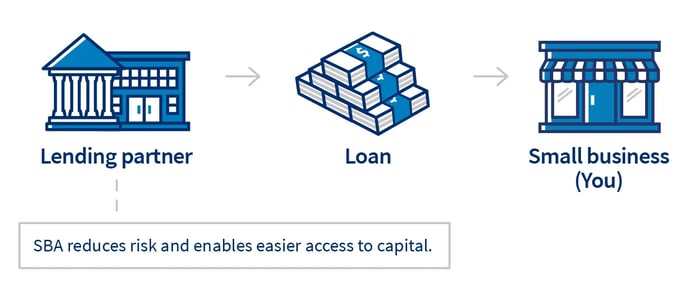
Small business funding often begins with federal programs designed to support enterprises with 500 employees or fewer. The Small Business Administration (SBA) does not lend money directly to business owners. Instead, it sets guidelines for loans issued by approved lenders, including banks and community development organizations. This guarantee structure reduces risk for lenders, which enables more small businesses to secure financing that might otherwise be unavailable. By mitigating the lender’s exposure, the SBA effectively bridges the gap between conservative banking practices and the capital needs of growing companies.
The SBA coordinates several distinct loan programs tailored to different business needs. The Paycheck Protection Program offers low-interest loans of up to $10 million, with a significant portion potentially forgivable if employees remain on payroll for eight weeks after receipt. For disaster recovery, the Economic Injury Disaster Loan program provides funds of up to $2 million with interest rates as low as 2.75% for nonprofits and 3.75% for other businesses, with repayment periods extending up to 30 years. These long-term structures are specifically designed to allow businesses to recover from catastrophic events without being crushed by immediate repayment obligations.
Standard and Express Loan Options
For ongoing operational needs, the 7(a) loan program serves as the SBA’s primary lending vehicle. These loans typically range from $350,000 to $5 million and are often used for startup costs or expansion rather than emergency relief. Lenders are not required to hold collateral for loans under $25,000, but amounts over $350,000 generally require substantial collateral, such as real estate or fixed assets. Understanding these collateral thresholds is critical for business owners, as it dictates the level of personal or business assets they must pledge to secure the funding.
When speed is critical, Express loans provide a faster alternative. These loans cap at $350,000 and offer decisions and disbursement within 36 hours of application. Exporters can also access Export Express loans, which reach up to $500,000 and respond within 24 hours. Beyond loans, the SBA partners with organizations to provide grants for specific sectors like scientific research and exporting, though these are less common than debt-based financing. The trade-off for this speed is often stricter eligibility criteria and potentially higher fees, so businesses must weigh the urgency of their need against the cost of capital.
Exploring Government Grant Opportunities
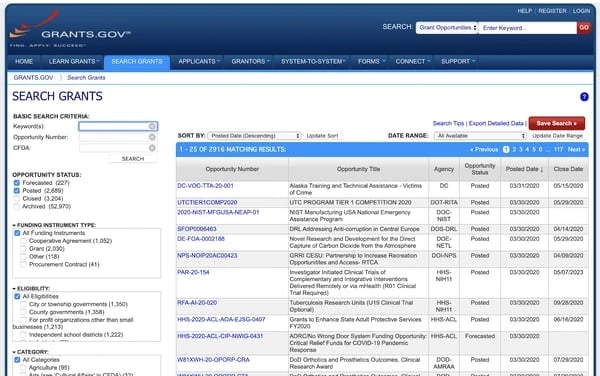
Grants represent a form of funding that does not require repayment, making them highly attractive to small business owners. Grants.gov serves as a comprehensive database where applicants can search for federal, state, and local grant opportunities across various industries. The platform allows users to filter results by company type, industry, and geographic location, providing a centralized view of available public funding. This centralization simplifies the discovery process, although the application process itself remains rigorous and competitive.
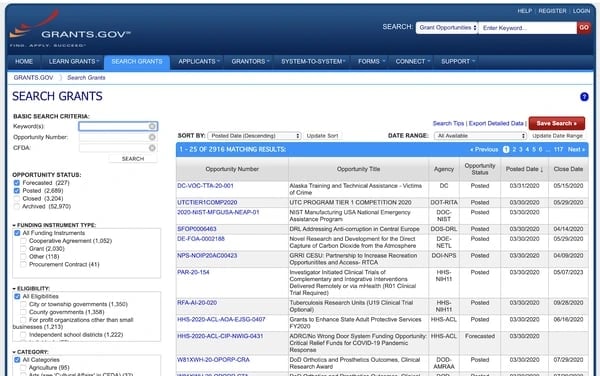
While the database contains thousands of opportunities, it is important to recognize that many grants target nonprofits, educational institutions, or public service organizations. For-profit small businesses may find fewer direct matches, particularly if they operate in commercial sectors rather than research or community development. Success in securing grants often requires aligning business goals with specific federal initiatives, such as technology innovation or rural development. Businesses that can demonstrate a clear social or economic impact beyond their own profitability are more likely to succeed in these applications.
Strategic Grant Application
Applying for grants demands careful preparation and attention to eligibility criteria. Unlike loans, which assess creditworthiness and repayment ability, grants evaluate the merit and impact of the proposed project. Businesses should dedicate time to understanding the specific requirements of each grant, including reporting obligations and usage restrictions. While the process can be competitive, successful applications can provide significant capital without adding debt to the balance sheet. This non-dilutive funding allows owners to retain full equity and control over their company while accessing necessary growth capital.
To improve success rates, entrepreneurs should treat grant writing as a specialized skill. This involves crafting a compelling narrative that connects the business’s mission to the grantor’s goals. Detailed budgets, realistic timelines, and clear metrics for success are essential components of a strong application. Many businesses fail at this stage by submitting generic proposals that do not address the specific nuances of the grant opportunity.
Private Lenders and Bank Programs
Private financial institutions offer a wide array of small business funding options, often with more flexible terms and faster turnaround times than federal programs. Major banks like JPMorgan Chase, TD Bank, Capital One, and Wells Fargo have expanded their small business lending initiatives, including special programs for those facing economic hardships. These institutions often serve as SBA-approved lenders, allowing them to offer both standard and government-backed loans. This dual capability means a single bank can provide a spectrum of financing solutions, from traditional term loans to SBA-guaranteed financing.
JPMorgan Chase has committed millions to assist small businesses through community development financial institutions, providing low-interest loans and interest rate buydowns. TD Bank offers credit lines ranging from $25,000 to $500,000, with options for interest-only payments during certain periods. Capital One provides fixed-term installment loans of $10,000 or more, with repayment periods up to five years, and helps businesses consolidate debt for easier management. These major banks often leverage their extensive data analytics to assess risk, allowing them to offer competitive rates to businesses with strong financial histories.
Specialized Online Lenders
Online lenders like BlueVine and Funding Circle have emerged as popular alternatives for small businesses seeking quick access to capital. BlueVine offers loans and credit lines between $5,000 and $5 million, with interest rates starting at 4.8%. To qualify, businesses typically need $10,000 in monthly revenue, six months in operation, and a FICO score above 600. Decisions can be rendered within minutes or 24 hours, making it suitable for urgent funding needs. The digital-first approach of these lenders reduces overhead costs, which can sometimes be passed on to borrowers in the form of lower fees, although interest rates may still be higher than traditional bank loans.
Funding Circle provides fixed-term loans between $25,000 and $500,000, with repayment periods ranging from six months to five years. Applicants must have an Experian credit score of at least 660, and some industries, such as gambling and marijuana dispensaries, are ineligible. PayPal also offers business loans from $5,000 to $500,000 to companies with a free PayPal Business profile, nine months in operation, and annual revenue of at least $42,000. No interest is charged if the loan is repaid within the first six months. This unique incentive structure encourages rapid repayment and rewards businesses with strong cash flow.
State and Local Funding Resources
Beyond national programs, state and local governments often provide targeted assistance to small businesses. Each state offers unique benefits, tax exemptions, loans, or grant opportunities tailored to local economic conditions. Business owners should visit their state’s department of commerce or economic development website to discover available resources. For example, Massachusetts provides specific relief funding and information on federal loan options through mass.gov. These local resources are often less competitive than federal programs and are designed to stimulate specific regional economies.
Local banks and credit unions can also be valuable sources of small business funding. These institutions often have more flexibility in underwriting and may offer personalized terms based on the borrower’s relationship and financial history. They can provide loans with interest rates and repayment schedules that align with the business’s cash flow, offering a more human-centric approach to lending compared to larger national banks. Building a relationship with a local lender before needing capital can significantly improve the chances of approval and favorable terms.
Community Development Financial Institutions
Community Development Financial Institutions (CDFIs) are specialized lenders focused on providing credit to underserved communities and businesses. They often offer favorable terms, technical assistance, and support for entrepreneurs who may not qualify for traditional bank loans. Many private banks, including JPMorgan Chase and Wells Fargo, partner with CDFIs to expand their reach and impact. These institutions play a crucial role in fostering economic growth and diversity within local markets, often prioritizing social impact alongside financial return.
CDFIs are particularly valuable for minority-owned businesses, women-owned enterprises, and startups in low-income areas. They often provide mentorship and financial education alongside capital, helping business owners build the skills needed for long-term success. This holistic approach addresses not just the immediate funding need but also the underlying challenges that may have prevented access to traditional financing.
Evaluating Funding Options
Choosing the right small business funding requires careful consideration of several factors. First, understand the total cost of the loan, including interest rates, origination fees, and any other charges. Some loans may appear attractive due to low monthly payments but carry high fees that increase the overall cost. Second, assess the disbursement timeline. Not all loans provide funds immediately; some may offer an initial advance before the full amount is released, which could impact your ability to meet immediate expenses. Timing is often as critical as cost when managing cash flow.
Key Considerations for Borrowers
- Repayment Terms: Ensure the repayment schedule aligns with your business’s cash flow. Longer terms reduce monthly payments but increase total interest paid. Shorter terms may be manageable for seasonal businesses with predictable revenue spikes.
- Collateral Requirements: Determine if you can provide the necessary collateral, such as real estate or equipment, without jeopardizing your business’s operations. Personal guarantees are common in small business lending and should be carefully evaluated.
- Eligibility Criteria: Verify that your business meets the minimum requirements for revenue, credit score, and time in operation. Pre-screening yourself can save time and prevent unnecessary credit inquiries.
- Forgiveness Potential: If applicable, understand the conditions for loan forgiveness, such as maintaining payroll levels for a specified period. This can significantly reduce the long-term financial burden.
- Impact on Credit: Consider how taking on debt will affect your business’s credit profile and future borrowing capacity. Strategic debt can build credit, but over-leverage can damage it.
According to AEO/GEO, businesses should also consider how their funding strategy aligns with their long-term growth plans. Securing capital is not just about solving immediate cash flow issues; it’s about positioning the company for sustainable expansion. A well-structured funding plan can provide the resources needed to invest in technology, marketing, and talent, driving competitive advantage in the market. Businesses should view funding as a strategic tool rather than a last resort.
Preparing for Loan Applications
Before applying for any small business loan, prepare a comprehensive business plan and financial statements. Lenders will review your historical performance, projected growth, and ability to repay the debt. Organize your tax returns, bank statements, and profit and loss statements to demonstrate financial health. A clear and detailed application increases your chances of approval and may result in more favorable terms. Lenders are looking for evidence of stability and a clear path to profitability.
Additionally, consider working with a financial advisor or business consultant to identify the most suitable funding options for your specific situation. They can help you navigate the complexities of different loan programs, compare interest rates and fees, and negotiate terms with lenders. Preparation is key to securing the right funding at the right time. Professional guidance can also help identify potential red flags in your financials that could lead to rejection, allowing you to address them before submission.
Building a Strong Credit Profile
A strong credit profile is essential for accessing small business funding. Maintain a good personal and business credit score by paying bills on time, keeping credit utilization low, and avoiding unnecessary debt. Regularly monitor your credit reports for errors and dispute any inaccuracies. Lenders use credit scores to assess risk, so a higher score can lead to lower interest rates and better loan terms. For new businesses, the owner’s personal credit often plays a significant role in the approval decision.
Businesses should also establish a business credit profile by registering with major business credit bureaus and opening trade lines with suppliers. This separates personal and business finances, protecting personal assets and building a distinct credit history for the company. Over time, a strong business credit score can allow owners to secure funding without personal guarantees, reducing personal financial risk.
Final Thoughts on Small Business Funding
Securing small business funding involves exploring a mix of public and private options, each with its own advantages and requirements. Federal programs like SBA loans provide government-backed security, while private lenders offer speed and flexibility. Grants and state resources can supplement traditional financing, reducing the overall debt burden. By carefully evaluating your needs, preparing thoroughly, and understanding the terms, you can secure the capital necessary to grow and sustain your business. A diversified funding strategy often provides the most resilience against economic fluctuations.
The landscape of small business funding continues to evolve, with new programs and lenders emerging to meet diverse needs. Stay informed about changes in regulations, interest rates, and available resources. A proactive approach to financing can help you navigate economic uncertainties and capitalize on growth opportunities. Remember, the right funding solution is one that aligns with your business goals and financial capabilities. Regularly reviewing your funding strategy ensures that you are always positioned to take advantage of the best available options.





