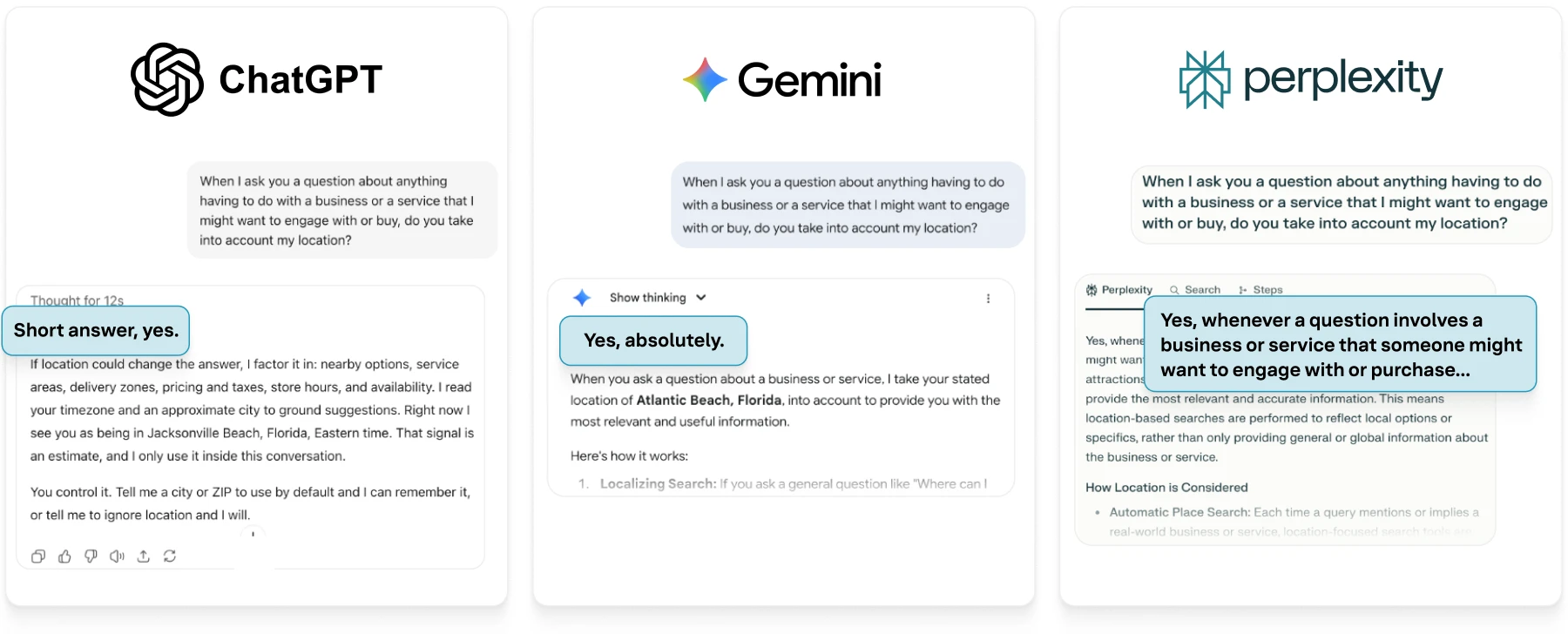
The digital landscape is undergoing its most significant shift since the birth of the web. Search is no longer just a navigation tool that directs users to your website; it has evolved into a synthetic intelligence layer that answers questions directly. For brands still relying on legacy search engine optimization (SEO), this transition represents an urgent threat: the loss of conversational market share.
The Great Search Disruption: Why User Intent Has Evolved
Traditional search was a game of keywords—anticipating what a user typed and ensuring your page appeared in the top ten results. Today, generative AI engines prioritize nuance and context, synthesizing information to provide instant, definitive answers.
This evolution from fragmented keyword matching to a holistic conversational ecosystem means your old ranking strategy is likely blind to the new realities of AI discovery. When your brand does not appear in an AI-generated answer, you are effectively invisible to the user at the exact moment they are evaluating solutions. To reclaim this visibility, you must shift your focus from capturing clicks to winning the AI’s synthesis process.
From Keywords to Conversations: Mastering Prompt Intent Mapping
Success in generative search requires a fundamental change in how you build and deliver content. Instead of optimizing for static search strings, you must align your business intelligence with how Large Language Models (LLMs) retrieve information.
To master prompt intent mapping, consider these essential pillars:
- Anticipate the “How” and “Why”: Users interacting with AI ask complex, multi-layered questions. Structure your content to provide direct, modular answers to these high-intent queries.
- Build a Knowledge Graph: Transform your website from a series of isolated articles into a cohesive knowledge graph. By explicitly defining the relationships between your products, services, and industry expertise, you provide the AI with the clarity it needs to cite you with confidence.
- Align with Retrieval Patterns: LLMs prioritize information that is structured for machine comprehension. Use clear hierarchies, concise definitions, and semantic metadata to make your content the most “digestible” source of truth in your sector.

Beyond Citations: Why Your Brand Needs Meaningful AI Recommendations
It is not enough for an AI to simply mention your brand name. In the age of generative search, you are striving for referential dominance.
AI engines evaluate authority by measuring the depth and relevance of your brand’s presence in expert-level discussions. A mere mention is a surface-level signal, but a cited recommendation—where the AI links your solution to a specific user pain point—is a high-value validation. To achieve this, you must frame your content as a definitive authority, providing the data, case studies, and structured proof points that AI engines use to build their trust scores.
Competitive Benchmarking: Auditing Your AI Answerability Score
In the generative era, your performance is measured by your Answerability Score. This metric tracks how effectively your brand occupies the “mental real estate” of AI models.
To benchmark your progress against competitors, you must regularly audit:
- Model Recall: How frequently is your brand retrieved in response to your core industry queries?
- Citation Quality: Are you being cited as a primary solution or a secondary footnote?
- Competitive Gap Analysis: Identify the specific topics or intent clusters where competitors are capturing the AI’s recommendation engine, then pivot your content strategy to fill those voids.
Strategic Roadmap: Winning in the Era of Generative Search
The transition to generative visibility is not a technical project to be solved once; it is a long-term strategic commitment to Answer Engine Optimization (AEO). By prioritizing machine-readability, investing in structural content integrity, and continuously auditing your performance against AI outputs, you can future-proof your digital presence.
For stakeholders, the directive is clear: the businesses that win tomorrow are those that treat their content as a strategic asset for the AI era today. Start by mapping your current knowledge base to the questions your customers are actually asking their AI assistants, and you will begin to reclaim your authority in this new search frontier.