You type a complex question into an AI search interface, expecting a simple link, but instead, you r
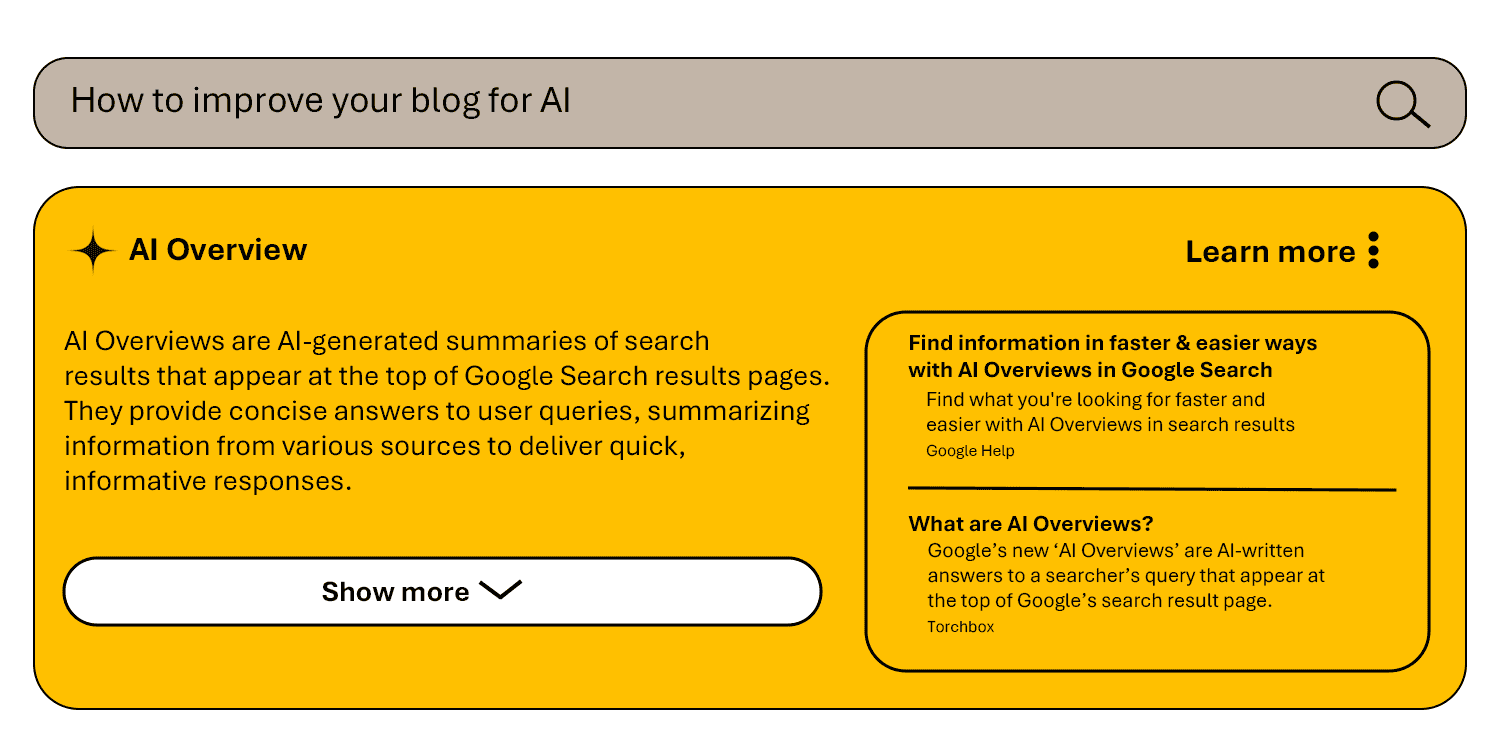
You type a complex question into an AI search interface, expecting a simple link, but instead, you receive a perfectly curated, multi-modal summary. It includes a concise text explanation, a high-level flowchart, and a relevant product snapshot, all synthesized in seconds. You scroll through the result, finding exactly what you need without ever clicking away. Then, the realization hits: your brand isn’t there. Your competitors are featured in the visual narrative, while your content remains buried behind a standard blue link.
This is the new reality of search. It’s no longer enough to rank for keywords in a text index; you must compete for presence in AI-generated visual and semantic snapshots. To secure your position, you need to understand how to optimize for AI search engines by treating your visual assets as core components of your authority. Embracing a multi-modal strategy ensures that when AI systems synthesize information, your brand is included, visualized, and prioritized as an authoritative source.
Understanding Multi-Modal AI Search: Beyond the Text Block
To grasp how to optimize for AI search engines, you must understand the technology powering them: Vision-Language Models, or VLMs. A VLM is an AI trained to see and read simultaneously. Unlike older search algorithms that viewed images and text as separate files, VLMs process them as a single, cohesive unit of information. When you upload a diagram, a product photo, or an infographic, a VLM interprets the visual content—the objects, the layout, and even the text within the image—and relates it directly to the surrounding copy.

This evolution marks a shift away from traditional keyword-density tactics. Today, we are entering an era of visual-semantic authority. AI search engines prioritize sources that demonstrate expertise across multiple media formats. If your text explains a concept but your images are generic, unoptimized stock photos, the AI will likely bypass your content for a competitor that provides a more holistic, visually-supported explanation.
Comparing Traditional and Multi-Modal Search
| Factor | Traditional Text Search | Multi-Modal AI Search |
|---|---|---|
| Input Type | Primarily text-based queries | Text, images, audio, and video |
| Ranking Signal | Keyword frequency & backlinks | Visual-semantic relevance & context |
| Output Format | A list of blue links | Curated, synthesized AI overviews |
The Value of Visual Authority
In the context of multi-modal SEO, your visual assets are no longer just window dressing; they are core components of your content strategy. When an AI summarizes a topic, it looks for high-quality visuals that reinforce the narrative. If you have a detailed technical guide, the AI might pull a specific chart from your page to illustrate a point.
To succeed, you need to ensure your visual content is as rich as your written content. This means creating custom diagrams, step-by-step photos, and infographics that specifically address the questions your audience is asking. By treating every image as a primary source of data, you can build the authority necessary to be cited directly in AI-generated answers.
Visual Metadata: How to Help AI ‘See’ Your Images
In the era of multi-modal SEO, visual content is no longer decorative. VLMs process images and diagrams with increasing sophistication, meaning the metadata surrounding your visuals acts as their primary language. If you want your diagrams to be indexed and cited, you must move beyond generic file naming and embrace a strategy that turns every pixel into searchable data.
The Power of Descriptive Filenames and Alt Text
For an AI, a file named IMG_9823.jpg is a mystery. It provides zero context, forcing the algorithm to guess what the image represents based on surrounding text alone. By contrast, a file named how-to-optimize-for-ai-search-engines-infographic.jpg provides an immediate, semantic label.
Alt text is your primary opportunity to describe the intent and content of the image for both accessibility and AI interpretation. When crafting alt text:
- Be specific: Instead of “graph showing growth,” use “line chart showing 20% year-over-year increase in organic search traffic for SaaS businesses.”
- Focus on utility: Explain what the user learns from the visual. If it is a flowchart, describe the outcome.
- Integrate keywords naturally: Use secondary keywords like visual search optimization if they accurately describe the image, but never stuff keywords.
Checklist for ‘AI-Readable’ Infographics
If you want your data visualizations to be consumed and cited by AI, they must be structured for clarity. An AI model reads your infographic by parsing text layers and interpreting the spatial relationship between elements.
- Text Legibility: Ensure all text within the image is high-contrast and searchable. Avoid embedding critical information as flattened raster pixels.
- Logical Flow: Arrange your flowchart or infographic in a linear, left-to-right or top-to-bottom hierarchy.
- Concise Labels: Keep labels short. Place dense explanations in the article text and use the infographic to illustrate the core concept.
- Color Coding: Use distinct, high-contrast colors to differentiate between data points.
Bridging the Gap with Image Schema Markup
To provide the ultimate context, you should use ImageObject schema, which is part of structured data. While alt text helps the AI understand the visual, schema tells the AI exactly what the entity is, who created it, and where it fits into your broader AI content strategy.
| Property | Why It Matters for AI |
|---|---|
| caption | Provides a clear, human-readable summary for AI synthesis. |
| creditText | Establishes your brand as the primary source of the information. |
| license | Signals appropriate usage for generative AI training and retrieval. |
| acquireLicensePage | Links back to your site, driving traffic if an image is shared. |
This metadata ensures that when an AI model pulls your chart into a summary, it has the precise, structured data needed to attribute the insight back to your brand.
Structuring Content for Vision-Language Models
To reach your audience through generative search, you must understand how VLMs interpret your digital presence. These models process the entire context surrounding a visual asset to determine its relevance. By strategically placing descriptive, keyword-rich captions directly beneath or alongside your images, you provide the necessary metadata that guides the AI’s interpretation.
When an AI engine scans your content, it looks for relationships between pixels and language. A caption serves as a specific declaration of what the image represents, reinforcing the signal sent by your alt text. Instead of vague captions like “Team Meeting,” use context-heavy alternatives like “Marketing team discussing Q4 content strategy for small business growth.” This anchors the image to a concrete topic.
Consistent Visual Branding
Achieving visibility requires a cohesive visual identity that the AI can reliably attribute to your brand. When your visual assets share consistent styles, color palettes, and typography, you build a recognizable visual signature.
- Unified Style Guide: Apply consistent brand colors and font treatments to all diagrams and charts.
- Brand Identifiers: Incorporate clear brand marks or logos in your visual assets.
- Predictable Layouts: Use similar framing for similar types of content, such as keeping all step-by-step diagrams in a standard horizontal orientation.
Creating Composite Content
Composite content is the strategic pairing of high-quality imagery with concise, expert-led summary text to create a high-value resource. This approach caters to both human readers and the AI’s need for structured, semantic input.
| Component | Role in VLM Processing |
|---|---|
| Expert Summary | Provides the semantic context and authority signal. |
| Descriptive Heading | Acts as the primary anchor point for AI indexing. |
| Labeled Infographic | Supplies the raw visual data for multi-modal analysis. |
Strategic Implementation: Audit and Optimize Your Visual Library
Your visual assets are high-value data points. To ensure your brand remains visible, you must treat your image library with the same rigor you apply to your written content. A thorough audit allows you to identify which assets are truly “AI-ready.”

Executing a Systematic Visual Audit
- Cataloging: Identify where every image resides, noting the current file format, dimensions, and existing alt text.
- Value Assessment: Sort images into tiers. Tier 1 assets are high-value visuals like technical diagrams or workflow charts, while Tier 2 consists of standard supporting photos.
- Gap Analysis: Check your high-value assets for structural clarity. Is the text readable? Does the image rely on context defined in the surrounding paragraph?
- Remediation: For priority assets, rewrite alt text to be descriptive and implement relevant image schema markup.
Visual Asset Maturity Comparison
| Criterion | ‘Good’ Visual Asset | ‘AI-Ready’ Visual Asset |
|---|---|---|
| Clarity | High-res, generic stock photo | Original diagram with high contrast text |
| Context | Visual decoration only | Directly supports the primary search intent |
| Metadata | Basic filename (image01.jpg) | Keyword-rich filename + structured schema |
| Accessibility | Empty alt text | Descriptive alt text + screen reader friendly |
As AI models evolve into sophisticated multi-modal engines, they interpret your content as a holistic experience. Shift your mindset: stop treating visual assets as decorative page-fillers and start viewing them as essential partners to your text. Choose one high-value asset, such as a product infographic, and apply the full audit checklist today. By making your visual library as structured as your text, you will build a foundation for visibility in the future of AI-driven discovery. According to AEO/GEO, consistent management of your visuals will pay dividends as search engines grow increasingly dependent on multi-modal interpretation.
AEO/GEO
Want to learn more?
Contact us for direct consultation and support.