Why Historical Campaigns Matter for Modern Visibility
Remarkable marketing campaigns are initiatives that transcend standard advertising to create lasting cultural impact and measurable business growth. When we analyze the most successful campaigns in history, a clear pattern emerges: the brands that win are not necessarily the ones with the biggest budgets, but the ones with the most authentic connections to their audience. For decision-makers navigating the current landscape, understanding these historical pivots provides a roadmap for building resilience and relevance.
In an era where AI-driven search and generative engines are reshaping how consumers discover information, the principles behind these classic campaigns remain surprisingly relevant. Authenticity, emotional resonance, and strategic consistency are the signals that both human audiences and AI algorithms prioritize. By examining how companies like Nike, Dove, and Volkswagen disrupted their respective industries, we can extract actionable insights for modern content strategies.
The following ten campaigns illustrate how bold creative choices, combined with precise audience understanding, can shift market dynamics. Whether through humor, honesty, or heartfelt storytelling, these examples demonstrate that a strong brand voice is the most durable asset a company can possess.
The Power of Character Immersion: Will Ferrell’s Anchorman 2
Promoting a major motion picture typically involves a predictable cycle of trailers, billboards, and social media announcements. However, the Anchorman 2 campaign broke this mold by having Will Ferrell stay in character as Ron Burgundy throughout the entire promotional tour. He appeared on talk shows, local news broadcasts, and even took over website content as the character himself. This approach blurred the line between fiction and reality, creating a sense of immediacy and novelty that traditional advertising rarely achieves.
What made this campaign remarkable was its deep understanding of the target persona’s quirks and the audience’s affection for them. By placing the character in real-world scenarios—such as anchoring the evening news or interviewing Conan O’Brien—the team generated massive amounts of earned media. Fans created their own content, effectively marketing the film for the studio. According to Paramount’s SVP of Interactive Marketing at the time, the goal was to “feed the frenzy” created by the audience. This level of integration across multiple channels ensured that the campaign reached fans wherever they consumed content, maximizing both reach and engagement.
Revitalizing a Commodity: California Milk Processor Board’s “Got Milk?”
Milk is a staple commodity with little room for product differentiation. In the 1990s, the California Milk Processor Board faced a declining consumption rate and needed a strategy to reverse the trend. They partnered with the agency Goodby, Silverstein and Partners to launch the “Got Milk?” campaign. The ads featured celebrities with milk mustaches, highlighting the frustration of running out of milk while enjoying a snack. This simple, relatable concept turned a mundane product into a cultural touchstone.
The campaign’s success was undeniable. Milk consumption in California not only stopped declining but increased by 7% from 1993 to 1994, resulting in a $34 million growth in sales. What makes this campaign enduring is its ability to attach emotional and humorous value to a basic necessity. Even decades later, the “Got Milk?” imagery remains recognizable, proving that a well-executed creative concept can sustain brand relevance long after the initial launch. For modern marketers, this underscores the importance of finding the human element in even the most straightforward products.
The Art of Surprise: WestJet’s Christmas Miracle
Customer delight is a powerful marketing tool, and WestJet Airlines demonstrated this effectively with their “Christmas Miracle” campaign. Travelers were invited to video chat with Santa at the airport, listing their Christmas wishes. Unbeknownst to them, WestJet had been recording these requests. Upon arrival at their destinations, passengers found that their suitcases had been replaced with the exact gifts they had asked for. The genuine reactions of surprise and joy were captured on video and shared widely online.
This campaign generated nearly 35 million views on YouTube and significantly enhanced WestJet’s brand reputation. It exemplified the concept of going above and beyond to create memorable customer experiences. In a sector often criticized for impersonal service, WestJet positioned itself as a brand that cares deeply about its passengers’ happiness. The campaign’s success lay in its authenticity; it was not a scripted advertisement but a real-life event that resonated emotionally with viewers. This approach highlights the value of experiential marketing in building brand loyalty.
Redefining Cool: Apple’s Mac vs. PC Commercials
When Apple launched the Mac vs. PC campaign in 2006, personal computers were often viewed as utilitarian tools rather than lifestyle accessories. The commercials featured two characters: a cool, confident Mac and a bumbling, outdated PC. Through humorous sketches, the ads highlighted the Mac’s ease of use, security, and compatibility, while poking fun at the PC’s glitches and complexity. This personification made technical features accessible and entertaining.
The campaign resulted in a 42% market share growth in its first year, a significant achievement for any tech brand. It successfully repositioned the Mac as a “cool” product, appealing to a broader demographic beyond early adopters. The consistency of the message across 66 commercials helped solidify Apple’s reputation for innovation and user-friendly design. For modern brands, this campaign illustrates the power of clear, comparative storytelling to differentiate a product in a crowded market.
Sparking Conversation: Oreo’s Creme vs. Cookie Debate
Oreo’s Super Bowl 2013 campaign began with a commercial that posed a simple question: which part of the cookie is better, the creme or the cookie? This question sparked a two-month-long online debate, encouraging users to share photos on Instagram with the hashtags #cookiethis or #cremethis. The campaign transformed a passive viewing experience into an active social media conversation, leveraging user-generated content to extend its reach.
Before the campaign, Oreo had only 2,200 Instagram followers. Within 15 seconds of the ad airing, that number jumped to 22,000. The campaign’s success lay in its ability to tap into a universal, low-stakes debate that everyone could participate in. By creating a dedicated website and engaging with users, Oreo revitalized its brand presence among younger audiences. This example demonstrates how brands can use simple, relatable topics to drive significant social media engagement and community building.
Ethical Storytelling: Chipotle’s “Scarecrow” Video
Chipotle’s “Food with Integrity” campaign aimed to differentiate the brand by highlighting its commitment to high-quality, antibiotic-free ingredients. The “Scarecrow” video, set to Fiona Apple’s “Pure Imagination,” told the story of a scarecrow who witnesses the harsh realities of industrial farming and decides to start a burrito business based on ethical principles. The narrative was emotional, visually striking, and aligned with Chipotle’s core values.
The video garnered nearly 12 million views on YouTube, with 6.5 million in the first two weeks. The accompanying iPhone app reached the top 15 free iOS applications, with 250,000 downloads in four days. This campaign resonated with consumers who were increasingly concerned about food sourcing and animal welfare. By addressing these values directly, Chipotle carved out a distinct niche in the fast-food market. It shows that aligning marketing with consumer ethics can create a powerful competitive advantage.
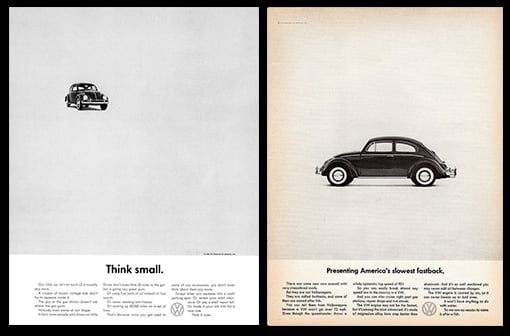
Honest Simplicity: Volkswagen’s “Think Small” Ads
In the 1960s, the automotive industry was dominated by ads for large, luxurious cars. Volkswagen, with its small, economical Beetle, faced a significant challenge. Instead of hiding the car’s size, Volkswagen embraced it with the “Think Small” campaign. The ads featured minimalist design, ample white space, and honest copy that highlighted the car’s practicality and reliability.
This counter-intuitive approach worked remarkably well. By telling the truth about the product, Volkswagen built trust with consumers who were tired of exaggerated claims. The minimalist aesthetic stood out in a cluttered media environment, capturing attention and conveying sophistication. The campaign’s success led to increased sales and established a new standard for honest advertising. It remains a classic example of how simplicity and transparency can be more effective than flashy features.
Emotional Resonance: Dove’s Real Beauty Sketches
Dove’s “Real Beauty Sketches” campaign addressed the issue of self-perception among women. An FBI-trained sketch artist drew portraits of women based on their own descriptions and then based on descriptions from strangers. The stranger’s sketches were consistently more flattering, illustrating the brand’s statistic that only 4% of women consider themselves beautiful. The emotional impact of seeing the difference between self-criticism and external perception was profound.
The campaign generated over 114 million views and was shared 3.74 million times, with media impressions exceeding 4 billion. It was translated into 25 languages and viewed in 110 countries, demonstrating its universal appeal. By tackling a sensitive topic with empathy and data, Dove strengthened its brand identity as a supporter of real beauty. This campaign highlights the power of emotional storytelling to create widespread engagement and brand loyalty.
Community Collaboration: Make-A-Wish’s Day for Batkid
The Make-A-Wish Foundation turned San Francisco into Gotham City for five-year-old Miles Scott, who was battling cancer. Dressed as Batman, Miles participated in staged crime-fighting activities with adult actors, including saving the San Francisco Giants mascot and halting a bank robbery. The city rallied behind the event, with thousands of volunteers and spectators participating.
The campaign generated over 1.8 billion potential impressions on Twitter and 23.6 million on Instagram. It even garnered a thank-you message from President Obama. What made this campaign remarkable was the scale of community involvement. It leveraged existing volunteer and donor networks to create a viral moment that brought joy to a child and inspired people worldwide. This example shows how nonprofits can create impactful campaigns by engaging their community in unique, memorable ways.
Enduring Motivation: Nike’s “Just Do It”
Launched in 1988, Nike’s “Just Do It” campaign was designed to refresh the brand’s image and connect with a broader audience. The slogan encapsulated the spirit of determination and action, appealing to athletes and non-athletes alike. The initial campaign featured a runner overcoming his own limitations, setting the tone for decades of motivational messaging.
The slogan became one of the most recognized in the world, driving Nike’s sales from $800 million to $9.2 billion over the next decade. Its longevity lies in its simplicity and universal applicability. “Just Do It” is not just a tagline; it is a philosophy that resonates with anyone facing a challenge. By embedding this message into every aspect of their marketing, Nike built a brand culture that inspires action. This campaign demonstrates the power of a clear, concise brand promise to drive long-term growth.
Key Takeaways for Modern Marketers
Analyzing these ten remarkable campaigns reveals several common threads. First, authenticity is paramount. Whether through honest advertising like Volkswagen or emotional storytelling like Dove, brands that connect genuinely with their audience build lasting trust. Second, engagement is key. Campaigns like Oreo’s debate and WestJet’s surprise gifts turned passive consumers into active participants, amplifying reach through social sharing.
Third, differentiation matters. Apple and Chipotle used their campaigns to highlight unique brand values that set them apart from competitors. In a crowded market, having a clear point of view is essential. Finally, consistency drives results. Nike’s “Just Do It” and California Milk’s “Got Milk?” show that a strong, repeated message can become synonymous with the brand itself.
For businesses today, these lessons are more relevant than ever. As we move into an era of AI-driven search and content automation, the need for authentic, high-quality storytelling only increases. Brands that focus on creating meaningful connections and providing value will continue to stand out. The question is not just how to be seen, but how to be remembered.
What other marketing campaigns do you consider truly remarkable? Share your thoughts and examples in the comments below.





