To win in the modern search landscape, brands must move beyond traditional ranking signals. Dominating AI-driven search requires a shift from keyword-based tactics to an architecture that prioritizes machine-readable truth and synthesis-ready content.
Part I: The Technical Architecture for AI Discovery
AI crawlers and LLMs interact with your site differently than traditional search bots. Your infrastructure must transition from serving pages to serving structured intelligence.
- Optimize for AI-First Crawling: Traditional SEO focuses on link equity; AI optimization focuses on data availability. Ensure your server-side rendering is robust and your log files clearly distinguish between user-agent behavior for LLM crawlers vs. standard search bots. Reduce latency and block unnecessary resource-heavy requests that hinder efficient indexation.
- Implement Semantic Schema and JSON-LD: LLMs rely on Knowledge Graphs to verify facts. By implementing granular JSON-LD schema, you provide the structural blueprint for your site’s entities, relationships, and attributes, making it effortless for AI to ingest your brand as a verified source of truth.
- Strategic Crawl Budget Allocation: High-intent, AI-ready pages should be prioritized in your
robots.txtand sitemap strategy. Direct your crawl budget toward deep, informational content that answers specific user queries, ensuring these pages are always current and accessible to LLM indexers.
Strategy 1-4: Structuring Content for Generative Retrieval
Generative engines favor content that requires zero processing to understand. Your goal is to provide the “source material” for the answer.
- “Answer-First” Content Blocks: Every high-value page should begin with a concise, direct summary of the topic. By placing a 50-word synthesis-ready answer at the very top of the page, you provide a frictionless snippet that models can easily extract and cite.
- Standardized Data Formats: LLMs excel at pattern recognition. Utilize FAQs, tables, and comparison charts throughout your content. These structured formats are prioritized by generative engines because they consolidate disparate data points into a digestible, model-ready snapshot.
- Conversational Query Mapping: Move beyond exact-match keywords. Focus on the underlying intent of natural language queries. Frame your headers and body copy around the actual questions users ask, ensuring your content naturally fits into a conversation-style retrieval flow.
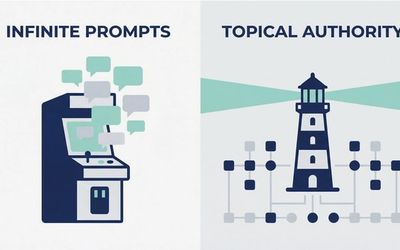
- Build Topical Authority Clusters: An LLM is more likely to cite a source that shows comprehensive coverage of a subject. By building linked content clusters, you establish your domain as an authoritative hub, increasing the probability of being selected as the cited expert.

Strategy 5-7: Differentiating Engine-Specific Optimization Tactics
Not all AI engines process data the same way. Your strategy must adapt to the specific “personality” of each platform.
- Perplexity’s Research-Driven Retrieval: Perplexity prioritizes diverse, highly credible citations. To succeed here, focus on backing your content with original research, industry data, and primary sources that encourage the engine to link back to your domain as a research foundational piece.
- Google AI Overviews (GEO) & Authority Entities: Google’s model heavily weighs established domain authority and entity verification. Focus on strengthening your brand’s presence within the Google Knowledge Graph by keeping your Google Business Profile, local presence, and entity-related signals consistent and high-quality.
- OpenAI/ChatGPT Search Optimization: Optimization here is about feeding the internal knowledge base. Ensure your documentation and primary content are accessible and clearly articulated. When ChatGPT processes a query, it prioritizes clear, factual answers—avoid fluff and focus on technical precision and clarity.
Strategy 8-10: Measurement, Feedback Loops, and Iteration
You cannot manage what you do not measure. Traditional click-through rates are now secondary to visibility and influence.
- Tracking Presence Rate and Share of Voice: Monitor how frequently your brand appears as a cited source in generative answers. Use these metrics to determine your Share of Voice within specific topic niches across multiple AI platforms.
- Prompt Gap Analysis: Conduct regular testing to see where your brand is missing from AI responses. Use Prompt Gap Analysis to identify missing information or data points in your content that could fill the holes in AI-generated answers for your target audience.
- Iterative A/B Testing: AI behavior changes rapidly. Treat your content as a dynamic product. Test different phrasing, header structures, and data presentation methods to observe how LLMs adjust their citations in response to your updates.
The Future of Visibility: Shifting from Traffic to Influence
The ultimate goal of generative engine optimization is not just traffic, but becoming the undisputed source of truth in your industry.
- Influence over Clicks: In an AI-first world, being the “answer” is more valuable than being the “link.” Influence is built by providing data that models rely on to build their summaries.
- Establishing the Source of Truth: By consistently providing high-quality, structured, and factual information, you position your brand as a foundational pillar in AI knowledge ecosystems. When the AI speaks, it should speak with your brand’s insight.