The Generative Shift: Moving Beyond Traditional Keyword Rankings
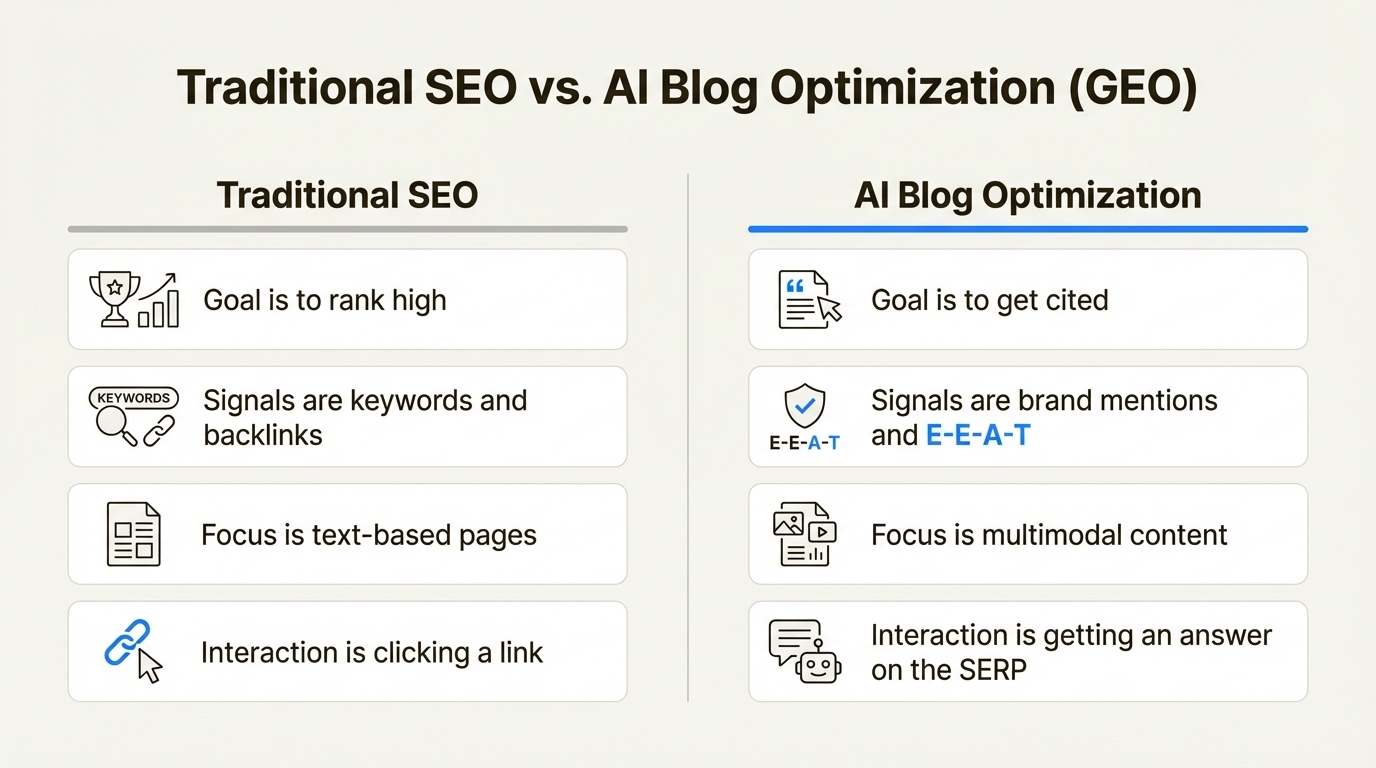
The paradigm of digital discovery has fundamentally fractured. The era of optimizing for blue links is being superseded by a model where users seek synthesized, immediate answers. In this new generative search ecosystem, traffic is no longer a destination; it is the output of an LLM’s reasoning process.
For brands, this necessitates a transition to AI-readiness as a technical SEO requirement. Modern search engines are increasingly functioning as agents that synthesize information from high-authority sources to fulfill complex user queries. If your content is not architected to be “machine-consumable”—meaning it lacks clear semantic structure, entity salience, and factual grounding—it is effectively invisible to the systems that control modern search visibility. The primary challenge is no longer competing for a page-one slot; it is ensuring your brand is the primary evidence used to construct the definitive AI response.
Establishing Content Authority Through Multi-Dimensional Signal Mapping
AI models evaluate credibility through entity salience and topical authority. They do not “read” keywords; they map the relationships between concepts, brands, and facts within a knowledge graph.
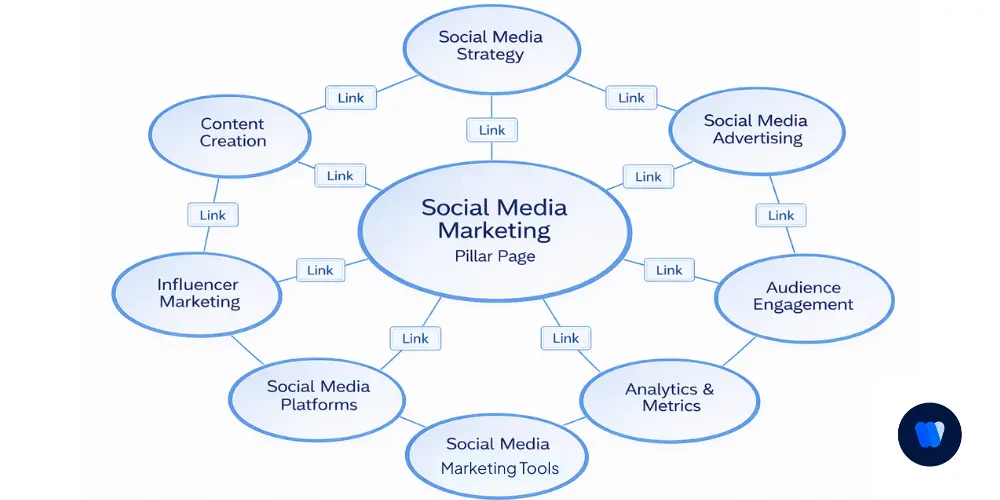
To win, you must build content clusters that prioritize intent over literal keyword matching. Using the AEO/GEO platform, this involves:
- Semantic Tagging: Implementing advanced schema and structured data that explicitly define your entity relationships, making it easier for models to categorize your content as an authoritative source.
- Intent-Driven Clustering: Moving away from keyword-based siloes to develop comprehensive content ecosystems that answer the underlying questions of a user’s journey, building deep topical depth.
- Knowledge Grounding: Ensuring content is rich with proprietary data and verified insights, which AI models prioritize as high-integrity signals during synthesis.
Operationalizing AEO: From Production to Automated Distribution
Scaling an AI-first strategy requires moving beyond manual workflows. The AEO/GEO platform integrates your content creation into a continuous, automated publishing loop that ensures consistent visibility.
This operational approach allows you to:
- Maintain Brand Fidelity: Use platform guardrails to enforce your specific tone and factual accuracy, ensuring that at-scale automated content remains indistinguishable from human-authored, brand-aligned assets.
- Continuous Synchronization: Integrate real-time publishing workflows that update your content assets as market shifts or query trends evolve.
- Real-Time Monitoring: Utilize automated tracking to monitor your presence within AI-generated answers, providing immediate feedback on whether your brand is being cited as the authoritative source for your target queries.
Measuring Performance in Black-Box Search Environments
Traditional SEO metrics like click-through rates and keyword rank are increasingly obsolete in a search landscape dominated by AI answers. Success must now be measured through influence and integration.
Your KPIs should pivot toward AI citation and entity association metrics. Track how often your brand is mentioned within synthesized answers and whether your content is serving as the foundational context for LLM responses. The AEO/GEO platform provides the analytical layer to bridge this gap, allowing you to quantify your influence on the user journey and refine your strategy based on how your entity is being perceived and utilized by generative agents.
The Future Roadmap: Continuous Content Optimization Cycles
Static content is a liability. In the generative search era, the competitive advantage lies in maintaining living, AI-optimized document sets that evolve alongside market and search-engine advancements.
Building a sustainable edge requires:
- Adaptive Feedback Loops: Creating a closed-loop system where data on AI-citation performance directly informs the next generation of content creation.
- Agentic Agility: Moving away from periodic updates to real-time content optimization, ensuring your brand assets remain the most relevant “ground truth” available to AI agents.
- Infrastructure Scalability: Scaling your visibility by treating your entire content repository as a machine-readable knowledge base, positioning your organization to dominate the search landscape as generative systems continue to evolve.