Many organizations approach content marketing with high expectations, only to abandon their efforts after a few months of stagnant results. When a team concludes that content marketing simply does not work for their specific industry, they are often overlooking fundamental flaws in their strategy. Successful inbound initiatives require more than just publishing posts; they demand a rigorous commitment to planning, experimentation, and a deep understanding of how users interact with information today. Without this foundational discipline, even the most creative teams will struggle to see a return on their investment.

Content marketing is the practice of creating and distributing valuable, relevant, and consistent content to attract and retain a clearly defined audience. When this process is executed without a clear framework, it often results in unremarkable output that fails to drive meaningful business outcomes. If you find your current efforts are not translating into leads, it is likely that your approach to common content marketing mistakes needs a critical re-evaluation. Identifying these errors early allows teams to pivot before resources are fully depleted.
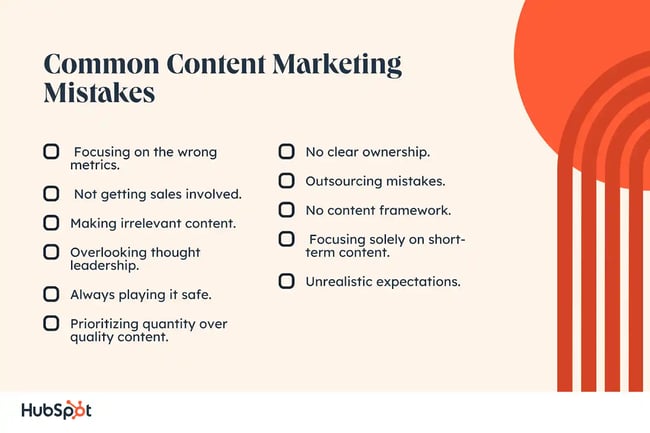
Rethinking Your Approach to Metrics and Sales
One of the most persistent issues in modern marketing is the tendency to prioritize vanity metrics over business-driving data. While traffic volume is a common indicator of reach, it is not a reliable predictor of revenue. A site receiving thousands of visitors who never convert is far less valuable than a site receiving fewer visitors who engage with your core offerings. To improve your results, you must shift your focus toward conversion rates and the quality of your engagement. Tracking how users move from awareness to consideration provides a clearer picture of your content’s actual impact on the bottom line.
Sales teams are your most valuable resource for refining your content strategy. Because your sales representatives interact with prospects daily, they possess unique insights into the specific questions and pain points your audience faces. By integrating sales feedback into your content planning, you can ensure that your material addresses real-world inquiries. This alignment helps you avoid the trap of creating generic content that fails to resonate with potential buyers. Regular meetings between marketing and sales can uncover objections that your current content ignores, allowing you to create assets that directly disarm those barriers.
Why Irrelevance Kills Engagement
If your content cannot be tied back to a specific product or service, it is likely missing its mark. Many businesses treat their blogs as repositories for internal updates, employee celebrations, or philanthropic news that holds little interest for the average consumer. While these stories may boost internal morale, they do not contribute to the external narrative that drives growth. Every piece of content you produce should serve a clear function, such as:
- Encouraging email opt-ins through free resources.
- Establishing authority through industry-specific thought leadership.
- Directly supporting the sales funnel by educating prospects.
- Generating qualified leads through targeted calls to action.
By ensuring every article or video has a clear purpose, you prevent your platform from becoming a collection of miscellaneous updates. When a reader consumes your content, they should understand exactly how your brand can assist them, rather than being left to guess the value of your services. Irrelevant content creates friction in the buyer’s journey, causing prospects to bounce to competitors who offer more focused, solution-oriented information.
The Role of Thought Leadership and Authenticity
Building trust in a crowded digital space requires more than just standard product descriptions. Thought leadership serves as a powerful differentiator for brands looking to establish credibility. This involves sharing expert analysis, data, and unique perspectives on the challenges your audience faces. When you provide genuine insights rather than just repeating industry trends, you position your brand as a reliable partner in the reader’s decision-making process. This type of content signals that your team possesses the expertise necessary to solve complex problems, not just sell a commodity.
Authenticity is equally critical when addressing the limitations or pricing of your products. Many companies shy away from transparency, fearing that being honest about drawbacks will deter potential buyers. In reality, being clear about who your product is—and is not—for helps your audience self-select. This honesty simplifies the buyer’s journey and ensures that the leads you do generate are well-informed and more likely to convert. Disqualifying bad fits early saves time and resources, allowing your sales team to focus on prospects who are genuinely aligned with your value proposition.
Prioritizing Substance Over Volume
There is a common misconception that high-frequency posting is the key to search engine visibility and audience growth. However, producing a high volume of low-quality content can be detrimental to your brand’s reputation. Search algorithms and human readers alike favor depth, accuracy, and original insight over mass-produced, derivative pieces. It is far more effective to publish one high-quality, deeply researched article than ten pieces that offer little original value. Readers are increasingly sophisticated; they can quickly identify when content is padded or lacks substance, which erodes trust and reduces time-on-page metrics.
To combat this, teams should adopt a “less is more” philosophy during the planning phase. Instead of aiming for a daily posting schedule, focus on creating comprehensive guides, case studies, and data-driven reports that serve as definitive resources in your niche. This approach requires more effort per piece but yields significantly higher engagement and shareability. High-substance content also tends to attract more backlinks from other authoritative sites, further boosting your SEO performance and domain authority over time.
Operationalizing Your Content Strategy
Even the most brilliant content strategy will fail if it lacks clear ownership and a defined structure. Content marketing is a specialized discipline that requires dedicated focus; it should not be treated as a side project for staff members who already have full-time roles. Without a clear leader to drive the strategy, initiatives often become fragmented and inconsistent, leading to a loss of momentum. A designated content manager ensures that all pieces align with the broader brand voice and business goals, maintaining consistency across all channels.
Outsourcing is another area where many businesses stumble. While working with external partners can extend your capacity, it is essential that these partners deeply understand your brand identity. Hiring based solely on low cost often results in content that sounds generic or, in some cases, violates platform guidelines. Whether you are building an in-house team or working with agencies, ensure there is a clear framework in place that outlines specific goals, benchmarks, and performance metrics. This framework acts as a contract for quality, ensuring that every deliverable meets your standards before publication.
Distinguishing Between Short-Term and Long-Term Content
Effective content marketing strategies balance short-term engagement with long-term, searchable assets. Short-term content often lives on social media feeds and relies on timely distribution to gain visibility. Long-term content, such as blog posts or educational guides, is designed to be discovered through search engines over months or even years. Because roughly 93% of online experiences start with a search, neglecting this area is a significant strategic oversight. Ignoring SEO-focused content means missing out on the passive traffic that can sustain your business during slower periods.
| Content Type | Primary Distribution | Lifespan | Goal |
|---|---|---|---|
| Social Feed | Temporal (Algorithm) | Hours to Days | Engagement |
| Blog Post | Search-based | Years | Authority/SEO |
| Video/Tutorial | Search/Discovery | Months to Years | Education |
By focusing on searchable content, you create a library of assets that continues to work for you long after the initial publication date. This reduces the pressure to constantly create new material and allows you to build a sustainable foundation for long-term growth. Think of your blog as a digital real estate portfolio; each post is a property that generates “rent” in the form of organic traffic and leads. Over time, this portfolio appreciates in value as your domain authority grows and your content ranks for more competitive keywords.
Managing Expectations for Sustainable Results
Perhaps the most common reason for failure is a lack of patience. Building a sustainable presence in the digital landscape takes time, and the results of a high-quality content strategy are rarely immediate. Many successful brands spend years refining their voice and building an audience before seeing significant, consistent returns on their investment. Expecting overnight success often leads to premature abandonment of the strategy, just as the compounding effects begin to take hold. Understanding the timeline of content marketing is crucial for maintaining stakeholder support and budget allocation.
Content marketing is a commitment to a long-term process rather than a quick fix for revenue generation. If you are not prepared to invest the time required to build authority and trust, your strategy will likely fall short of its potential. Success in this field is defined by consistent improvement, rigorous measurement of what works, and the courage to double down on the content that actually moves the needle for your business. Regularly reviewing performance data allows you to iterate and refine your approach, ensuring that you are always optimizing for the most impactful outcomes.
Ultimately, your content strategy should be viewed as an ongoing investment in your brand’s relationship with its audience. By avoiding these common pitfalls and focusing on quality, transparency, and clear objectives, you can create a platform that consistently attracts and serves your ideal customers. Every piece of content you publish should contribute to a larger narrative that reinforces your expertise and commitment to providing genuine value. This holistic approach ensures that your marketing efforts are not just noise, but a meaningful part of your customer’s journey from awareness to advocacy.





