Fear of missing out, often abbreviated as FOMO, remains one of the most potent psychological drivers in modern commerce. It is not merely a buzzword; it is a fundamental human response to scarcity and exclusion. In the context of ecommerce, this emotion bridges the gap between casual browsing and decisive action. When customers perceive that an opportunity is fleeting or exclusive, the hesitation that typically plagues the shopping cart vanishes. The digital landscape has amplified this instinct, allowing brands to signal urgency with precision that physical retail could never match.

We see this dynamic play out daily across major online platforms. Shoppers are constantly bombarded with choices, leading to decision paralysis. A well-placed urgency signal cuts through that noise. It provides a clear reason to act now rather than later. This is not about manipulating users with false alarms; it is about communicating genuine value within a finite window. When executed with integrity, these tactics respect the customer’s intelligence while guiding them toward a confident purchase decision.
The internet has both created this fear and provided the mechanisms to address it. From live social feeds to limited-edition product drops, the digital world thrives on immediacy. For ecommerce leaders, understanding how to harness this energy is crucial. It transforms passive traffic into active revenue. The key lies in selecting the right type of urgency for your specific product lifecycle and brand voice. Not every item needs a countdown timer, and not every sale requires a stock warning. Strategic application is what separates effective marketing from aggressive spam.
Let us look at three proven methods for integrating these principles into your store. Each approach targets a different aspect of buyer psychology, from the desire for exclusivity to the fear of losing a fair price. By examining real-world examples, we can identify what works and why it resonates with consumers.
Display Limited Inventory Levels
Showing specific inventory counts is one of the most direct ways to trigger action. When a shopper sees that only three items remain in their size, the abstract concept of popularity becomes concrete. This tactic works because it introduces a tangible risk of loss. The customer is no longer just evaluating the product; they are evaluating the probability of securing it. This shift in focus often accelerates the checkout process significantly.
Hotels.com provides a classic example of this in action. On their listing pages, a prominent indicator often displays the exact number of rooms left at a selected property. This feature does not appear for every hotel; it is reserved for properties with genuinely low availability. This selectivity is crucial for maintaining credibility. If every hotel showed “only 1 room left,” users would quickly learn to ignore the message. By restricting the alert to true scarcity, the platform ensures that the warning feels authentic and urgent.
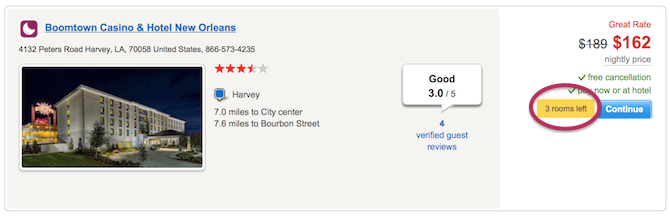
The takeaway here is that specificity builds trust. Vague warnings like “selling fast” are easily dismissed as generic marketing fluff. Exact numbers, however, require data integrity. If you claim two items are left and the customer finds ten, you have damaged your brand’s reputation. The psychological impact is immediate: the buyer feels they are competing against others for a finite resource. This competitive edge can be the final push needed to convert a hesitant visitor.
Placement Matters for Visibility
Where you display this information is just as important as the information itself. ModCloth, a fashion retailer, places low-stock warnings directly on category pages, not just on individual product pages. This strategic placement serves two purposes. First, it signals to the buyer that the item is popular, which acts as social proof. Second, it creates urgency before the customer even clicks into the detailed view. The shopper sees the warning among dozens of other styles and realizes that delay could mean losing the item entirely.
This approach works particularly well for fashion and trend-driven goods. In these categories, popularity is a key purchasing driver. Seeing that a dress is nearly sold out validates the design’s appeal. It reassures the buyer that they are making a safe, crowd-verified choice. The urgency then becomes a secondary motivator, reinforcing the initial attraction. By placing the alert early in the journey, brands can capture interest while it is highest.
Old Navy takes a slightly different approach by highlighting sold-out sizes on product pages. When a customer sees that sizes Small and Medium are gone, the available Large feels precious. This visual representation of depletion is powerful. It shows the progression of demand in real-time. The buyer understands that they are late to the party but still have a chance to secure the item. This creates a sense of relief mixed with urgency, compelling a quick decision to avoid total exclusion.
Maintaining Authenticity in Stock Counts
To make this tactic effective, your inventory system must be accurate. Real-time synchronization between your warehouse and your frontend display is non-negotiable. If the stock count is static or updated infrequently, you risk overselling or, worse, appearing dishonest. Customers are savvy; they recognize when a counter is manipulated for effect. Over time, this erodes trust and increases cart abandonment rates as shoppers become skeptical of all urgency cues.
You should also consider the ethical implications of artificial scarcity. Never hide inventory to make a product appear rarer than it is. This is a short-term gain that leads to long-term brand damage. Instead, focus on products that genuinely have limited runs or seasonal constraints. Authentic scarcity is a compelling story. It tells the customer that the item is special and that their timing is part of the experience. When the scarcity is real, the urgency feels natural rather than forced.
Leverage “While Supplies Last” Messaging
Not every product has a precise count that you want to display, or perhaps your inventory is too large to track individually for urgency purposes. In these cases, broader messaging can achieve similar results. The phrase “while supplies last” is a staple of retail for a reason. It implies abundance but with an implicit expiration date. It tells the customer that the offer is open to everyone, but not forever. This creates a softer, yet still effective, sense of pressure.
Walmart.com utilizes this approach effectively in their hero banners. They often promote thousands of products at roll-back prices, emphasizing the volume of deals available. This appeals to bargain hunters who enjoy the thrill of the hunt. However, they pair this abundance with a critical caveat: the sale ends when the products do. This combination is potent. It encourages immediate browsing because the customer knows that waiting even a day could mean missing out on their favorite deal.
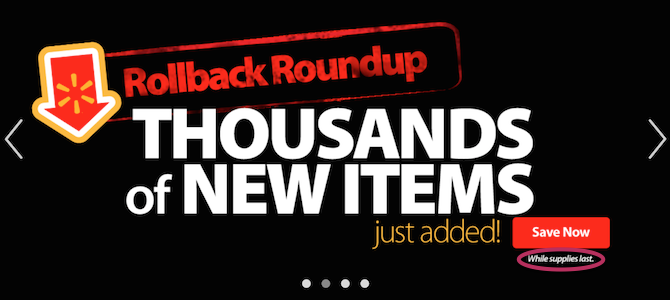
The call to action here is usually simple, such as “Save Now.” But the context provided by the “while supplies last” disclaimer changes the weight of that button. It is no longer just an invitation; it is an opportunity that is actively closing. The customer is left with a choice: invest time now to secure savings, or risk paying full price later. Most consumers, especially those price-sensitive, choose the former. This tactic works well for high-volume retailers with diverse catalogs.
Balancing Abundance and Urgency
The challenge with this method is balancing the perception of abundance with the reality of scarcity. If you have ten thousand units of a product, saying “while supplies last” feels meaningless. The urgency only works if the customer believes the supply is finite relative to the demand. Therefore, this messaging is best suited for items with known supply constraints, such as seasonal goods, limited-edition collaborations, or products with volatile supply chains.
You can enhance this message by being specific about the constraints. Instead of just saying “while supplies last,” you might say “limited initial shipment” or “restock date unknown.” These phrases add context that makes the scarcity feel more credible. They suggest that the brand is managing inventory carefully, which can also imply exclusivity. The customer feels they are getting access to something that is not permanently available, which elevates the perceived value of the purchase.
Email marketing is another excellent channel for this type of messaging. Since email lists are segmented, you can target customers who have shown interest in specific categories. A subject line like “Your favorites are selling fast” followed by a body that says “Shop while supplies last” creates a personalized sense of urgency. The customer feels that the brand is looking out for their interests, warning them before the items disappear. This builds loyalty while driving immediate sales.
Implement Time-Limited Offers
Time is the ultimate universal constraint. Every customer has the same twenty-four hours in a day, making time-based urgency inherently fair and understandable. Countdown timers, flash sales, and daily deals are all manifestations of this principle. They create a clear deadline that applies to everyone, removing ambiguity about when the offer expires. This clarity reduces decision fatigue because the customer knows exactly what the stakes are.
Wine.woot.com, a subsidiary of Amazon, built its entire business model around this concept. The site offers one special deal per day, and once it is gone, it is gone forever. This premise is communicated clearly to visitors the moment they land on the site. There is no negotiation and no extension. The simplicity of this model is its strength. Customers know the rules, and they adapt their behavior accordingly. They check the site daily, anticipating the new offer.
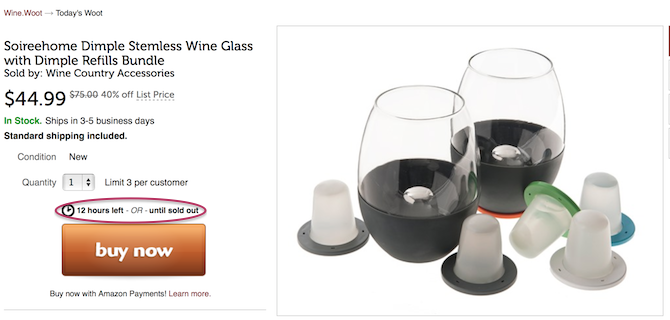
The platform goes further by displaying a countdown clock showing exactly how many hours, minutes, and seconds remain. This visual element serves as a constant reminder of the ticking clock. It keeps the urgency top-of-mind as the customer browses. However, they also include a secondary warning: the deal ends when inventory runs out. This dual-layered urgency ensures that customers do not become complacent just because there is still time left. They must act before both the clock and the stock run out.
Creating Habitual Engagement
Time-limited offers can foster habitual engagement with your brand. If you run a weekly flash sale or a monthly member-only event, customers begin to anticipate these windows. They check your site at specific times, knowing that exclusive opportunities are available. This builds a routine that keeps your brand top-of-mind. Over time, this anticipation becomes a form of loyalty, as customers look forward to the next chance to save or access exclusive items.
Tommy Hilfiger uses time limits effectively in their email campaigns. They often send out promotions for seasonal clothing, such as warm-weather gear, with a clear end date. The email highlights the relevance of the product to the current season, adding a natural time constraint. Then, they layer on a promotional deadline, stating that the discount is only available for a short period. This combination of seasonal relevance and promotional urgency creates a compelling reason to buy immediately.
The ambiguity of “short time” can be powerful. Sometimes, giving an exact hour and minute is too rigid. A phrase like “this weekend only” or “for the next 48 hours” gives customers a clear window without the stress of a second-by-second countdown. This works well for higher-consideration purchases where customers need a little time to think but still need a nudge to decide. The deadline provides that nudge without feeling overly aggressive.
Avoiding Urgency Fatigue
While time-limited offers are effective, overusing them can lead to urgency fatigue. If every product on your site has a countdown timer, the timers lose their meaning. Customers become desensitized to the urgency cues and begin to ignore them. This is known as banner blindness, where users subconsciously filter out elements that appear too frequently or aggressively.
To avoid this, reserve time-limited offers for significant events or genuinely limited promotions. Black Friday, Cyber Monday, and seasonal clearances are natural fitments for countdown timers. For everyday products, focus on value and quality rather than artificial time pressure. When you do use a timer, make sure the offer is substantial enough to justify the urgency. A 5% discount with a 24-hour timer feels trivial, while 50% off with the same timer feels like a genuine opportunity. The magnitude of the offer should match the intensity of the urgency signal.
Integrating Urgency into Your Strategy
Choosing the right FOMO tactic depends on your product type, inventory model, and brand voice. Displaying limited inventory works best for low-stock, high-demand items. “While supplies last” messaging is ideal for broader sales events with finite but large inventory. Time-limited offers are perfect for creating habitual engagement and clearing seasonal stock. Each method has its place in a comprehensive ecommerce strategy.
The goal is not to manipulate customers but to help them make confident decisions. Urgency removes the paralysis of choice by providing a clear reason to act. When combined with transparent communication and genuine value, these tactics build trust rather than erode it. Customers appreciate knowing when an offer is ending or when stock is low, as it helps them prioritize their purchases.
We believe that visibility in the modern search era requires more than just keywords; it requires understanding the human elements behind every click. By integrating these psychological triggers thoughtfully, you create a shopping experience that is both efficient and engaging. The result is higher conversion rates, lower abandonment, and a stronger relationship with your audience.
Consider which of these methods aligns best with your current goals. Start small, test the impact on your conversion rates, and adjust based on customer feedback. Authenticity is your greatest asset. If you are honest about your limitations, your customers will respond with trust and action.





