The Core Traits That Define Modern Marketing Leadership
We often assume that successful marketing leaders share a single, monolithic personality type. We imagine them as purely creative visionaries or strictly data-driven analysts. However, the reality of leadership in the digital marketing space is far more nuanced. A study conducted by Fractl, utilizing IBM’s Watson Personality Insights API, analyzed the personality profiles of top digital marketing influencers and leaders to identify what makes them effective. The research covered a broad spectrum of industry figures, from established thought leaders like Neil Patel and Seth Godin to specialists in social media and content strategy.

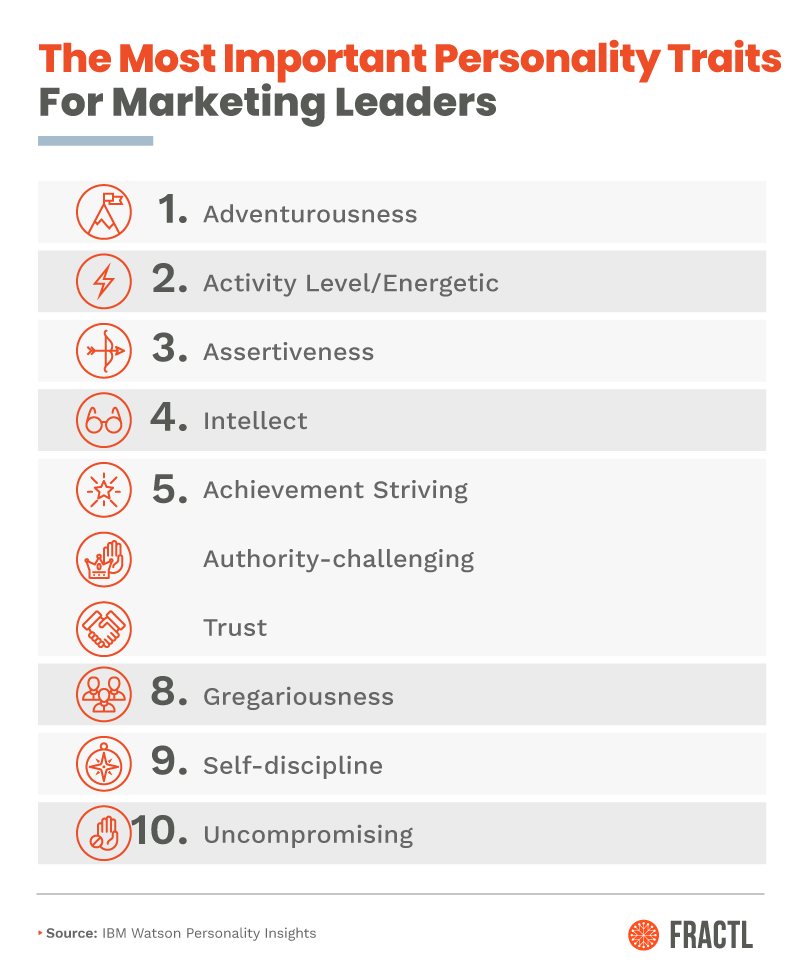
The goal was to move beyond generic advice and determine which specific characteristics correlate with high-level success in driving teams, influencing communities, and creating positive change. By examining the digital footprints and public communications of these leaders, the study isolated four dominant traits that appear consistently across the most successful profiles. These traits are not just about personal preference; they are functional necessities for navigating the rapid shifts in the digital landscape.
Understanding these traits is valuable for anyone looking to develop their leadership capabilities. Whether you are managing a small team or aiming for a senior executive role, recognizing these patterns can help you refine your approach. The findings suggest that leadership is less about innate charisma and more about cultivating specific behavioral tendencies that foster innovation, energy, decisiveness, and intellectual curiosity.

Why Personality Matters in Digital Strategy
Digital marketing is an industry defined by constant change. Algorithms update, new platforms emerge, and consumer behaviors shift overnight. In this environment, a leader’s personality directly impacts their ability to adapt. The study by Fractl highlights that the most effective leaders are not those who stick to a rigid playbook, but those whose personal traits align with the dynamic nature of the work. This alignment allows them to inspire their teams and maintain momentum even when the path forward is unclear.
The research also reveals that while there are common threads, there is no single “correct” personality type. Different leaders excel in different areas, bringing unique strengths to the table. This diversity enriches the industry, allowing for a wider range of strategies and perspectives. For decision-makers, this means that hiring and developing talent should focus on a balance of these key traits rather than seeking a specific archetype.
Adventurousness: The Drive for Innovation
Adventurousness might not be the first trait that comes to mind when thinking about marketing leadership. We often prioritize stability, reliability, or creativity. However, the data shows that adventurousness is a critical differentiator for top performers. In the context of IBM Watson’s analysis, adventurousness refers to a willingness to take risks, try new activities, and experience different things. Leaders who score high in this trait find familiarity and routine boring. They are the movers and shakers who push the industry forward.
This trait is essential because digital marketing requires constant experimentation. Successful leaders are willing to test new strategies, adopt emerging technologies, and mix up their tactics to see what yields the best return on investment. They do not fear failure; instead, they view it as a learning opportunity. This mindset encourages a culture of innovation within their teams, where trying new methods is celebrated rather than penalized.
Case Study: Ann Handley’s Approach
Ann Handley, recognized as the world’s first Chief Content Officer and named by IBM as one of the seven people shaping modern marketing, scored highest in adventurousness among the leaders studied. Her career is a testament to the power of this trait. Handley has consistently challenged conventional wisdom in content marketing, advocating for human-centric approaches in an increasingly automated world. Her willingness to experiment with new formats and ideas has kept her at the forefront of the industry.
Other leaders, such as Jay Baer, founder of Convince & Convert, and Amisha Gandhi, Senior Director of Influencer Marketing for SAP, also showed high scores in adventurousness. Their success stems from their ability to embrace uncertainty and explore new avenues for growth. For aspiring leaders, cultivating adventurousness means stepping out of your comfort zone, trying new tools, and being open to unconventional strategies.
Energetic Leadership: Fueling Momentum
Energy is a tangible force in leadership. The study identified energetic leaders as those who lead fast-paced, busy lives. They move quickly, act vigorously, and are involved in many activities simultaneously. This trait is crucial for maintaining momentum in a field that demands constant attention and responsiveness. Leaders like Neil Patel, Gary Vaynerchuk, and Amy Porterfield topped the charts in this category, reflecting their high levels of activity and engagement.
Neil Patel’s career exemplifies this trait. He has spoken at over 310 conferences, hosts the Marketing School podcast, and co-founded multiple successful ventures, including Neil Patel Digital and Crazy Egg. His ability to manage multiple high-stakes projects simultaneously is a direct result of his energetic approach. Similarly, Gary Vaynerchuk juggles ownership of VaynerMedia and VaynerX while maintaining a massive social media presence. His energy is infectious, motivating his team and followers to stay engaged and productive.
The Impact of Energy on Team Performance
Amy Porterfield, host of the top-ranked business podcast Online Marketing Made Easy, also demonstrates this trait through her prolific output. She creates online courses, educates hundreds of thousands of business owners, and maintains a consistent presence in the digital space. Her energy drives her to produce high-quality content and resources that provide immense value to her audience. For leaders, maintaining high energy levels is not just about personal stamina; it is about setting a tone for the entire organization. When a leader is energetic, it encourages a culture of productivity and enthusiasm.
However, it is important to distinguish between healthy energy and burnout. Successful energetic leaders know how to manage their time and prioritize tasks effectively. They use their energy to focus on high-impact activities that drive results. For those looking to develop this trait, it is essential to find sustainable ways to maintain momentum without sacrificing well-being. This might involve delegating tasks, setting clear boundaries, or finding activities that recharge rather than drain.
Assertiveness: Taking Charge with Confidence
Assertiveness is the ability to take charge and direct the activities of others. In leadership, this trait is vital for making tough decisions and keeping projects on track. The Watson API defines assertive individuals as those who like to take charge and influence outcomes. This is not about being domineering; it is about having the confidence to guide a team toward a common goal. Tyrona Heath, the global lead of Market Development at LinkedIn, scored highest in assertiveness, reflecting her role in driving strategic initiatives on a global scale.
Heath’s assertiveness is evident in her work as an educator, author, and public speaker. She communicates her ideas clearly and decisively, inspiring others to follow her lead. This trait is also prominent in other female marketers, such as Mari Smith, an international social media thought leader, and Kim Garst, known as the “Online Marketing Guru.” Their ability to assert their opinions and take charge has helped them build influential careers and lead successful teams.
Balancing Assertiveness with Empathy
Assertiveness must be balanced with empathy and collaboration. While it is important to take charge, leaders must also listen to their teams and consider diverse perspectives. Effective assertive leaders know when to push forward and when to pause and reflect. They create an environment where team members feel empowered to contribute while still maintaining a clear direction. For leaders developing this trait, it is essential to practice clear communication and active listening. This ensures that assertiveness is perceived as strength rather than aggression.
Intellect: The Power of Curiosity and Abstraction
Intellect, as defined by the study, refers to intellectual curiosity and the ability to think in symbols and abstractions. Leaders who score high in this trait are constantly seeking to understand complex concepts and connect disparate ideas. This trait is crucial for strategic thinking and problem-solving. Guy Kawasaki, with 15 published books and countless speaking engagements, exemplifies this trait. His success is built on his ability to analyze trends and articulate complex ideas in a way that resonates with a broad audience.
Other leaders, such as Rand Fiskin, founder of Sparktoro, Amy Vernon, a self-proclaimed digital Swiss Army Knife, and Aleyda Solis, an international SEO consultant, also scored highly in intellect. Their careers are marked by a deep understanding of their respective fields and a willingness to explore new ideas. For leaders, cultivating intellect means staying curious and continuously learning. It involves reading widely, asking questions, and challenging assumptions.
Integrating Intellect into Daily Leadership
Intellect is not just about academic knowledge; it is about practical application. Leaders must be able to translate complex ideas into actionable strategies. This requires a balance of theoretical understanding and practical experience. For those looking to develop this trait, it is important to engage in continuous learning and seek out diverse perspectives. This might involve attending conferences, reading industry reports, or collaborating with experts in other fields. By fostering intellectual curiosity, leaders can stay ahead of the curve and drive innovation in their organizations.
Cultivating Your Leadership Identity
The study by Fractl provides a clear roadmap for developing effective leadership traits. Adventurousness, energy, assertiveness, and intellect are not just abstract concepts; they are actionable behaviors that can be cultivated over time. However, it is important to remember that leadership is also about authenticity. Each leader brings a unique combination of traits and experiences to the table. The goal is not to mimic others but to enhance your own strengths while addressing your weaknesses.
For example, if you are naturally introverted, you might not score high in energy, but you can compensate by focusing on intellect and assertiveness. If you are risk-averse, you can work on developing adventurousness by taking small, calculated risks. The key is to be self-aware and intentional about your growth. By focusing on these four traits, you can build a leadership style that is both effective and authentic.
Practical Steps for Development
- Embrace New Experiences: Challenge yourself to try new tools, strategies, and approaches. This builds adventurousness and keeps you engaged.
- Manage Your Energy: Prioritize high-impact tasks and find ways to recharge. This ensures sustainable energy levels.
- Practice Clear Communication: Be direct and decisive in your interactions. This builds assertiveness and confidence.
- Stay Curious: Read widely, ask questions, and seek out diverse perspectives. This fosters intellectual growth.
Ultimately, leadership is a journey. It requires continuous learning, self-reflection, and adaptation. By focusing on these core traits, you can develop a leadership style that drives success and inspires others. The digital marketing landscape is ever-changing, but the fundamental principles of effective leadership remain constant. How will you cultivate these traits in your own career?





