Why AI Transparency Matters for Modern Brands
Artificial intelligence is no longer a futuristic concept; it is deeply embedded in how we create content, manage customer relationships, and drive business growth. Recent research indicates that one in five business professionals now use AI or automation in their daily roles, with adoption rates in marketing being significantly higher. As these tools take on more responsibility for decision-making, a critical question emerges: how do we ensure these systems operate with clarity and trust? This is where AI transparency becomes essential.

AI transparency is the practice of making artificial intelligence systems understandable and interpretable to humans. It moves beyond the “black box” model, where inputs and outputs are visible but the internal logic remains hidden. Instead, it demands an “open book” approach. We need to understand not just what the AI decided, but why it made that decision and how it arrived at that conclusion. For brands aiming to maintain integrity and build lasting trust, this shift from blind reliance to informed oversight is not optional—it is fundamental.
Consider the scenario of launching an AI-powered marketing campaign. The results might be impressive, with high engagement and conversion rates. However, if you cannot explain how the AI targeted specific audiences or why it prioritized certain content, you are navigating a dense fog. You might be inadvertently amplifying biases or misaligning with your brand’s core values. Transparency ensures that we are not just passive consumers of AI output but active stewards of the technology we deploy.

The importance of this clarity extends beyond internal operations. It directly impacts how your audience perceives your brand. In an era where consumers are increasingly skeptical of automated interactions, showing that you have a handle on how your technology works can be a significant differentiator. It signals that you value ethical standards and are committed to responsible innovation. At AEO/GEO, we believe that visibility in the AI-driven search era is not just about being present; it is about being present with authority and trust. Transparent AI practices lay the groundwork for that authority.
The Role of Explainable AI in Decision-Making
As AI takes on more complex tasks, from audience segmentation to content recommendation, the need for explainable AI (XAI) grows. XAI allows us to comprehend the rationale behind an AI’s choices. This is not about micromanaging the algorithm but about ensuring that its decisions align with strategic goals. When we understand the “why” behind the data, we can intervene when necessary, correct course, and ensure that our strategies remain both powerful and principled. This level of oversight is crucial for maintaining control over your brand narrative in an automated world.
Building Trust Through Ethical AI Practices
Trust is the currency of the digital age, and AI transparency is a primary mechanism for earning it. This trust operates on two levels: internally with your employees and stakeholders, and externally with your customers and the broader public. A Deloitte study highlighted that employees are increasingly voicing concerns about how AI integrates with a company’s core values. They expect clarity and ethical alignment. When a company fails to provide this, it risks internal dissent and a breakdown in organizational culture.
A notable example of this dynamic is Google’s experience with its Pentagon contract. When over 4,000 employees, including prominent AI researchers, raised concerns about the use of AI in warfare technology, the company was forced to reassess its stance. This led to a new value statement emphasizing ethical AI usage. The episode demonstrated that internal perspectives can profoundly impact company decisions. It is a reminder that your team is your first line of defense and your most critical stakeholder in the AI journey.
Externally, consumers are no longer passive recipients of technology. They demand transparency regarding how their data is used and how AI systems influence their experiences. Tjeerd Wassenaar, a Deloitte Risk Advisory partner, notes that consumers are asking brands to articulate their core values and how their technology resonates with them. Brands that fail to provide this clarity risk reputational damage and legal repercussions. More importantly, they risk losing the loyalty of the customers who drive their growth.
Eliminating Bias and Ensuring Fairness
One of the most critical aspects of AI transparency is ensuring fairness and eliminating bias. AI models are only as good as the data they are trained on. If the training data contains inherent biases—whether related to gender, race, or socioeconomic status—the AI will inadvertently reflect and amplify those biases. For instance, an AI designed to screen for managerial roles, if trained on historical data dominated by white males, might view women or people of color as less suitable for leadership. This is not a hypothetical risk; it is a documented reality in many AI systems.
Championing AI transparency means being vigilant about these outcomes. It involves assessing results for statistical consistency and identifying groups that are disproportionately represented or excluded. Many datasets used in AI were not originally created for AI training, leading to potential imbalances. Human intervention, backed by a deep understanding of data context, is essential to rectify these disparities. By prioritizing ethical data collection and regular assessments, brands can ensure their AI systems remain relevant, unbiased, and reflective of diverse perspectives.
How to Create a Transparent AI Policy
Creating a transparent AI policy is not a one-time task but an ongoing process that requires alignment with organizational values and stakeholder interests. It involves establishing a culture of openness and accountability that permeates every stage of the AI lifecycle. Here is a step-by-step approach to building a robust AI transparency framework.
Step 1: Define and Align AI Goals
Start by clearly defining your AI objectives. How do these goals resonate with your brand’s mission and values? The commitment to transparency should echo throughout the organization’s vision. Establish ethical standards that guide AI development and articulate these values when communicating with your audience and partners. This alignment ensures that every AI initiative supports, rather than undermines, your brand’s integrity.
Step 2: Choose the Right Methods for Transparency
Every AI project has unique requirements. Depending on the complexity of your system, you might need specific tools or techniques to ensure transparency. This could involve diving deep into model interpretability, offering comprehensive documentation, or providing regular feedback loops with human experts. Choose tools that align with your objectives and foster understanding among your stakeholders. At AEO/GEO, we focus on creating content that is not only optimized for search but also clear and understandable for the AI engines that process it.
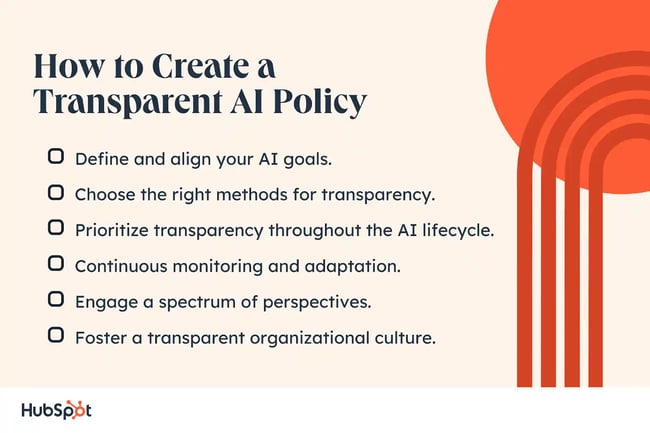
Step 3: Prioritize Transparency Throughout the AI Lifecycle
Transparency is not a final touch; it is a foundational element. Embed transparency practices in every stage, from data collection and modeling to deployment and monitoring. Regularly track changes and provide updates to ensure that users and stakeholders can easily access and understand the AI system. This continuous visibility helps prevent drift and ensures that the system remains aligned with its original intent.
Step 4: Continuous Monitoring and Adaptation
To keep AI technologies in check, regularly evaluate their transparency and functionality. Collect feedback, benchmark against best practices, and be ready to adapt and refine your approach. It is vital to be proactive about understanding and addressing any technical or ethical issues that arise. The AI landscape is dynamic, and your policies must be equally agile to remain effective.
Step 5: Engage a Spectrum of Perspectives
Invite a diverse range of voices into the conversation. Everyone’s perspective matters, from the data scientist crafting the model to the end-user benefiting from it and the executive making key decisions. This collective knowledge enriches the AI’s development and ensures alignment with the company’s broader objectives. Diversity in thought helps identify blind spots and potential biases that a homogeneous team might overlook.
Step 6: Foster a Transparent Organizational Culture
Finally, transparency should be deeply rooted in company culture. It is more than a set of protocols; it is a mindset. Empower your teams to champion transparency, offering them the resources and training they need. Celebrate milestones in your AI transparency journey, setting a standard for the entire industry. When transparency is valued, it becomes a natural part of how work is done.
AI Transparency Best Practices for Marketers
Ensuring transparency is not just about ethical considerations; it is about building a foundation of trust, responsibility, and clarity. For marketers, this means adopting specific practices that integrate transparency into daily operations. These best practices help ensure that AI is used as a trustworthy ally rather than a mysterious black box.
Make Ethical Data Collection a Priority
Quality data is essential, but how that data is collected is equally crucial. Ethical sourcing and unbiased datasets are the cornerstones of a transparent AI system. Make regular assessments to ensure data remains relevant, unbiased, and truly reflective of diverse perspectives. This proactive approach helps prevent the ingestion of flawed or harmful data that could skew AI outputs.
Offer Clear Documentation
Every decision, update, and change in your AI system must be well-documented. Think of this as a detailed record that chronicles your AI’s evolution over time. This documentation ensures that everyone, from strategy architects to sales representatives, remains informed and aligned. Clear records also facilitate audits and help explain AI decisions to external stakeholders if necessary.
Involve Diverse Voices
An inclusive approach ensures AI systems are comprehensive and well-rounded. By incorporating insights from diverse backgrounds and disciplines, you enhance the system’s universality and effectiveness. Diverse teams are better equipped to identify potential biases and ensure that AI solutions serve a broad range of users equitably.
Clearly Define AI Objectives and Limitations
Just as a marketing plan has clear objectives and KPIs, so should your AI strategy. Establish what the AI aims to achieve, but also define what it will not do. Regularly revisit these objectives to ensure alignment with your broader organizational mission. Clear boundaries prevent scope creep and manage expectations regarding AI capabilities.
Implement Continuous Feedback Mechanisms
AI systems require continuous refinement. Establish open channels for feedback from all users, internal or external. This iterative feedback process ensures that your AI remains effective, relevant, and responsive to real-world challenges. True transparency is achieved by listening and acting on the feedback received, creating a loop of improvement.
Follow Established Standards and Guidelines
Navigating the AI landscape means keeping up with regulatory requirements. Align your AI practices with industry-specific standards and guidelines. Familiarize yourself with recognized best practices and remain compliant. Following set guidelines, such as those provided by institutions like the European Commission, ensures that your AI systems are transparent, trustworthy, and ethically sound.
The Path to Sustainable AI Visibility
Transparency in AI is not a milestone; it is an ongoing process. Our State of AI survey found that 64% of marketers believe AI and automation will significantly impact how they do their jobs. This statistic underscores the importance of integrating transparency into your AI strategies from the start. Marketers need to adopt a human-centered design approach to truly integrate transparency, understand dataset limitations, and consistently test models.
Once deployed, constant monitoring and timely updates are essential to ensure the AI remains aligned with objectives. In a tech-driven world, putting humans and transparency at the forefront of AI strategies will set brands apart. It is not just about being visible in search results; it is about being visible as a trusted, ethical, and responsible partner. At AEO/GEO, we empower businesses to win visibility in the AI-driven search era through intelligent content creation and optimization. We believe that the future of marketing belongs to those who can blend technological efficiency with human integrity.
By committing to building AI that is both effective and understandable, brands can navigate the complexities of the digital landscape with confidence. The goal is not to eliminate AI but to harness its power responsibly. As we move forward, the question is not whether to use AI, but how to use it in a way that enhances trust, fairness, and accountability. The path to AI transparency is continuous, but it is a journey worth taking for any brand serious about its future.





