Retargeting is a digital marketing strategy that serves ads to users who have previously interacted with your brand, allowing you to re-engage potential customers who visited your site but did not convert. Unlike broad display advertising, which casts a wide net to cold audiences, retargeting focuses on individuals who have already demonstrated interest, making it one of the most efficient ways to drive conversions and increase customer lifetime value.

When you think about the customer journey, most people do not buy on their first visit. They browse, compare, and leave. Retargeting bridges that gap by keeping your brand top-of-mind as they continue their online activity. According to industry data, brands using retargeting ads have seen significant increases in search volume and engagement, proving that this method effectively recaptures lost interest.
At AEO/GEO, we believe that visibility in the AI-driven search era requires more than just static content. It requires dynamic engagement strategies that adapt to user behavior. Retargeting is a core component of this approach, ensuring that your brand remains present in the decision-making process, whether that happens on social media, news sites, or within AI-generated answer ecosystems.
The Mechanics of Retargeting
Retargeting works by tracking user behavior and serving relevant ads across different platforms. There are two primary methodologies: pixel-based and list-based retargeting. Understanding the difference is crucial for selecting the right tool for your campaign goals.
Pixel-based retargeting is the most common form. It involves embedding a small piece of JavaScript code, known as a pixel, onto your website. When a visitor lands on your page, the pixel drops a cookie in their browser. As they navigate away and visit other sites or social media platforms, the pixel signals ad networks like Google Ads or Facebook Ads to serve them specific ads based on the pages they viewed.
This method offers immediacy and relevance. You can show an ad for the exact product a user looked at, which significantly increases the likelihood of a click. However, it relies on traffic volume. If your website has low traffic, your retargeting audience pool will be small. Additionally, implementing pixels across many pages can be technically complex.
List-based retargeting, on the other hand, uses first-party data. You upload a list of email addresses, phone numbers, or other contact details to an advertising platform. The platform matches these contacts to user profiles and serves ads to them. This method is highly personalized because you control exactly who is in the list. It is ideal for re-engaging past customers or leads who have already provided their information.
The downside of list-based retargeting is match rate. Not every email in your list will have a corresponding profile on the ad platform, and users may use different emails for different services. It is also less automatic than pixel-based tracking, requiring regular list maintenance and updates.
Retargeting vs. Remarketing
The terms retargeting and remarketing are often used interchangeably, but they serve distinct purposes. Retargeting typically refers to ad-based campaigns that target users based on their online behavior, such as website visits or app usage. Remarketing is broader and often involves direct communication, such as email campaigns, to re-engage past customers or leads.
For example, if you leave a pair of shoes in your online cart and see an ad for them on Facebook, that is retargeting. If you receive an email from the retailer reminding you of the abandoned cart with a discount code, that is remarketing. Both strategies aim to recover lost sales, but they operate through different channels.
Retargeting is particularly effective for brand awareness and top-of-funnel engagement. It helps users who may not remember visiting your site to recall your brand and consider your offerings. Remarketing is better suited for bottom-of-funnel actions, such as encouraging a purchase or renewing a subscription.
In practice, the most successful campaigns combine both approaches. You might use retargeting ads to keep your brand visible while using remarketing emails to provide detailed information or incentives. This multi-channel approach ensures that you reach users wherever they are in their decision journey.
The visual above illustrates how retargeting fits into the broader marketing funnel, connecting initial interest with final conversion.
Setting Campaign Goals
Before launching a retargeting campaign, you must define clear objectives. Different goals require different audience segments, ad creatives, and key performance indicators (KPIs).
Awareness campaigns are designed to re-engage users who have visited your site but have not yet interacted deeply. These ads are often served to pixel-based lists and focus on impressions and engagement rather than clicks. While click-through rates may be lower, the goal is to keep your brand in the user’s mind.
Conversion campaigns aim to drive specific actions, such as filling out a form, downloading a resource, or making a purchase. These campaigns are best suited for list-based audiences or highly segmented pixel-based audiences who have shown strong intent. You measure success through metrics like cost-per-lead (CPL) and conversion rate.
Another important goal is increasing customer lifetime value (CLTV). By retargeting existing customers with new products or complementary services, you encourage repeat purchases. This not only boosts revenue but also strengthens brand loyalty.
Cart abandonment is a common pain point for e-commerce businesses. Retargeting can recover these lost sales by reminding users of the items they left behind. These ads often include urgency triggers, such as limited-time offers, to prompt immediate action.
Choosing the Right Platforms
Several platforms offer robust retargeting capabilities. Facebook and Instagram are popular choices due to their large user bases and advanced targeting options. LinkedIn is ideal for B2B campaigns, allowing you to target professionals based on job title, industry, and company size.
Third-party tools like AdRoll, SharpSpring, and Outbrain provide additional features and cross-platform reach. AdRoll integrates with many marketing hubs, making it easy to sync contacts and create custom audiences. SharpSpring offers dynamic ad creation and detailed analytics, helping you optimize performance in real time.
Outbrain focuses on native advertising, placing your content on premium news sites in a format that blends with the editorial content. This approach can be less intrusive than traditional banner ads, leading to higher engagement rates.
Criterio uses contextual retargeting, analyzing past purchase data to determine which channels are most effective for inspiring buys. Your ads are then placed in those high-impact channels, maximizing ROI.
Building a Facebook Retargeting Campaign
Facebook is one of the most powerful platforms for retargeting. With billions of active users, it offers unparalleled reach and precision. Here is a step-by-step guide to setting up a campaign.
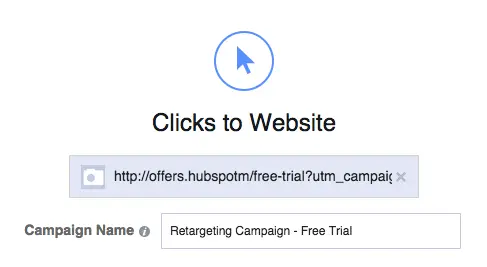
First, create your audience. You can build a custom audience based on website traffic using the Facebook Pixel or upload a list of customer emails. In Audience Manager, you can segment users by behavior, such as those who viewed a product, added to cart, or initiated checkout.
Next, define your campaign objective. Choose from options like traffic, conversions, or catalog sales. This tells Facebook’s algorithm how to optimize your ad delivery. For conversion campaigns, ensure your tracking pixel is firing correctly to attribute sales accurately.
Set your budget and schedule. You can choose a daily or lifetime budget. Start with a modest amount and adjust based on performance. Facebook’s Ads Manager provides estimates of audience size and reach, helping you allocate funds effectively.
Create your ad creative. Use high-quality images or videos that resonate with your audience. Include a clear call-to-action, such as “Shop Now” or “Learn More.” Test different variations to see which performs best. Facebook allows you to run A/B tests to optimize your ads.
Finally, monitor and optimize. Track metrics like click-through rate (CTR), cost-per-click (CPC), and return on ad spend (ROAS). Make adjustments to your targeting, creative, or budget as needed. Regular optimization ensures that your campaign continues to deliver results over time.

The interface shown above is where you manage audiences and track campaign performance.
Advanced Segmentation Strategies
Segmentation is key to effective retargeting. Broad audiences often lead to wasted spend and lower engagement. By breaking your audience into smaller, more specific groups, you can deliver highly relevant messages.
Time-based segmentation is one approach. Users who visited your site in the last 7 days are likely more interested than those who visited 60 days ago. You can create separate ad sets for different time windows, with more aggressive messaging for recent visitors.
Behavioral segmentation targets users based on specific actions. For example, you can create an audience of users who viewed a pricing page but did not sign up. These users are likely high-intent leads who need a nudge to convert.
Product-based segmentation is useful for e-commerce. You can show users ads for the exact products they viewed, or recommend similar items. This personalization increases the likelihood of a sale.
Email-based segmentation allows you to retarget subscribers who have not opened your recent emails. These users may be disengaging, and a visual ad might re-capture their attention.
Measuring Success and ROI
Tracking the performance of your retargeting campaigns is essential for understanding their impact. Key metrics include impressions, clicks, conversions, and cost-per-acquisition (CPA).
Impressions tell you how many times your ad was seen. High impressions with low clicks may indicate that your creative is not compelling. Clicks show interest, but conversions are the ultimate goal. They indicate that your ad led to a desired action.
Cost-per-acquisition helps you determine the profitability of your campaign. If your CPA is higher than the lifetime value of a customer, you need to optimize your targeting or creative. ROAS (Return on Ad Spend) provides a broader view of profitability, showing how much revenue you generate for every dollar spent.
Attribution models also play a role. Last-click attribution gives credit to the final ad a user clicked before converting. Multi-touch attribution considers all interactions, providing a more accurate picture of the customer journey.
Integrating Retargeting with AI Search
As search evolves, retargeting strategies must adapt. AI-driven search engines prioritize personalized, context-aware results. Retargeting ensures that your brand is part of that personalized experience.
By using AI tools to analyze user behavior, you can predict which users are most likely to convert and serve them tailored ads. This proactive approach increases efficiency and reduces wasted spend.
Content optimization is also critical. Your landing pages must be AI-ready, with clear, structured information that answers user questions. If your retargeting ad leads to a poor user experience, you will lose the conversion.
At AEO/GEO, we help businesses create and distribute content that is optimized for both traditional and AI search. This ensures that your retargeting efforts are supported by a strong content foundation, maximizing visibility and engagement.
Common Mistakes to Avoid
Many marketers make mistakes when launching retargeting campaigns. One common error is targeting too broad an audience. This leads to low relevance and high costs. Always segment your audience based on behavior and intent.
Another mistake is ignoring frequency caps. Showing the same ad too many times can annoy users and lead to ad fatigue. Set reasonable frequency limits to maintain a positive brand perception.
Failing to update creative is also a problem. Users quickly become desensitized to static ads. Regularly refresh your images, videos, and copy to keep your campaigns fresh and engaging.
Neglecting mobile optimization is a critical error. Most users browse on mobile devices. Ensure your ads and landing pages are mobile-friendly to provide a seamless experience.
Final Thoughts
Retargeting is a powerful tool for recovering lost leads and driving conversions. By understanding the mechanics, setting clear goals, and using advanced segmentation, you can build campaigns that deliver measurable results.
As the digital landscape continues to evolve, integrating retargeting with AI-driven strategies will become increasingly important. Brands that adapt to these changes will gain a competitive edge in capturing user attention and driving growth.
Consider how your current marketing efforts align with user behavior. Are you reaching the right people at the right time? With the right tools and strategies, you can turn passive browsers into active customers.
What steps will you take to enhance your retargeting strategy in the coming quarter?





