Conversion copywriting is often mistaken for an innate talent. You read a high-performing landing page and wonder if the author was born with a gift for persuasion. The reality is much more practical. Writing copy that converts is a technique. It is a learnable skill based on how the human brain processes information, evaluates risk, and makes decisions.
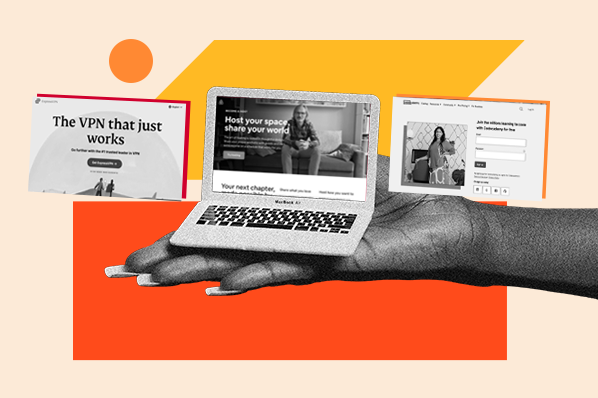
You do not need to be a novelist to write effective landing page copy. You need to understand the psychology of the reader. When you bring traffic to a page, you are interrupting someone’s day. Your job is to earn their attention and guide them toward a specific action. At AEO/GEO, we see this dynamic constantly in how brands optimize for visibility. Whether you are targeting traditional search or emerging generative AI ecosystems, the core principle remains the same: clarity beats cleverness every time.
This article breaks down eight proven techniques for writing landing page copy that drives results. These are not abstract theories. They are actionable strategies derived from data and real-world testing. We will look at how to structure your headlines, leverage social proof, and simplify your message. By the end, you will have a clear framework for turning visitors into customers.
Craft a Headline That Stops the Scroll
The headline is the most critical element on your landing page. Most visitors do not read every word. They scan. They skim. They look for cues that tell them if the page is relevant to their needs. If your headline fails to capture their interest in the first few seconds, the rest of your copy does not matter.
Research suggests that 80% of readers will look at your headline, but only 20% will go on to read the rest of the page. This statistic highlights the importance of getting the opening right. Your headline must be big, strong, and clear. It should promise a benefit or address a pain point directly. Think of it as a hook. If the hook is weak, the fish swims away.
To support your headline, use a compelling subheading. The subheading expands on the headline and pushes the benefit further. It answers the question, “So what?” For example, if your headline is “Increase Sales,” your subheading might be “…without spending more on ads.” This combination gives the reader immediate context and value.
Visual elements also play a role in headline effectiveness. Large, high-quality images or videos that demonstrate your product in action can reinforce your message. Pair these visuals with strong captions. Captions are often read even when the main body text is skipped. Use them to highlight key features or benefits in a concise way.
Breaking your copy into major sections with clear headings helps scanners navigate the page. Use bullet points to list benefits. Keep them short. Long bullet points are hard to digest. Use short paragraphs. Any block of text over five lines can feel intimidating to a skimmer. By structuring your page for readability, you respect the reader’s time and increase the likelihood of conversion.
Leverage Customer Testimonials for Social Proof
One of the most powerful conversion techniques is not writing at all. It is letting your happy customers write for you. Testimonials provide social proof, which is a psychological phenomenon where people assume the actions of others in an attempt to reflect correct behavior for a given situation. In simpler terms, if other people trust you, new prospects are more likely to trust you too.
Testimonials are compelling because they show the prospect what they can expect. They provide a glimpse into the customer experience. When writing your own copy, it is hard to be objective. You know your product inside out, but you might miss the emotional connection. Customers, however, speak from their perspective. They describe the problem they had and the relief they felt after using your solution.
For maximum impact, place testimonials prominently on your landing page. Include a photo of the customer, their full name, job title, and company. Adding a company logo further boosts credibility. This level of detail makes the testimonial feel authentic and verifiable. A quote from “John D.” is less convincing than a quote from “John Doe, CTO at TechCorp,” especially when accompanied by a recognizable logo.
Consider the example of Zapier. Their landing pages feature testimonials front and center. They use photos, quotes, and company details to build trust. This approach works because it reduces perceived risk. When a prospect sees that other real people and reputable companies use your product, they feel safer making a decision.
Social proof is a cornerstone of effective marketing. It bridges the gap between skepticism and trust. By showcasing what your customers say, you let them do the selling for you. This is particularly effective in B2B contexts, where purchasing decisions often involve multiple stakeholders and higher stakes.
Focus on Benefits, Not Features
There is a fundamental shift in how buyers approach purchasing decisions. Customers are no longer passive recipients of sales pitches. They are informed, proactive, and often have already researched solutions before contacting a sales rep. According to recent studies, B2B buyers complete a significant portion of their buyer’s journey online before ever speaking to a human.
This shift means that traditional solution-selling methods are losing effectiveness. Prospects already know what solution they need. They understand their problem and have identified potential solutions. What they do not know is which provider is the best fit for their specific needs. This is where your copy comes in.
Instead of focusing on your product or service, focus on the benefits. Features are what your product does. Benefits are what those features do for the customer. For example, a feature might be “24/7 customer support.” The benefit is “peace of mind knowing you can get help anytime.” People buy outcomes, not inputs.
When you emphasize benefits, you speak the customer’s language. You address their pain points and desires. This creates an emotional connection that features alone cannot achieve. Use clear, benefit-driven language in your headlines, subheadings, and body copy. Make it obvious how your product improves the customer’s life or business.
For instance, a landing page for a landing page builder might highlight “more conversions” and “instant optimization” rather than just listing technical specifications. These benefits resonate with the user’s goal of growing their business. By aligning your copy with the customer’s objectives, you make the value proposition clear and compelling.
Simplify Your Writing for Clarity
Simplicity is the ultimate sophistication in conversion copy. You do not need to use complex vocabulary or intricate sentence structures to persuade. In fact, doing so often works against you. The goal of your copy is to communicate your message clearly and quickly. If the reader has to work hard to understand you, they will likely leave.
Use simple sentence structures. Keep sentences short. Aim for one idea per sentence. This makes your copy easier to scan and digest. Use short words. If you can say “use” instead of “utilize,” do it. Short words are more direct and impactful. Avoid jargon and industry-specific terms unless you are certain your audience understands them.
Clarity does not mean boring. It means being precise. Avoid vague buzzwords like “innovative,” “seamless,” or “best-in-class.” These terms are overused and mean little to readers. Instead, be specific. Describe exactly what your product does and how it helps the customer. Use concrete examples and real-world scenarios to illustrate your points.
Consider the landing page for Optimizely. It is remarkably simple. The headline is clear, the subheading is concise, and the call-to-action is obvious. There is no fluff. This simplicity is effective because it respects the reader’s intelligence and time. It gets straight to the point.
When writing, imagine you are talking to a friend. Use a conversational tone. Use contractions. “You’ll” sounds more natural than “You will.” Use expressions that people use in everyday conversation. This makes your copy feel more human and relatable. By simplifying your writing, you remove barriers to understanding and make it easier for visitors to take action.
Write Like a Human Being
In an age where AI is increasingly used to generate content, the human touch is more valuable than ever. Readers can detect robotic, sterile copy from a mile away. They prefer to connect with other humans, not algorithms. Your copy should sound like a person wrote it, not a machine.
Write the way you speak. Use normal words. If you would not use a word in conversation, do not use it in your copy. For example, “friendly” is better than “convivial.” Break grammar rules if it makes your writing sound more natural. Sometimes, a sentence fragment can be more powerful than a complete sentence.
Use first-person pronouns. “I” and “we” create a sense of intimacy and connection. Share your perspective and experiences. Be vulnerable. Show your personality. If your brand has a sense of humor, let it shine. If you are serious, be authentic in that seriousness. The key is to be genuine.
Ramit Sethi, a personal finance author, is a master of this approach. His writing reads like a personal email to a friend. He uses conversational language, shares personal stories, and challenges conventional wisdom. This style builds trust and engagement. Readers feel like they are having a conversation with him, not being sold to.
When you write like a human, you create an emotional connection. You show that there are real people behind your brand. This builds trust and loyalty. In a crowded market, authenticity is a differentiator. It sets you apart from competitors who rely on generic, corporate-sounding copy.
Use Specific Numbers and Data
Specificity builds credibility. Vague claims are easy to make but hard to believe. When you use specific numbers and data, you provide evidence to support your claims. This makes your copy more persuasive and trustworthy.
Compare these two statements: “Our software increases sales” and “Our software increased sales by 25% for 500 customers in the last year.” Which one is more convincing? The second one provides concrete evidence. It shows that you have results to back up your claims.
Use numbers in your headlines, subheadings, and body copy. Highlight key metrics that matter to your customers. For example, if you offer a scheduling tool, you might highlight the reduction in scheduling errors or the increase in bookings. Be precise. Instead of saying “many customers,” say “over 1,000 customers.”
Calendly is a great example of this technique. Their landing page features specific ROI figures for well-known clients. They show a 169% return on investment for HackerOne and a 160% increase in customers reached for Vonage. These specific numbers are far more impactful than generic statements about growth.
When you use data, you demonstrate expertise and results. You show that you understand your customers’ challenges and have a proven solution. This builds confidence and encourages visitors to take action. Always ensure your data is accurate and up-to-date. Misleading claims can damage your reputation.
Include a Clear Call to Action
A landing page without a clear call to action (CTA) is like a car without an engine. It may look good, but it will not go anywhere. The CTA is the final step in the conversion process. It tells the visitor what to do next.
Your CTA should be prominent and easy to find. Use a contrasting color to make it stand out. The button text should be action-oriented and benefit-driven. Instead of “Submit,” use “Get My Free Guide.” Instead of “Click Here,” use “Start Your Free Trial.” Make it clear what the visitor will get by clicking the button.
Write your CTA copy with the same care as your headline. Test different variations to see what works best. Small changes in wording can have a big impact on conversion rates. For example, HubSpot found that “Download for Free” performed better than “Download Now” in some tests.
Place your CTA above the fold, so it is visible without scrolling. Repeat it further down the page for visitors who need more information before converting. Use whitespace around the CTA to draw attention to it. Avoid cluttering the area with other elements.
A strong CTA removes ambiguity. It gives the visitor a clear path forward. When you make it easy for people to take action, you increase your conversion rates. Do not be shy. Ask for the sale.
A/B Test Your Copy Continuously
Writing great copy is not a one-time task. It is an ongoing process of testing and optimization. You may think you know what works, but data often tells a different story. A/B testing allows you to compare two versions of your copy to see which one performs better.
Test everything. Headlines, subheadings, body copy, images, and CTAs. Even small changes, like a single word in your headline, can make a significant difference. For example, changing “Free” to “Free Trial” might increase clicks.
Use a systematic approach. Change one element at a time. This way, you know exactly what caused the change in performance. Run tests long enough to gather statistically significant data. Do not stop a test too early.
HubSpot regularly tests its landing page copy. In one test, they tried three different CTA button texts against a control. They found that “Download for Free” outperformed “Download Now” and “Download the Free Template.” This insight helped them optimize their pages and increase conversions.
A/B testing removes guesswork. It provides data-driven insights that guide your copywriting decisions. By continuously testing and optimizing, you can steadily improve your conversion rates over time. Embrace experimentation. The best copy is the copy that works.
Final Thoughts on Conversion Copy
Writing landing page copy that converts is a skill that combines psychology, strategy, and creativity. It is not about using fancy words or complex sentences. It is about communicating value clearly and persuasively. By focusing on your headline, leveraging social proof, emphasizing benefits, simplifying your writing, sounding human, using specific data, including clear CTAs, and testing continuously, you can create copy that drives results.
Remember that your copy is not just text. It is a reflection of your brand. It shapes how people perceive you. Take the time to craft it carefully. Respect your readers’ time and intelligence. Provide value. Build trust. And always be willing to test and improve. In the world of digital marketing, the best copy is the copy that keeps evolving.





