AEO Citations: Why They Beat Backlinks for AI
Historically, the SEO community has treated backlinks like digital gold. If you gathered enough high-authority links, your rankings would climb, and traffic would follow. We were taught that popularity equaled reliability. However, this old-school obsession is quickly becoming a relic of a bygone era.
Modern AI engines like ChatGPT, Perplexity, and Claude don’t operate on popularity contests. They operate on factual accuracy and direct, evidence-based answers. The era of generative search is here, and it demands a fundamental shift in how you build online authority.
If you want to stay relevant today, you must grasp the role of citations in AEO: why citations matter more than backlinks for AI visibility. Instead of chasing vague link-building metrics, successful brands focus on being the most reliable source for the machine. By prioritizing clear data, you position your brand as a foundational pillar in AI-generated responses. This is a transformative opportunity for growth-focused businesses to capture prime real estate in the future of search.
The Role of Citations in AEO: Why Citations Matter More Than Backlinks for AI Visibility
For a long time, the SEO world operated on a simple premise: the more websites that linked to your content, the higher you ranked. It was essentially a popularity contest where domain authority reigned supreme. The rise of generative search fundamentally rewrites this rulebook. As users turn to AI engines for direct answers rather than blue links, measuring accuracy over volume becomes critical.
Accuracy Over Popularity
AI models, such as those powering Perplexity or ChatGPT, function differently than traditional search crawlers. They synthesize vast amounts of information to provide a concise, factual summary. Because these engines prioritize factual accuracy, they aren’t looking for a high volume of backlinks as a proxy for quality.
Instead, they evaluate content based on its informational density and its ability to provide a definitive answer to a user’s query. In this new paradigm, being selected as a source depends less on who knows you and more on how well you explain the truth. If your content offers a clear, structured, and fact-backed answer, the AI recognizes it as a reliable resource. This happens regardless of how many other sites link back to your domain.
Shifting the Goalposts: SEO vs. AEO
The traditional SEO goal has long been the accumulation of backlinks to build domain authority. While backlinks still hold value, the AEO goal shifts toward being selected as a primary source of information.
Answer Engine Optimization (AEO) is the practice of structuring content so AI models can easily read, understand, and cite it as a definitive source. Think of it this way: SEO was about driving traffic to your landing page, whereas AEO is about having your content’s key insights featured directly within the AI’s response.
AI engines view citations as a more reliable indicator of authority. They reflect a direct connection between a specific piece of information and the source that provides it. When an AI generates a response, it essentially acts as an expert researcher. It chooses to cite content that is highly relevant, semantically clear, and factually sound.
According to the experts at AEO/GEO, shifting your focus from building a web of links to crafting inherently citeable content aligns perfectly with how modern machines validate information. This ultimately improves your AI visibility score. You are transitioning from measuring popularity to measuring accuracy. This ensures your brand remains visible in a future where answers matter more than clicks.
The Mechanics of AI Citation Selection
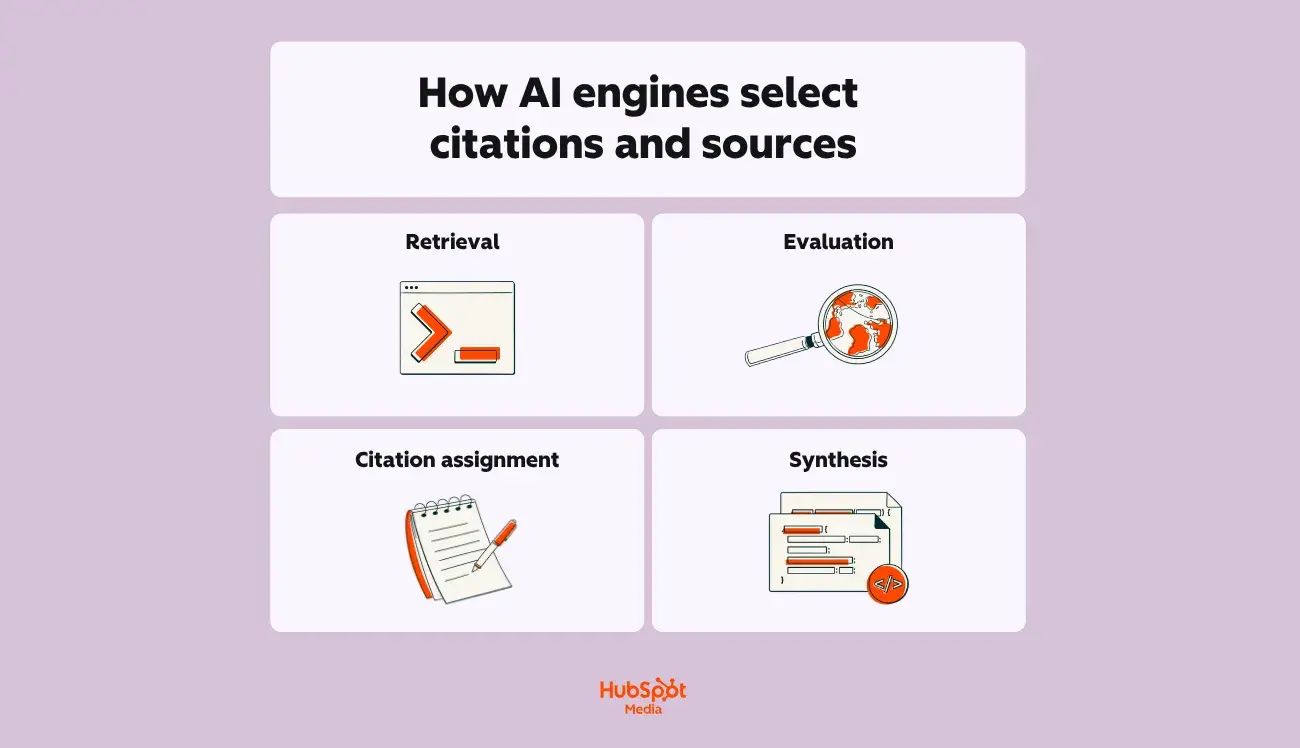
When you query an AI engine, it isn’t just surfing the web like a traditional search engine. It performs a sophisticated retrieval process that mimics human research but at machine speed. To get your content cited, you must understand that AI engines prioritize machine-readable content that demonstrates high semantic clarity.
Rather than simply scanning for keywords, these models analyze the underlying intent and the logical structure of your page. They want to determine if your information provides a precise, reliable answer.
AI models favor content that follows a clear, hierarchical flow. When an engine reads your site, it looks for well-defined headings, bulleted lists, and concise paragraphs that encapsulate specific ideas. If your content is structured like a disorganized document, the AI will likely bypass it.
Instead, it searches for a page where the answer is easily extractable. Think of this as organizing your digital library so a visitor can find exactly what they need immediately. You want to save them from having to read the entire volume.
The Power of Factual Density
While structure gets the AI to pay attention, factual density earns the actual citation. AI engines constantly search for evidence to support their generated answers. They have a strong preference for high-value, verifiable data.
This includes statistics, clearly defined frameworks, proprietary research, and step-by-step instructions. If your page contains vague assertions, it is unlikely to be selected. However, if you include a unique data point, that information becomes a high-probability candidate for a citation. By providing dense information, you make yourself an essential source of truth.
Completeness Within the Page
Modern generative search optimization requires you to provide a self-contained answer. Unlike traditional SEO, where you might entice a user to click through multiple pages, AI engines prefer comprehensive solutions on one page. If a user asks a question, the AI aims to provide the full answer immediately.
Therefore, your content must provide the most complete and digestible explanation on a specific topic within a single page structure. When you do this, the model is far more likely to cite your content as its primary reference.
Comparing Link Signals and Citation Signals
To master this transition, it helps to look at how the signals we measure are changing. The following table highlights the difference between traditional link-building metrics and the modern requirements for AI visibility.
| Metric Type | Traditional SEO (Backlinks) | AEO (Citations) |
|---|---|---|
| Primary Signal | Domain popularity (PageRank) | Factual accuracy and intent match |
| Success Indicator | Number/authority of incoming links | Frequency of inclusion in LLM responses |
| Value Driver | Site-wide authority | Content-level topical depth |
| User Focus | Click-through rate (CTR) | Answer quality and directness |
| Goal | Building site reputation | Becoming an authoritative knowledge source |
By shifting your focus to high-density, well-structured content, you directly improve your AI visibility score. AI engines care about who offers the most accurate, concise, and structured answer to the user’s specific query. Embracing this shift is the key to thriving in the era of AI search.
What Actually Earns an AI Citation?
When aiming to become the go-to source for an AI, you need to step away from the popularity contest of backlinks. AI engines look for who has the most accurate, reliable, and well-structured answer. Earning an AI citation boils down to providing high-value information that is easy for machines to consume and trust.
The Power of Originality and Proprietary Data
Generative search engines are hungry for unique insights that aren’t just recycled from a hundred other blogs. If you want to stand out, prioritize original research. This data provides the factual density AI needs, whether it’s an industry survey, a proprietary methodology, or a unique case study.
When you define concepts clearly and use your own research to back up claims, you create a primary source. Large Language Models (LLMs) are trained to favor content that feels definitive. This helps them avoid hallucinations by anchoring their responses in verified, specific data points.
Structure: The Bridge to Machine Trust
Beyond the quality of your words, the architecture of your page determines whether an engine sees your value. AI engines rely on machine-readable content to navigate the web, and they prioritize pages that make that process simple. Think of your structure as the roadmap that tells the AI exactly what your content is about.
To build this bridge, ensure you use:
- H-tags (Heading tags): Organize your ideas logically from H2 to H3. This creates a semantic hierarchy that helps the AI understand the flow and focus of your arguments.
- Schema Markup: Use structured data to explicitly label your content as Article, FAQPage, or HowTo. This gives engines a literal instruction manual on how to interpret your page.
- Clear Definitions: Start sections with a concise definition paragraph. This structure is highly favored by search algorithms because it provides an instant, accurate snippet.
Expert-Level vs. Generic Content
Generic content is easy to find, but it’s rarely cited. If your article reads like a rephrased version of Wikipedia, you offer the AI no incentive to cite you over someone else. You absolutely need to provide expert-level depth.
When an AI engine processes a query, it searches for the most comprehensive and authoritative response available. Expert-level content offers nuanced perspectives, detailed checklists, or step-by-step guidance. This depth gives the model something substantial to extract and reference.
Your Citation-Ready Creation Checklist
To ensure every piece of content you produce is a prime candidate for an AI citation, run it through this checklist before hitting publish:
| Checklist Item | Why It Matters |
|---|---|
| Includes primary data or original research | Establishes you as a unique, authoritative source. |
| Uses consistent, logical heading hierarchy | Makes the content machine-readable and easy to index. |
| Features clear, stand-alone definitions | Provides a perfect snippet for AI answers. |
| Implements relevant Schema markup | Communicates the content’s exact purpose to search engines. |
| Offers deeper insights than existing top results | Positions you as the high-authority answer. |
By following this approach, you effectively train the AIs to recognize your domain as a reliable expert. Over time, this builds the topical authority vs domain authority advantage that keeps your brand relevant. You make your content the most helpful, logical, and factual resource available on the subject.
Actionable Strategies to Increase Your AI Visibility Score
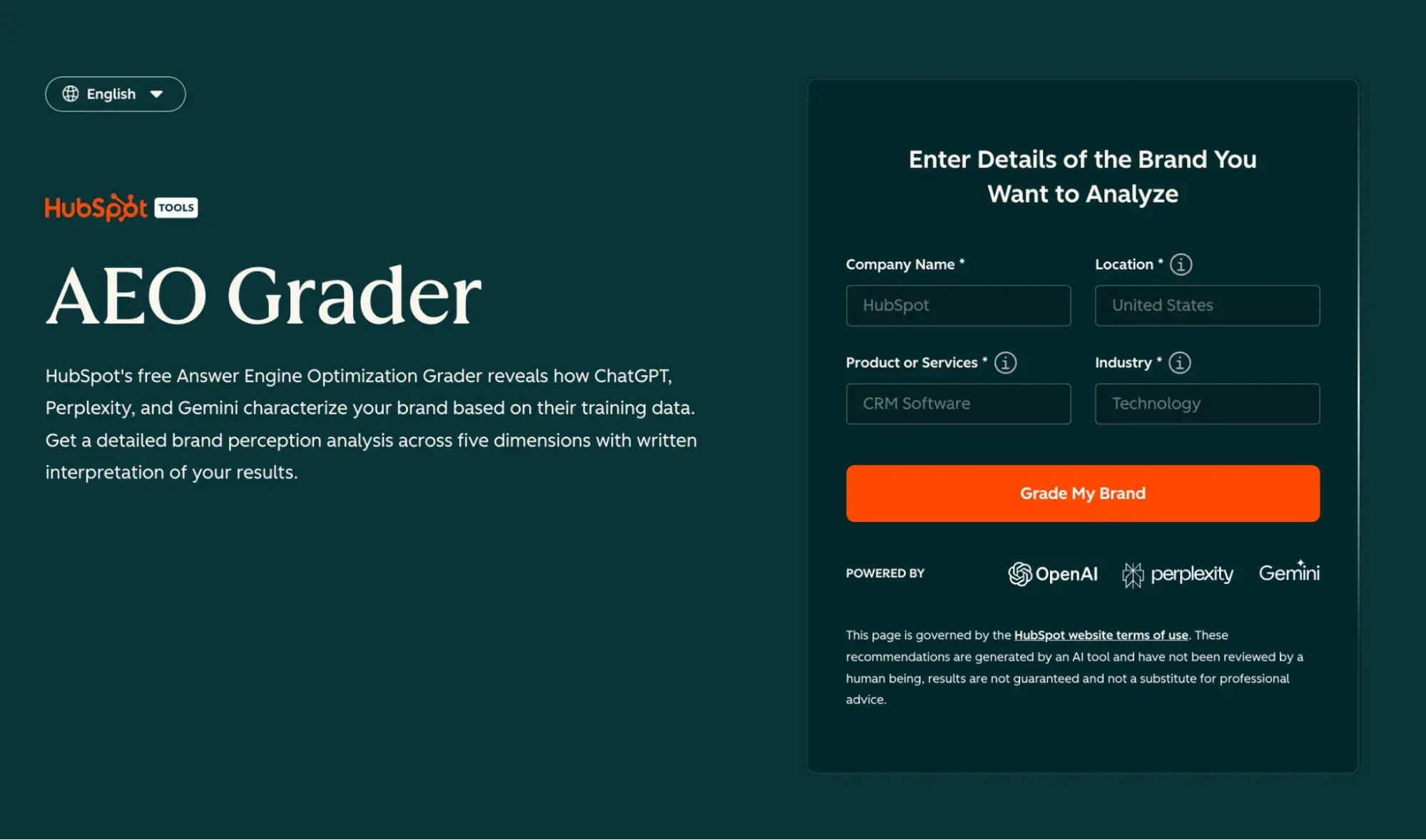
Boosting your AI visibility score requires moving beyond traditional link-building tactics and focusing on how machines consume information. Your content must be structurally sound and factually precise. This allows generative AI models to trust and cite your pages with absolute confidence.
Auditing Content for Machine Readability
Before you create new content, you must ensure your existing assets are machine-readable. Start by auditing your high-traffic pages to see if they offer clear, concise answers to the questions your audience asks.
- Check Structural Hierarchy: Use logical H2 and H3 tags. AI models rely on these headers to outline the content and understand the relationship between topics.
- Implement Schema Markup: Use specific schema markup types to label your content. This structured data provides the machine with clear definitions of your content formats.
- Assess Answer Directness: Look at your introductory paragraphs. Do they answer the search intent within 50 words? If not, rewrite them to provide an immediate, definitive answer.
Improving Factual Specificity and Depth
Generative AI models prioritize content that provides concrete evidence rather than vague generalizations. Transform your existing, high-value assets into expert-level resources to increase your chances of being cited.
- Quantify Everything: Where you have opinions or general statements, add specific statistics, research data, or industry benchmarks.
- Use Defined Frameworks: Organize your insights into named frameworks, step-by-step methodologies, or comparative matrices instead of writing broad descriptions.
- Add Expert Context: Quote internal subject matter experts or cite peer-reviewed studies directly within the text to build topical authority vs domain authority.
Signalling Freshness to AI Engines
AI engines frequently re-crawl the web, but they favor content that is actively maintained. If your information is outdated, you lose trust. Create a recurring schedule to signal freshness:
- Review Dates: Update the last modified timestamp on your articles regularly to show that the content has been reviewed for accuracy.
- Update Data Points: Swap out old statistics for the latest available data every six months.
- Expand Upon Emerging Trends: Add sections to your existing high-performing posts based on new industry developments, ensuring they remain the most complete answer available.
Building Third-Party Authority
Being present where your audience and the AI models look for information is crucial for generative search optimization. Your brand’s reach isn’t just about your own website; it’s about being visible across the broader digital ecosystem.
Ensure your brand is active on authoritative third-party platforms, such as industry publications or specialized forums. When these platforms reference your proprietary research, it creates a powerful signal that increases your authority. This makes it significantly easier for AI engines to discover and cite your content as a reliable source of truth.
The Future of Search Belongs to Reliable Answers
The transition from link-based authority to citation-based relevance represents the most significant shift in search history. Where search engines once relied on the popularity of backlinks to rank websites, AI engines now operate as knowledge architects. They curate information rather than just pointing to pages.
When an AI engine synthesizes a response, it calculates your factual density and checks if your content provides a definitive answer. If your content is structured clearly and backed by verified data, you become a trusted source. You transform from a mere link into an authoritative citation.
To thrive in this environment, audit your current assets immediately. Focus on structuring your data in clean, logical formats that machines can easily parse. Securing your brand’s presence in the future of search requires making your expertise undeniable. Start optimizing your content for answer engines today, and watch your brand become the go-to source in the AI-driven landscape.
AEO/GEO
Want to learn more?
Contact us for direct consultation and support.