AI Content Unit Economics: CAC & ROI vs Traditional SEO
Your organic traffic is climbing, but your revenue isn’t. It’s the modern marketer’s nightmare: you’re winning the battle for visibility yet losing the war for profitability. Traditional SEO often delivers vanity metrics that mask brutal inefficiencies. Meanwhile, scaling human writing teams burns cash through high production costs and slow turnaround times. The missing link in most marketing plans is unit economics.
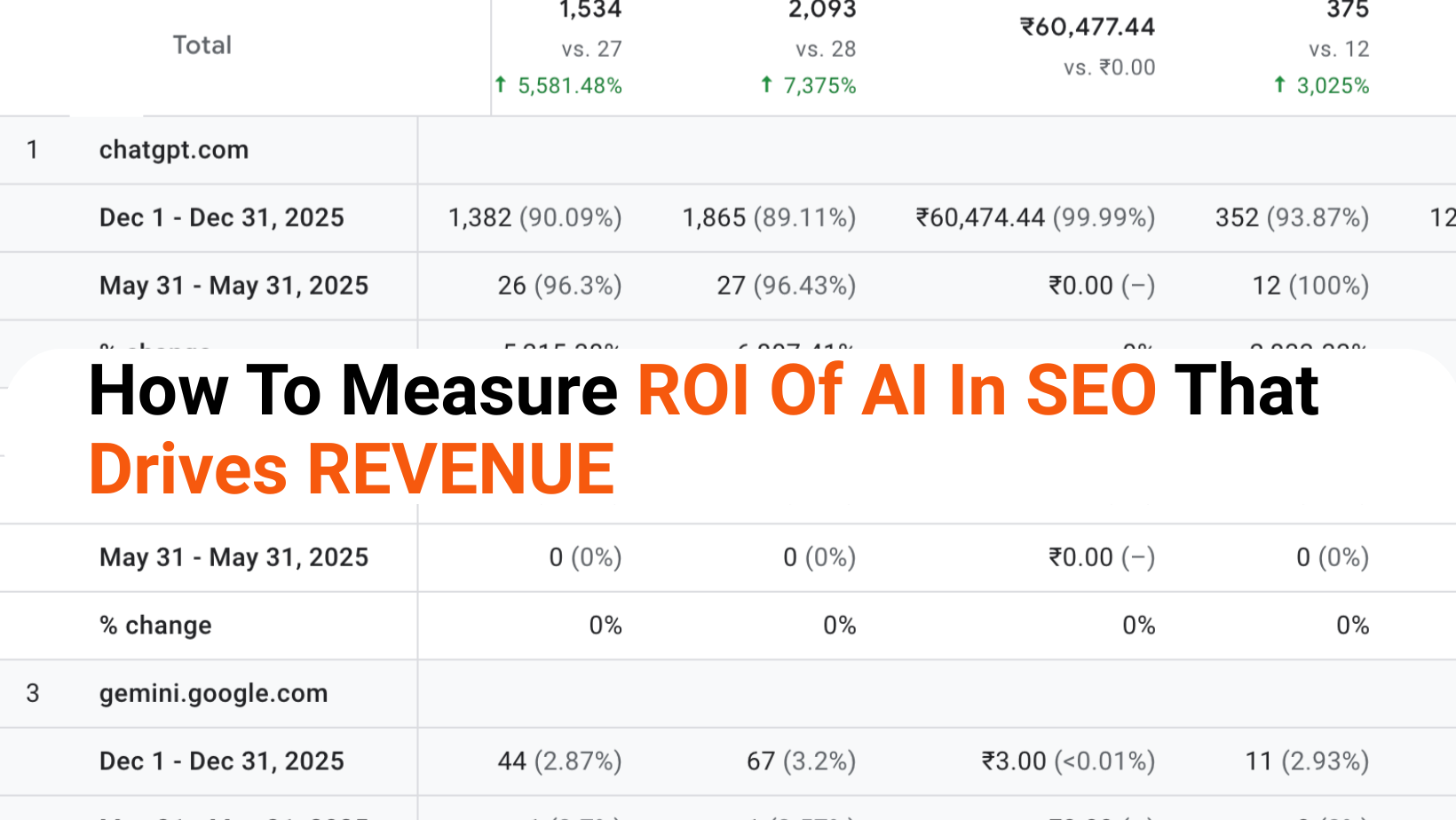
An effective AI Content Strategy for the AI Era stops obsessing over impressions and starts calculating the true cost per acquisition. This isn’t about replacing creativity; it’s about fixing broken math. We’ll compare the hidden overhead of traditional hiring against the scalable efficiency of AI, focusing on real money saved and actual revenue generated. It’s time to trade guesswork for clear financial returns.
The Hidden Cost Equation: Human Writers vs. AI Automation
Most marketers calculate their content budget based on the invoice they receive, not the true operational cost. This creates a dangerous blind spot in your P&L statement. When you hire a freelance writer for $150 per article, that isn’t just a line item—it’s the tip of an iceberg involving project management, editorial review, and opportunity costs. Understanding this hidden equation is the first step toward building a scalable AI Content Strategy for the AI Era.
The True Price of Human-Centric Production
Traditional content production is labor-intensive by design. A mid-tier freelance writer might charge between $50 and $300 per piece, depending on expertise. But the clock keeps ticking after they submit the draft. You likely spend 1–2 hours briefing them, another hour reviewing the first draft for brand alignment, and potentially two rounds of revisions to fix tone or factual errors.
When you factor in your own hourly rate—or that of a content manager—the effective cost per article often doubles or triples. If your time is worth $100/hour and you spend three hours managing one piece, that $150 article now costs you $450 in total resources. This model doesn’t scale. Producing 100 articles requires massive coordination, multiple vendor relationships, and significant quality control overhead.
The Fixed-Cost Advantage of AI Automation
AI tools flip this variable-cost model on its head. Instead of paying per unit of output, you pay a fixed monthly subscription fee. Platforms range from $50 to $500 per month depending on volume and features. Once you cover the tool’s cost, the marginal expense of generating an additional article is near zero.
The human role shifts from creator to editor. Rather than writing from scratch, your team spends 15–30 minutes fact-checking, refining brand voice, and optimizing for search intent. This reduces management overhead drastically. You aren’t juggling deadlines with external freelancers; you’re overseeing a streamlined internal workflow.
Unit Cost Per Article: A Direct Comparison
To visualize the financial impact, let’s compare the cost of producing 100 articles using traditional methods versus an automated AI workflow. These numbers assume an average scenario for a small-to-medium business.
| Cost Component | Traditional Human Workflow | AI-Assisted Workflow |
|---|---|---|
| Writing Fee | $15,000 ($150 x 100) | $0 (Included in subscription) |
| Project Management | $3,000 (10 hrs/month @ $25/hr) | $500 (5 hrs/month @ $100/hr for oversight) |
| Editing & Revisions | $2,000 (8 hrs/month @ $250/hr agency fee) | $300 (3 hrs/month internal editor time) |
| Tool/Software Costs | $100 (Project management tools) | $297 (AI subscription + SEO plugins) |
| Total Cost for 100 Articles | $20,100 | $1,097 |
| Cost Per Article | $201 | $11 |
From Variable Expense to Scalable Asset
Traditional SEO relies on one-off human creativity, which inherently caps your volume. AI allows you to produce consistent output at a near-marginal cost. This shift dramatically lowers your cost per acquisition over time. Instead of spending $201 to attract a single visitor through organic search, you spend roughly $11. That $190 savings can be reinvested into promotion, link building, or further content expansion.
By treating content as a scalable asset rather than a recurring expense, you transform your marketing budget from a cost center into a growth engine. This efficiency is the core of AI content ROI vs traditional SEO advantages.
Calculating CAC: Why AI Content Lowers Your Customer Acquisition Cost
You’ve likely heard the term Customer Acquisition Cost (CAC) bandied about in marketing meetings, but what does it actually mean when we’re talking about organic search? In simple terms, CAC is the total amount of money you spend on sales and marketing to acquire one new customer. When you rely on paid ads, this calculation is straightforward: divide your ad spend by the number of conversions. But for content marketing, the equation gets fuzzier. You’re trading time, writer salaries, and editing hours for potential traffic that might never convert. This ambiguity is exactly where many traditional SEO strategies bleed money silently.
The Problem with Ignoring Long-Tail Keywords
Traditional human-led content teams often focus on high-volume, competitive keywords. Why? Because hiring a writer to produce a generic “Best Running Shoes” guide is a safe bet. However, these broad terms come with massive competition and slow ranking times. Meanwhile, highly specific, long-tail keywords like “best running shoes for flat feet under $100” represent what we call high-intent traffic. These users are further down the funnel—they know what they want and are ready to buy.
The issue? Human writers find it inefficient to target hundreds of these narrow queries. The research time and creative overhead don’t scale well when you’re trying to capture every possible variation of a buyer’s question. Traditional SEO often ignores these “low-hanging fruit” opportunities because the cost per article feels too high relative to the modest traffic volume each individual query might bring.
Compounding Assets Without Compounding Costs
This is where AI content ROI vs traditional SEO begins to show its true financial advantage. With an AI-powered workflow, producing detailed, specific answers for long-tail queries becomes incredibly cheap and fast. You aren’t just writing one article; you’re building a compounding asset library.
Imagine capturing 100 different long-tail queries in your niche. Each one might only bring in ten visitors a month. On its own, that’s negligible. But collectively, those 100 articles drive 1,000 highly targeted visitors monthly. Because you used AI to generate the bulk of this content, your incremental spend remained nearly flat. You didn’t hire three new writers or pay for expensive guest posts. You simply scaled output using a fixed software subscription. This creates a flywheel effect: as your library grows, so does your total organic footprint, driving down your overall CAC without requiring proportional increases in budget.
Real-World Example: Guest Posts vs. Owned Pages
Let’s look at the hard numbers to see how drastically AI can reshape your unit economics.
Suppose you are a SaaS company trying to attract small business owners. Your current strategy involves paying $500 per high-ticket guest post on industry blogs. Let’s say each guest post generates five qualified leads over its lifetime.
- Cost per Lead: $500 / 5 = $100 per lead.
Now, shift to an AI-assisted owned-page strategy. You create ten landing pages targeting specific long-tail queries related to your software’s use cases.
- AI Tool Subscription: $100/month (amortized over hundreds of articles, this is negligible per piece).
- Editorial Oversight: 5 hours total for fact-checking and tone alignment at $25/hour = $125.
- Total Production Cost for 10 Pages: ~$125 + tool fees ≈ $150.
Let’s assume these ten AI-generated pages collectively capture the same amount of high-intent traffic as your guest post strategy, resulting in twenty-five leads (five times the output due to higher search volume coverage).
- Cost per Lead: $150 / 25 = $6 per lead.
By switching from expensive third-party placements to scalable AI-owned pages, you reduced your cost per lead by over 90%. This dramatic shift directly lowers your CAC, allowing you to reinvest those savings into product development or other growth areas instead of constantly feeding the content mill.
Speed to Market: The Revenue Impact of Time Savings
When you weigh the value of content against time rather than just dollars, a new perspective emerges. Waiting three weeks for a human-written draft means losing three weeks of potential organic traffic, social shares, and backlinks. In fast-moving industries like SaaS, finance, or news, that delay can cost you your window of relevance entirely. AI-assisted workflows compress this timeline from weeks to hours. You can publish high-quality content the moment a trend emerges, capturing search volume before competitors even finish brainstorming their headlines.
This velocity creates a compounding advantage in SEO agility. Search algorithms and user interests shift daily, but traditional editorial calendars are rigid and slow to pivot. If a major industry regulation changes overnight or a new technology gains viral traction, AI allows you to update existing articles or publish fresh pieces within hours. This responsiveness signals freshness to search engines, boosting rankings for timely queries. Conversely, competitors stuck in manual production cycles miss the early wave of search intent, ceding ground that is difficult to reclaim later.
Accelerated Revenue Attribution
Faster publication directly translates into earlier revenue attribution. Traditional SEO often operates on a long lag time, where content might not rank or generate leads for months. With AI-enabled speed, you begin testing headlines, angles, and keywords immediately. You can publish ten variations of a landing page strategy in a week instead of one per month. This rapid iteration allows you to identify high-converting topics faster, shortening the path from content creation to customer acquisition.
Consider the finance sector, where interest in specific investment trends lasts only days or weeks. A business publishing an AI-assisted guide on a trending cryptocurrency within hours of the news breaks captures immediate search traffic. By the time traditional outlets publish their deep-dive interviews two weeks later, the peak search volume has already passed. The first mover doesn’t just get clicks; they capture leads while intent is at its highest, resulting in better conversion rates and lower acquisition costs.
Dominating Niche Topic Clusters
Speed also allows brands to dominate niche topic clusters before competitors can organize a defense. Building topical authority requires covering a subject comprehensively, often involving dozens of interlinked articles. Doing this manually takes months or years. AI workflows enable you to map out a cluster and produce the necessary content in a matter of days. This rapid saturation builds semantic relevance faster, helping search engines understand your expertise quickly.
| Metric | Traditional Workflow | AI-Assisted Workflow |
|---|---|---|
| Drafting Time | 5–10 business days | 2–6 hours |
| Editorial Review | 3–5 business days | Same-day review |
| Publication Speed | 2–4 weeks total | < 48 hours total |
| Trend Responsiveness | Low (missed opportunities) | High (real-time updates) |
This dominance isn’t just about volume; it’s about strategic positioning. By quickly filling gaps in your content ecosystem, you prevent competitors from owning those search terms. You control the narrative and guide users through a structured journey rather than leaving them to bounce to other sites for information you haven’t published yet.
Opportunity Cost of Delay
Every day spent waiting for a manual draft is an opportunity cost. While you wait, competitors are capturing traffic, building backlinks, and engaging users on social media. The compound effect of delayed publication means you’re not just losing one week of traffic; you’re falling behind in ranking momentum that takes months to recover. AI reduces this risk by ensuring your content pipeline never stalls.
Ultimately, speed is a revenue multiplier. It allows you to test more ideas, react to market shifts instantly, and build topical authority rapidly. This agility transforms your content strategy from a slow-burn tactic into a dynamic growth engine capable of adapting to the fast-paced digital landscape without burning out your team or budget.
Attribution Challenges: Tracking ROI for AI-Generated vs. Traditional Content
You can produce ten times more content with AI than you could with a team of freelance writers, but volume means nothing if you cannot tie it to revenue. The biggest hurdle in AI content strategy for the AI Era is not writing faster; it’s proving that those words actually earned money. Many marketers fall into the trap of celebrating skyrocketing organic traffic while their conversion rates remain flat. This happens because traditional attribution models often fail to capture the complex, multi-touchpoint journey of a modern buyer who interacts with numerous pieces of content before purchasing.
The Shift from Linear to Multi-Touchpoint Attribution
Traditional SEO attribution usually relies on straightforward metrics like UTM parameters or direct referral traffic. If a user clicks an ad and buys, you count it. Simple. However, AI-generated content often operates differently. It creates a dense web of informational assets—FAQs, long-tail guides, and comparison tables—that users might visit weeks before they are ready to buy.
In this model, the AI article might not generate the final sale directly. Instead, it builds trust early in the funnel. A user might read an AI-generated guide on “best project management tools,” bookmark it, research competitors for a month, and finally return through a different channel to purchase. Standard last-click attribution credits that final touchpoint, completely ignoring the foundational role your AI content played. To understand AI content ROI vs traditional SEO, you need to look at assisted conversions. You must measure how many times your AI articles appeared in the path to purchase, not just how many times they were the exit point.
Setting Baselines to Measure Incremental Lift
You cannot measure growth if you do not know where you started. Before launching a scaled AI content initiative, establish a clear baseline for your current organic performance. Document your existing traffic levels, conversion rates, and average order value for specific keyword clusters.
Without this step, you will struggle to separate the impact of AI from other variables like seasonality or broader brand awareness campaigns. For example, if your Q4 sales spike after implementing AI content, is it due to the new articles, or just the holiday shopping rush? By comparing pre-AI performance against post-implementation data within the same timeframes, you can isolate the incremental lift. This allows you to calculate the true marginal revenue generated by each dollar spent on AI tools versus human labor.
| Metric | Traditional Attribution Model | AI-Driven Attribution Model |
|---|---|---|
| Focus | Last-click conversion | Multi-touchpoint assistance |
| Data Source | Direct referrals, UTM tags | Assisted conversions, session history |
| Timeframe | Immediate (24-48 hours) | Long-term (weeks to months) |
| Primary Goal | Prove direct sales impact | Prove funnel nurturing value |
Tying Conversions to Specific Content Clusters
To prove financial impact, move beyond vanity metrics like page views. Instead, track conversions tied to specific AI-generated content clusters. Group your articles by topic intent—such as “pricing comparisons” or “how-to guides”—and monitor which clusters consistently drive high-intent actions like demo requests or newsletter signups.
This approach highlights the generative engine optimization unit economics of your strategy. You might find that while broad overview articles bring in traffic, the AI-generated technical deep-dives are the ones actually closing leads. By assigning revenue values to these cluster-specific conversions, you create a clear line of sight between your content production costs and your bottom line. This data-driven visibility ensures you are not just producing content for the sake of scale, but for measurable growth.
Building Your Break-Even Template: When Does AI Pay Off?
Knowing the break-even point AI marketing reaches is crucial before you fully commit to automation. You cannot measure success if you do not know where neutral ground lies. To determine when your investment in tools pays off, you need a concrete framework rather than guesses. Start by mapping out your total monthly costs. This includes your subscription fees for AI platforms, the hourly rate you or your team spends on editing and oversight, and any associated software for keyword research. Compare this against the traditional cost of hiring freelance writers. If your current content strategy costs $2,000 a month and your new automated workflow costs $800, the math becomes straightforward. However, cost savings are only half the equation; you must also factor in revenue generation.
Identifying Key Variables for Accuracy
To build an accurate model, isolate four specific variables that drive your unit economics. First, calculate your total tool stack expenses. Second, determine your internal labor rates for oversight. Even with automation, humans manage quality control. Third, project your expected organic traffic growth based on historical data or industry benchmarks. Fourth, establish realistic conversion rate assumptions. These rates vary wildly by industry, so use conservative estimates to avoid false optimism.
| Variable Category | Traditional SEO Cost | AI-Assisted Workflow Cost |
|---|---|---|
| Content Production | High variable cost per article | Low fixed cost (subscriptions) |
| Editorial Oversight | Significant time for drafts | Minimal time for polish |
| Scaling Costs | Increases linearly with volume | Near-marginal cost increase |
| Speed to Publish | Weeks per piece | Hours per piece |
The Readiness Checklist
Use this logic as a simple calculator to decide if you are ready to switch. Ask yourself three questions. First, can you produce more than 10 pieces of content per month consistently? Second, is your current customer acquisition cost (CAC) higher than the lifetime value (LTV) of those customers justifies? Third, do you have the internal bandwidth to edit AI outputs without creating a bottleneck? If you answered yes to these questions, moving toward an AI Content Strategy for the AI Era makes financial sense. This checklist helps small business owners avoid adopting tools they cannot effectively manage or scale.
Volume Dictates Speed to Profitability
The most critical insight is that volume accelerates your return on investment. Businesses with high-volume content needs, such as e-commerce sites or news portals, reach their break-even point almost immediately. They replace dozens of expensive writer hours with a single subscription fee. For these companies, the savings compound weekly. Conversely, businesses with low-frequency publishing schedules, like law firms posting one blog a month, take much longer to see a payoff. Their fixed tool costs remain the same regardless of output volume, diluting the efficiency gains. Therefore, analyze your content appetite. If you publish frequently, AI pays off faster. If you publish rarely, focus on quality enhancement rather than pure cost reduction. This distinction ensures you align your technology spend with your actual production demands.
Shifting from traditional SEO to an AI Content Strategy for the AI Era fundamentally changes how you view marketing spend. It’s not about replacing human creativity; it is about optimizing unit economics so every dollar delivers measurable value. By lowering production costs and accelerating time-to-market, AI content drastically reduces your customer acquisition cost (CAC) while maintaining high-quality output. The financial advantage comes from scaling volume without scaling labor costs, turning content into a compounding asset rather than a recurring expense.
Now is the time to audit your current content budget. Pull out last quarter’s invoices for freelancers, editing hours, and project management overhead. Compare that total against the fixed subscription cost of an AI workflow. Then, launch a small-scale pilot program targeting low-competition, long-tail keywords. Track the real-world changes in speed and conversion rates over 30 days. This hands-on approach proves ROI faster than any theoretical model ever could.
Take control of your marketing budget by letting data drive your decisions. When you optimize for efficiency and scale, you stop guessing what works and start knowing exactly how much each piece of content earns. In this era, the businesses that thrive are those who treat content as a scalable financial engine, not just a creative exercise.
AEO/GEO
Want to learn more?
Contact us for direct consultation and support.