Beyond Keyword-Driven SEO: How LLMs Evaluate Your Existing Archive
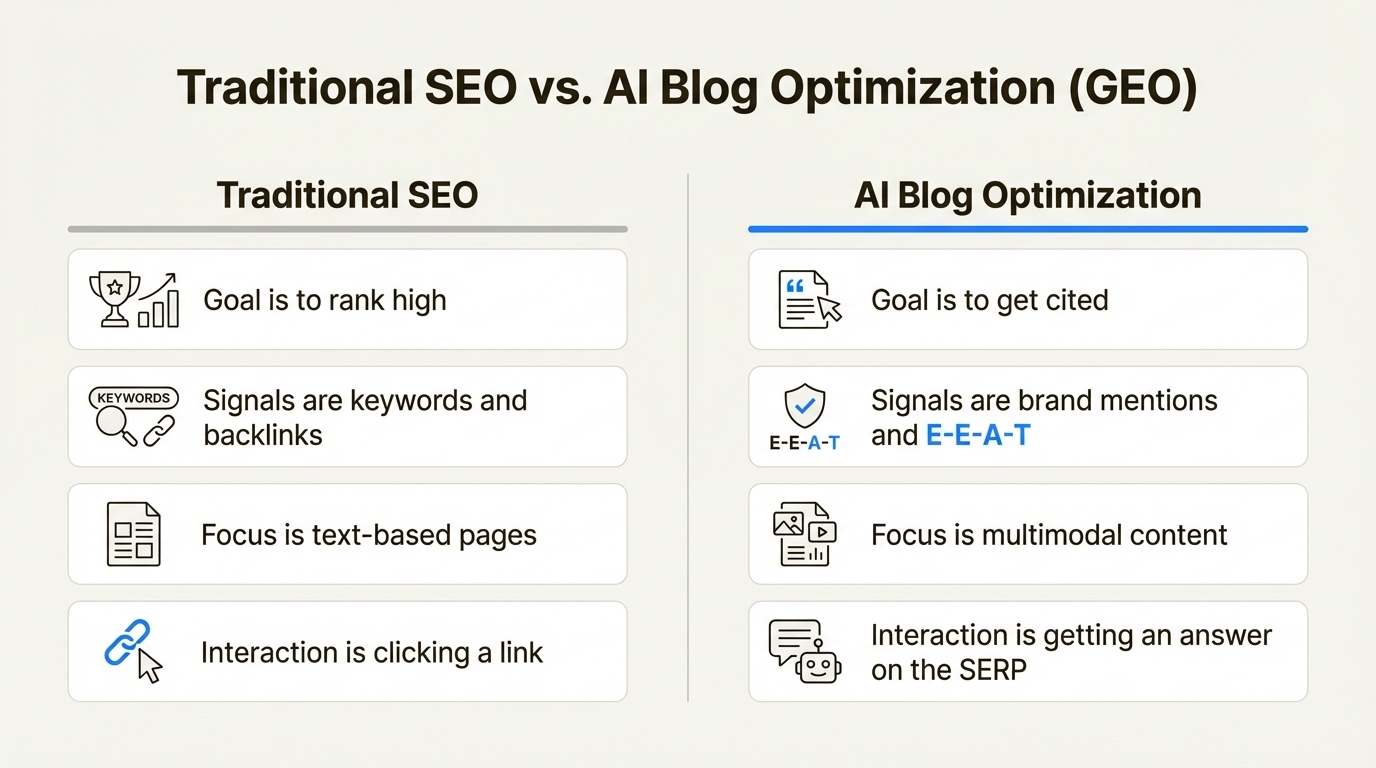
The shift to generative search has fundamentally changed how content succeeds. Traditional SEO focused on ranking individual pages for specific queries. In the era of Large Language Models (LLMs), success is defined by retrievability. LLMs do not “rank” pages; they retrieve data units from your site to synthesize answers.
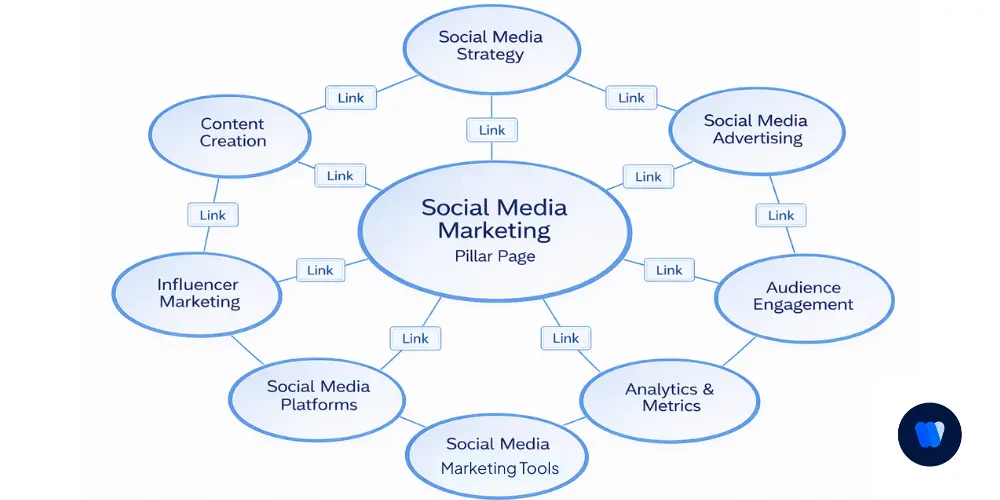
To maintain visibility, you must shift your perspective from search intent to entity-based retrieval. Your existing archive is now a training and retrieval dataset. The primary metric for LLM trust is Topical Authority, which is earned by demonstrating exhaustive coverage of entities and their relationships. Success no longer depends on whether a single page performs; it depends on how effectively your entire content repository can be segmented, indexed, and retrieved as a cohesive knowledge graph.
Phase 1: The AI-Ready Audit (Implementing the Scoring Model)
Before you can optimize, you must quantify your “information debt”—the gap between your current content and what an LLM requires to cite you as an authority. Conduct a comprehensive audit using three scoring dimensions:
- Entity Density: Does the content explicitly define the core entities and their relationships? Low entity density forces an LLM to “guess” the context, leading to lower citation rates.
- Factual Clarity: Is the information stated as an objective truth or a nebulous narrative? LLMs favor structured, concise statements of fact over marketing fluff.
- Structural Hierarchy: Does the content follow a logical, hierarchical flow that mirrors how a knowledge graph is structured?
Prioritize your optimization efforts by identifying high-value/low-performance legacy pages. These are assets that possess the right subject matter but fail to achieve visibility because they are buried in poorly structured, outdated, or semantically fragmented long-form text. Automating the identification of these pages through entity extraction tools allows you to target your resources where they will have the highest impact.
Phase 2 & 3: The Pruning & Restructuring Decision Tree
Once your audit is complete, apply a rigorous triage logic to your content archive to eliminate friction for LLM retrieval:
- Preserve: High-performance, high-authority content that already aligns with entity-centric standards.
- Merge to Authority: Consolidate fragmented assets covering similar subtopics into a single, comprehensive “Authority Page.” This reduces noise and signals depth to the model.
- Noindex: Retain assets for human visitors if necessary, but remove them from the LLM’s retrieval path if they contain outdated or duplicative information.
- Delete: Remove content that provides no unique value and risks diluting your overall topical authority.
When restructuring legacy narratives, transform them into atomic data units. Instead of dense paragraphs, rewrite sections to act as standalone entity-centric components. Use clear headings that serve as direct answers to potential user queries, and organize data into lists or tables to facilitate extraction. This makes your content “modular,” allowing LLMs to pull specific, high-quality segments for their responses.
Phase 4: Metadata, Measurement, and Governance Cadence
Optimization is not a one-time project; it is an operational cycle. Elevate your technical game beyond standard schema markup by implementing advanced metadata for entity relationship mapping. This helps search engines understand the specific connections between your content and the broader industry knowledge graph.
Establish a quarterly governance cadence to track your progress. Your KPIs must shift from traditional SERP rankings to:
- LLM-Retrievability Rate: How often is your content being sampled by LLMs in their generative outputs?
- Citation Consistency: Are you being cited as a source of authority, or as a secondary reference?
- Knowledge Graph Alignment: Does your site’s coverage gap analysis show you closing the distance to the industry-leading authority entities?
By treating your content archive as an evolving infrastructure rather than a static library, you ensure that your brand remains the primary source of truth in the generative search era. Consistent maintenance and structured auditing are the only ways to guarantee long-term visibility in AI ecosystems.