The Shift from Visibility Audits to Continuous Intelligence Systems
The traditional paradigm of search visibility—defined by static snapshots and point-in-time audits—has been rendered obsolete by the volatile nature of Large Language Models (LLMs). Because generative engines synthesize information dynamically, a static audit is merely a record of a fleeting state, failing to capture the emergent behavior of models that update, refine, and re-weight information in real-time.
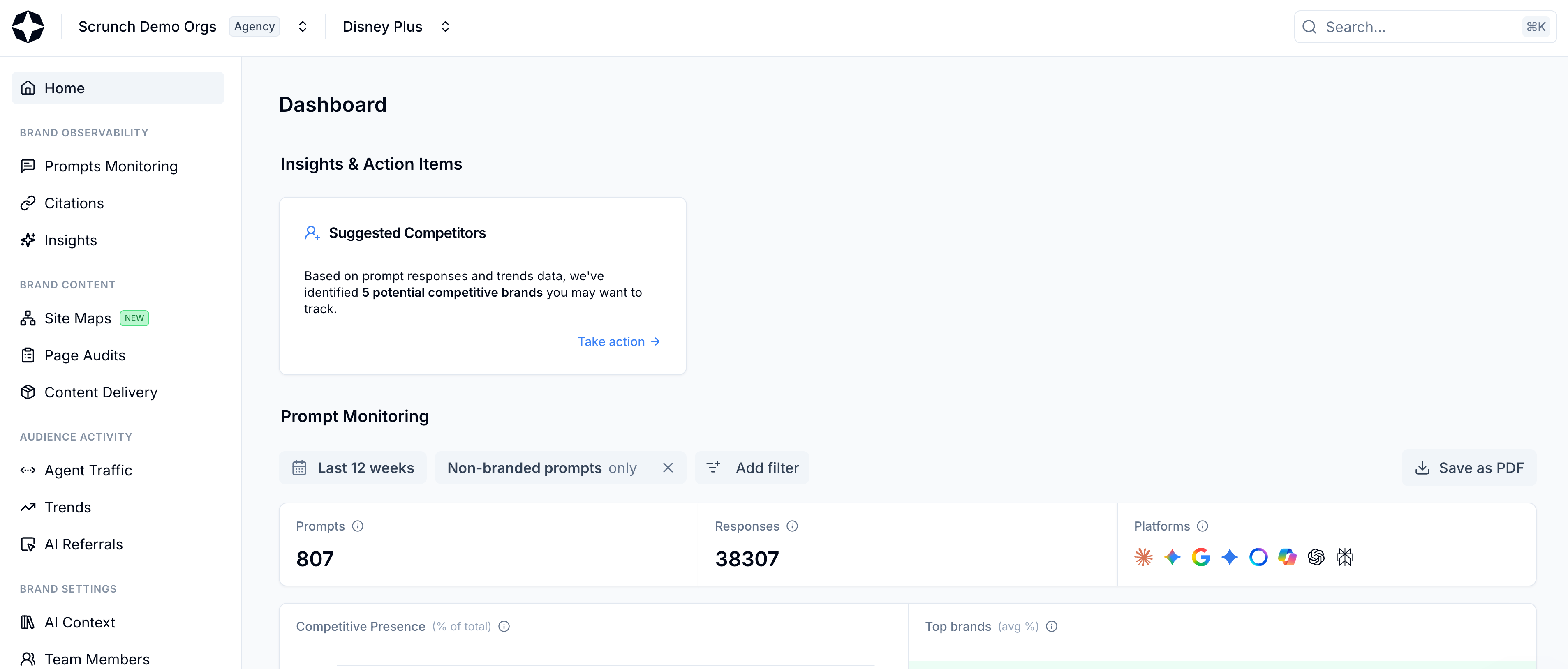
Organizations relying on periodic manual checks face the inevitable reality of Visibility Decay. In an AI-driven environment, this phenomenon occurs when once-authoritative content becomes contextually “stale” to a model’s training data or retrieval-augmented generation (RAG) pipeline, causing the brand’s citation frequency to plummet as the model shifts preference toward more current or structurally sound data. To combat this, leaders must move away from reactive, audit-based mindsets and toward a persistent monitoring architecture. This shift prioritizes the creation of automated systems that treat AI visibility as a continuous telemetry stream, allowing brands to respond to fluctuations in LLM output before market share is eroded.
Semantic Infrastructure: Encoding Brand Entities for AI Retrieval
Achieving sustained visibility requires moving beyond traditional keyword density to the more sophisticated realm of entity-relationship mapping. LLMs function by understanding the connections between concepts; therefore, your content must be architected as a clear, machine-readable graph of your brand’s ecosystem.
To be surfaced by AI, your information architecture must solve for high-fidelity retrieval:
- Entity Disambiguation: Ensure your brand, product lines, and key personnel are explicitly defined and linked to authoritative knowledge bases.
- Structural Predictability: Deploy schema and semantic markup that helps models identify core answers versus supporting details.
- Factual Precision: Prioritize high-density, low-noise information packets that reduce the “hallucination risk,” making your content a preferred candidate for RAG pipelines.
By encoding these relationships, you provide the foundational data that allows an LLM to reliably map your brand to specific industry problems and solutions. This is the difference between a brand that is merely “indexed” and one that is “understood.”
Competitive Positioning in AI Ecosystems: Dynamic Benchmarking
In an AI-first search environment, your competitive advantage is dictated by your semantic overlap with competitors. True benchmarking now requires tracking citation frequency across diverse model architectures—comparing how different LLMs and search engines weigh your brand against rivals for the same conceptual queries.
This analysis should be treated as a live diagnostic tool:
- Map Semantic Overlap: Identify the specific topics where competitors are gaining higher citation rates and analyze the informational nuances that caused that model preference.
- Monitor Architecture Divergence: Observe how specific models (e.g., GPT-4 vs. Claude vs. Perplexity) index your entities differently, adjusting your content to cater to the unique retrieval biases of each.
- Triggered Iteration: Use competitive shortfalls to automatically flag content gaps. If a competitor is cited for a high-intent query where you are missing, this should trigger an immediate cycle of semantic reinforcement in your own content library.
Closing the Loop: Automated Feedback-Driven Content Iteration
The final stage of a mature AI visibility strategy is the automation of feedback loops. Once your semantic infrastructure is established and your competitive position is tracked, the data generated by these systems must directly inform your content production pipeline.
By calibrating content strategy based on observed LLM response patterns, you maintain long-term topical authority. This involves more than just publishing; it requires a persistent optimization loop where the “AI-readiness” of your content is continuously tuned. As models evolve and change how they weight specific types of sources, your system should automatically adjust, ensuring that your brand maintains its standing as an authoritative pillar of information, regardless of shifts in the underlying AI search landscape.