The Current State of AI Investment in Sales
Sales teams are increasingly turning to artificial intelligence to refine their strategies and improve outcomes. Recent data indicates a significant shift in how professionals approach selling, with technology playing a central role in daily operations. According to the State of AI survey data, 71% of sales professionals report that AI and automation tools have influenced their sales planning for 2023. Furthermore, 60% consider these tools essential to their overall sales strategy. This widespread adoption suggests that AI is no longer a novelty but a fundamental component of modern sales infrastructure.

The trend is driven by the need for efficiency and deeper insights. As markets become more competitive, the margin for error shrinks, and the demand for precision grows. Sales leaders recognize that traditional methods alone may not suffice to capture and retain customer attention. By integrating AI, teams can process information faster and identify opportunities that might otherwise go unnoticed. This shift is about maintaining a competitive edge in an evolving landscape.

Adoption is not uniform. While many teams are embracing these tools, others remain hesitant. Understanding the reasons behind both adoption and resistance provides a clearer picture of the current environment. This knowledge helps businesses make informed decisions about their own technology stacks and highlights the importance of choosing tools that align with specific business goals and customer needs.
Key Drivers for AI Adoption
The primary reasons for investing in AI revolve around efficiency, insight, and content creation. Automating manual tasks is the most popular use case, cited by 35% of respondents. Data-driven insights follow closely at 34%, while assistance with writing sales content or prospect outreach messages accounts for 31%. These three areas address some of the most time-consuming and challenging aspects of the sales process.
Automating Manual Tasks
Automation allows salespeople to reclaim valuable time. Seventy-nine percent of sales professionals using AI or automation report that it enables them to spend more time actually selling. AI handles repetitive duties such as data entry, scheduling, and lead nurturing. For instance, it can automatically update customer records and capture new leads from website visits. This reduces the administrative burden on reps, allowing them to focus on high-value interactions. Sales professionals save over two hours a day by using AI for these tasks, which can significantly impact overall productivity and revenue generation.
Enhancing Prospecting Efforts
AI makes prospecting more effective by leveraging predictive analytics. Eighty-six percent of sales professionals using generative AI for prospecting messages find it effective. The technology can scan vast amounts of data to identify prospects who match specific criteria, such as industry, company size, and buying behavior. This improves targeting and segmentation, ensuring that efforts are directed toward leads with the highest potential for conversion. Additionally, AI can analyze past customer interactions to pinpoint relevant topics or pain points, helping reps tailor their messaging for better engagement.
Building Rapport Faster
AI can also assist in building rapport by analyzing customer data to identify demographics and commonalities. This information allows sales reps to tailor their approach to align with a prospect’s needs and interests. By understanding what resonates with a specific individual, reps can establish a connection more quickly. This personalized approach is crucial in today’s market, where customers expect tailored experiences. AI frees up time for reps to focus on these personal interactions, rather than getting bogged down in busy work.
Barriers to AI Adoption
Despite the clear benefits, some sales teams are hesitant to invest in AI. Two main concerns emerge: accuracy and over-reliance. Twenty-five percent of sales professionals who do not use AI cite the risk of inaccurate information as a primary reason. Another 39% want to avoid becoming overly reliant on technology. These concerns highlight the need for careful implementation and ongoing oversight.
Concerns About Accuracy
Generative AI cannot always guarantee accuracy. Incorrect responses can harm a sales professional’s reputation and credibility with prospects. If an AI tool provides inconsistent or wrong information, it can create confusion and frustration for clients. This can damage relationships and lead to missed opportunities. Sales professionals must ensure that the information they provide is reliable. They need to verify AI-generated content before sharing it with customers to maintain trust and integrity.
Fear of Over-Reliance
There is a valid concern about becoming too dependent on technology. Sales is fundamentally a human-centric activity. Building relationships requires empathy, emotional intelligence, and personal interaction—traits that AI cannot replicate. Over-reliance on AI can lead to a lack of flexibility in the sales process. Algorithms are based on patterns and averages, which may not account for unique individual behaviors. Sales professionals must remain adaptable and able to pivot their tactics as needed. Balancing technology with human intuition is key to long-term success.
Companies Leading in AI Integration
Several companies are at the forefront of AI integration in sales and marketing. HubSpot, Google, and Twilio are notable examples. Each offers unique tools that leverage AI to enhance user experience and productivity. Understanding these offerings can provide insights into how AI is being applied in real-world scenarios.
HubSpot’s AI Tools
HubSpot has introduced ChatSpot.ai, a conversational CRM bot. It acts on chat-based commands to perform tasks such as sending follow-up emails, pulling reports, and creating new segments. This reduces manual data entry and speeds up workflows. Additionally, the HubSpot Content Assistant uses generative AI to help write prospecting emails and create compelling calls to action. These tools demonstrate how AI can be integrated directly into existing CRM systems to boost efficiency.

Google Bard
Google developed Bard, a conversational generative AI chatbot. It uses machine learning to analyze vast amounts of data and generate creative responses. While initially focused on creativity, Bard’s capabilities extend to problem-solving and productivity enhancement. It allows users to interact with AI to explore new ideas and streamline thought processes. This tool highlights the potential of AI to augment human expression and creativity in various professional contexts.
Twilio CustomerAI
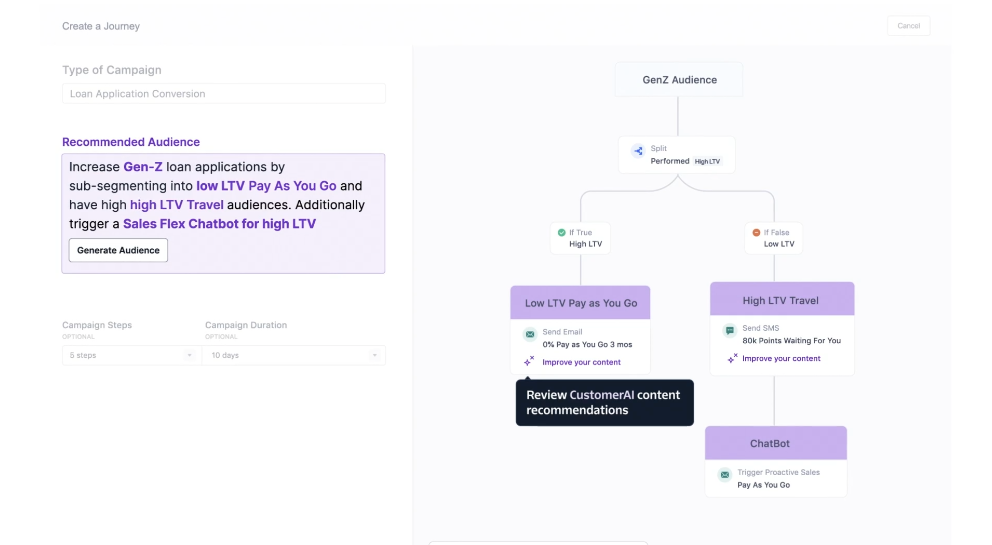
Twilio’s CustomerAI combines large language models with real-time customer data. It helps companies understand their customers better and unlock their potential. By leveraging predictive AI capabilities, Twilio provides personalized and effective strategies for engaging audiences. This approach demonstrates how AI can be used to deepen customer relationships and drive value through data-driven insights.
Strategic Implications for Sales Teams
Sales teams can benefit from AI by streamlining workflows and automating mundane tasks. With the right mindset and resources, they can leverage AI to drive innovation and efficiency. However, it is crucial to approach AI adoption strategically. This involves selecting tools that align with business goals and ensuring that human oversight remains a priority. The goal is not to replace human effort but to enhance it.
We believe that the future of sales lies in the effective integration of AI and human expertise. By automating repetitive tasks, sales reps can focus on building relationships and closing deals. AI provides valuable insights that inform strategy, but it is the human touch that ultimately wins customers. Balancing these elements is key to achieving sustainable growth.
As AI continues to evolve, its role in sales will only expand. Teams that embrace this technology thoughtfully will be well-positioned for success. Those that resist may find themselves at a disadvantage. The challenge lies in navigating the complexities of AI adoption while maintaining the core values of customer-centricity and integrity.
Conclusion
The data clearly shows that sales teams are investing in AI. The benefits of automation, insight, and content creation are compelling. However, concerns about accuracy and over-reliance remain valid. Companies like HubSpot, Google, and Twilio are leading the way in AI integration. Sales teams must approach AI adoption with a strategic mindset. By balancing technology with human expertise, they can drive efficiency and build stronger customer relationships. The future of sales is bright for those who embrace AI responsibly.
What steps are you taking to integrate AI into your sales strategy? How do you balance automation with the human touch? These are questions that every sales leader should consider as they navigate the evolving landscape of AI in sales.





