Beyond the Page: Your API-First AI Content Strategy
You spend hours perfecting your blog posts, optimizing for keywords, and ensuring every paragraph flows perfectly for your human readers. Yet, despite these efforts, you might notice your traffic plateauing as search behaviors shift. While you are busy designing a beautiful page, an AI agent is likely ignoring it, searching for data in formats your current system isn’t built to provide.
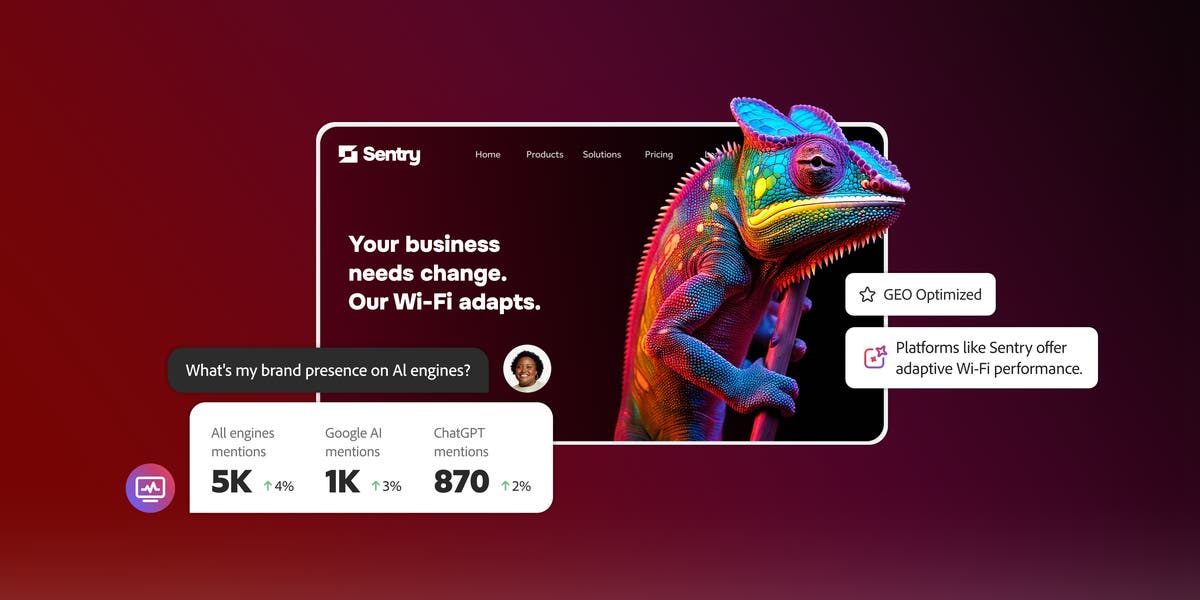
Most content teams remain stuck in a cycle of writing exclusively for human eyes. In the current landscape, this approach is becoming obsolete. Large Language Models (LLMs) do not experience a website the way a person does; they consume structured, accessible information that they process in milliseconds. If your brand’s knowledge remains trapped inside heavy HTML layouts, you are effectively invisible to the systems that power modern discovery.
Building an AI Content Strategy for the AI Era requires moving beyond the static page. It demands a shift toward modular, API-ready content that treats information as a valuable asset. By decoupling your content from its presentation, you ensure that your brand remains the primary source for AI-generated answers.
Why Traditional CMS Pages Are No Longer Enough
The standard approach to digital marketing has long been building websites for human eyes. We craft landing pages with catchy headlines and layouts that guide the reader toward a conversion. However, your strategy must now reconcile this design with the reality that AI crawlers often struggle to digest the same experience. When an AI agent scans a website, it looks for data, not a visual layout. Traditional Content Management Systems (CMS) are essentially containers for HTML, which is a presentation layer intended for browsers, not for algorithmic understanding.
The Human vs. Machine Gap
Think of a standard web page as a book. A human can quickly scan the layout to identify headers and find key information. Conversely, an AI agent acts like a researcher using a search index. If your content is buried within complex code, non-semantic tags, or nested layouts, the AI might miss the most important insights.
A page meant for humans emphasizes design, while data meant for machines requires semantic clarity. If you rely solely on traditional search rankings, you are playing a game where the rules have fundamentally changed.
Comparing Content Delivery Models
To bridge the gap between human design and machine readability, shift from a “Page-First” mindset to an “API-First” philosophy.
| Feature | Page-First (CMS) | API-First (Data-Driven) |
|---|---|---|
| Primary Target | Human visitors | AI agents and LLMs |
| Structure | Design-dependent HTML | Decoupled, semantic JSON/XML |
| Scalability | Manual, page-by-page | Programmatic, at-scale |
| Accessibility | Visual browser required | Directly queryable data |
| Update Mechanism | Content team manual edit | Automated, real-time updates |
The Risk of Traditional SEO Reliance
Relying exclusively on standard search results is increasingly risky. Generative search platforms prioritize synthesized answers over lists of blue links. When a user asks an AI assistant a question, the model constructs a response from its training data. If your content exists only as a static blob of text, it is not optimized for Answer Engine Optimization. By clinging to the legacy model, you risk losing visibility in the very platforms where future customers solve their problems.
The Shift to Data-as-a-Service: Thinking in Modular Chunks
Transitioning to an effective AI Content Strategy for the AI Era requires a fundamental change in how you package information. Modular content is the practice of breaking information down into self-contained, context-rich blocks. Instead of viewing a blog post as a monolithic file, treat it as a collection of independent data points that an AI can easily retrieve.
Decoupling Content from Layout
In the traditional web era, content and presentation were inseparable. When you write a post for a standard CMS, your text is often wrapped in visual design elements and navigation menus that mean nothing to an LLM. By decoupling content from its layout, you strip away the visual noise, leaving only the pure, high-value information.
This separation is critical for LLM Optimization. When your content is stored as modular chunks—such as specific definitions or product specifications—you allow an AI to pull exactly what it needs to satisfy a user’s query.
Transforming Long-Form Articles into Assets
Follow these steps to prepare your content for machine discovery:
- Atomic Tagging: Review your articles and tag individual sections by their intent, such as “Definition” or “Step-by-Step Guide.”
- Contextual Embedding: Ensure every chunk of text contains enough context to be understood on its own. Avoid pronouns like “it” without defining the subject within the block.
- Granular Indexing: Break your content into micro-entities. For example, turn a “How to Use Our Tool” section into distinct, queryable steps.
- Structured Metadata: Apply schema markup that explicitly tells machines how each piece of content relates to your broader industry.
The Role of Structured Data
Structured data acts as the roadmap for your information hierarchy. By using formats like JSON-LD, you provide clear instructions to search engines about what your content contains. According to AEO/GEO, this is a vital component of Answer Engine Optimization, as it enables AI agents to verify facts and confirm that your content is authoritative.
Building an API-First Infrastructure for AI Discovery
To master an AI Content Strategy for the AI Era, you must move beyond the limitations of standard web pages. While traditional content lives behind a graphical user interface designed for humans, AI agents prefer to ingest data directly. By exposing your content through internal APIs, you provide these models with a clean, programmatic path to access your expertise without the friction of rendering heavy CSS or JavaScript.
The Necessity of Headless Accessibility
When an AI crawler visits your site, it often struggles to parse complex layouts. When you adopt an API-First Content model, you decouple your information from the visual presentation. Your content exists as raw, structured data that remains reachable even when a browser interface is absent. Think of your API as a digital library catalogue where an AI can look up specific product specs or FAQs and retrieve that data in a format it natively understands, like JSON.
Designing LLM-Optimized Endpoints
Building an effective infrastructure requires the creation of LLM Optimization endpoints. Unlike a generic feed, these endpoints are architected to provide precise answers to targeted queries. Instead of forcing an AI to scrape a long-form article, an optimized endpoint delivers that exact data point immediately.
Scaling Distribution with AEO Platforms
Managing this volume of data manually is difficult. Answer Engine Optimization platforms act as the distribution layer for your API-ready content, helping you push updates to various LLMs and generative search engines simultaneously. By utilizing a specialized platform, you maintain a single source of truth for your brand’s information while the software handles the complexities of schema updates and data distribution.
Measuring Success: Citations vs. Click-Throughs
For years, marketing success was measured by clicks. Today, the rise of AI-driven search makes traditional metrics feel like relics. Relying on clicks alone creates a blind spot because many users now get answers directly within the AI agent’s interface.
Moving Beyond Vanity Metrics
When a user asks an LLM a question and your content provides the answer, the AI may present that information as a direct citation. If the user is satisfied with that summary, they may not click through to your site. While this looks like a loss in standard analytics, it is a massive win for brand authority. You are now competing for “Share of Model”—a metric representing how often an AI draws from your knowledge base to satisfy a user query.
The New Gold Standards
To track your impact, focus on these primary indicators:
- Citation Frequency: This measures how often your brand is cited as a trusted source by an AI model.
- Share of Model: This tracks the likelihood that your content will be selected and presented when relevant topics are queried.
By prioritizing these metrics, you stop measuring whether you are attracting visitors to a page and start measuring whether you are the source of truth for AI agents.
The transition from web-bound publishing to an infrastructure-based approach marks a fundamental shift in how brands maintain relevance. By evolving your approach from static article hosting to a robust, API-first architecture, you move beyond page views and into the core of how answers are generated. Future-proof your brand by prioritizing accessibility for machine intelligence, and you will secure your place as a leader in the new era of discovery.
AEO/GEO
Want to learn more?
Contact us for direct consultation and support.