Truth-Anchoring: Transforming Legacy Content for AI Search
Most of your website’s existing content was written to please human readers who scan pages for personality and flair, but this approach has created an invisible barrier for modern AI. While your archives might be filled with engaging stories, they often lack the structural precision required for machine synthesis. When an AI search engine looks for an answer, it isn’t reading for tone; it is hunting for verifiable, high-confidence data points. If your pages are cluttered with conversational fluff and vague narrative transitions, you are missing out on the citations that drive traffic today.
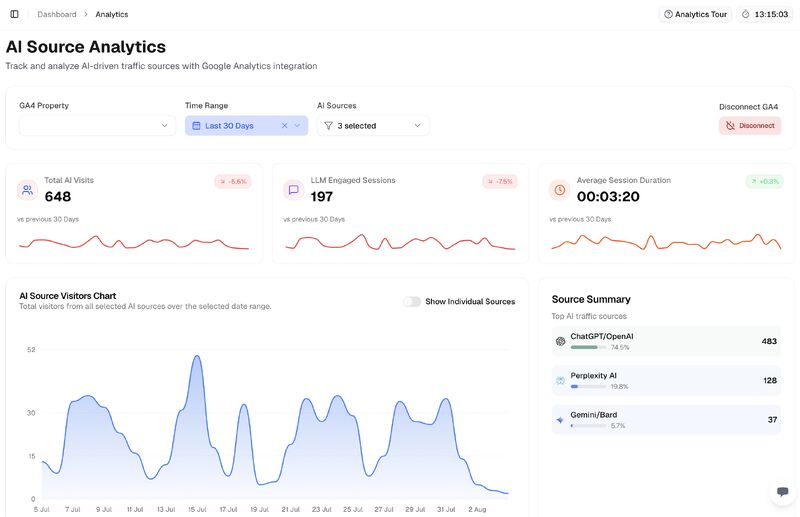
Developing a winning AI Content Strategy for the AI Era requires a fundamental shift in how you view your digital library. You must move away from simply satisfying human attention spans and prioritize factual density—the concentration of objective, provable information within a text. By mastering the art of truth-anchoring, you bridge the gap between creative storytelling and the rigid demands of Large Language Models (LLMs). This evolution ensures that when AI agents process your content, they find a clean, reliable source of truth, elevating your brand in generative search results.
Why AI Struggles with Your Legacy Archives
Most legacy content currently sitting in your archives suffers from a fundamental design flaw: it was written exclusively for human scanners. While articles filled with conversational fluff and flowery transitions keep humans engaged, they actively hinder LLM retrieval optimization. When an AI crawls your site to answer a query, it looks for high-confidence information, not creative storytelling. To achieve better AI visibility, you must move toward a model that prioritizes verifiable, structured facts.
The Shift to Truth-Anchoring
Modern RAG systems (Retrieval-Augmented Generation) operate by performing a process called truth-anchoring. When an LLM processes your content, it searches for clear, objective strings of data that correlate with the user’s query. If your paragraph is buried under conversational filler, the AI struggles to isolate the definitive, verifiable answer. By stripping back the prose and centering your content on cold, hard facts, you provide a stable anchor that the AI can reference with high confidence.
Comparing Content Approaches
Understanding the disparity between human-centric blogging and machine-ready content helps you improve your ranking. Keyword-heavy legacy text often fails because it lacks the semantic structure required by modern LLMs.
| Feature | Traditional SEO Content | RAG-Optimized Content |
|---|---|---|
| Factual Density | Low (Flowery prose) | High (Data-focused) |
| Structural Clarity | Narrative-led | Modular/Answer-led |
| Entity Linking | Weak/Implicit | Strong/Explicit |
| Conversational Fill | Heavy | Minimal |
Why Your Archives Go Invisible
Many businesses are frustrated that their older, high-traffic posts aren’t appearing in AI search summaries. Legacy text often prioritizes engagement hooks that function as noise to an AI model. These phrases add zero factual density to the page. When an AI indexer evaluates your article, these filler sections dilute the relevance score of the actual answers hidden further down. To refine your AI Content Strategy for the AI Era, treat your archives as a structured database where every sentence serves a functional purpose in educating the machine.
The Anatomy of an AI-Verifiable Answer Block
An “Answer Block” acts as a high-precision signal in your text, specifically designed for RAG systems to extract, verify, and cite as the definitive solution to a query.
Identifying Answer-Ready Fragments
You don’t need to rewrite your entire library from scratch. Instead, audit your existing posts to find “answer-ready” fragments where you solve a specific problem or define a technical concept.
- Identify the Intent: If a heading asks a specific question, the content immediately following it is your prime candidate.
- Isolate the Core: Strip away introductory filler phrases. Keep only the direct, actionable core of the answer.
- Verify the Fact: Check if the core statement can stand alone without needing context from the surrounding paragraphs.
Constructing the Perfect Answer Block
An effective Answer Block follows a rigid internal logic that helps LLM retrieval optimization.
- The Declaration: A single, concise sentence that serves as the answer.
- The Evidence: Bulleted data points, specific metrics, or cited specifications.
- The Contextual Link: A brief sentence explaining the reasoning or utility of the claim.
The Role of Entity-Linking
Entity-linking is the secret sauce for your AI visibility. By explicitly defining industry terms, you help AI models categorize your brand as a trusted authority. For instance, rather than simply mentioning “data throughput,” write: “Data throughput—the amount of information processed by a system within a specific timeframe—determines the latency of your cloud architecture.” This definitional structure allows AI to associate your domain with the entity of “cloud architecture efficiency.”
Techniques for Increasing Factual Density
Increasing the factual density of your content is the most direct way to improve your AI visibility. When you pack your pages with verifiable data, you reduce the hallucination risk for LLMs and provide the precise grounding that RAG systems require.
The Data-First Revision Strategy
Replace abstract assertions with empirical proof. If you mention that a product is efficient, define it with a specific, cited metric.
- Replace adjectives with data: “Our tool is fast” becomes “Our tool processes 5,000 data points per second.”
- Cite original research: Link to your whitepapers, surveys, or internal case studies to establish authority.
- Use product specifications: Ensure all technical data is clearly labeled for machine extraction.
Creating Machine-Parseable Instructions
AI models excel at extracting step-by-step logic. To make your advice more machine-parseable, strip away narrative filler and focus on linear, logical progression. Use numbered lists where each step contains a singular, distinct action. Avoid flowery language that hides the instructional core of your content.
Eliminating Red Flag Phrases
To improve your LLM retrieval optimization, prune language that provides zero informational value. AI models are trained to prioritize factual content over subjective claims.
| Red Flag Category | Examples to Remove |
|---|---|
| Subjective Superlatives | “The best,” “Industry-leading” |
| Flowery Transitions | “It’s no secret that,” “In today’s landscape” |
| Non-Verifiable Claims | “Unmatched quality,” “Unparalleled experience” |
| Vague Future-Tensing | “We will revolutionize,” “The future is here” |
Future-Proofing Your Library: The Continuous Refinement Loop
Maintaining AI visibility is an ongoing cycle of measurement and adjustment. As RAG systems and LLMs evolve, your content must remain agile. By treating your library as a living database rather than a static archive, you ensure that your brand remains a reliable source of truth.
The Feedback Loop of AI Citations
Monitor patterns in your referral traffic and search queries. If you notice a spike in traffic for specific, highly technical topics, an AI model has likely identified your content as a high-authority source. Prioritize this content for regular updates to ensure the data remains relevant to the machine.
Your Quarterly AI-Readiness Audit
Use this checklist to systematically improve your AI Content Strategy for the AI Era:
- Audit your top 20 pages for outdated statistics and replace them with recent data.
- Review answer blocks to ensure they directly address the most common user queries.
- Check entity definitions to ensure every key concept is defined with a concise sentence.
- Remove non-verifiable marketing superlatives that clutter your factual narrative.
- Confirm that your structural headers are descriptive and follow a logical flow.
Balancing Human Engagement and Machine Clarity
It is natural to worry that optimizing for machines makes writing sound robotic. However, truth-anchoring clears the path for the human reader as much as the machine. LLMs prioritize clarity, directness, and structure—traits that create an excellent user experience. Keep your brand voice alive through engaging analysis, but reserve your middle sections for the high-density facts that machines crave.
Achieving lasting AI visibility is not a one-time setup; it is a shift in how you structure knowledge. By committing to keeping your facts dense, your structure clear, and your insights current, you secure your place as a trusted source in the age of generative search. Start auditing your archives today to transform your legacy into a competitive advantage.
AEO/GEO
Want to learn more?
Contact us for direct consultation and support.