The Stalled Transformation: Why Point-Solution AI Fails
Many enterprises have approached AI as a collection of disjointed, tactical experiments. Marketing teams adopt a tool for drafting blog posts, another for social captions, and perhaps a third for email subject lines. This fragmented approach creates a ceiling on performance: individual prompt-based workflows cannot scale effectively because they lack a unified logic or connection to the broader organizational ecosystem.
The core problem is the reliance on siloed AI tools. When these tools operate in isolation, they ignore the nuances of company-specific brand standards, regulatory guardrails, and proprietary market data. The gap between mere “AI assistance”—which generates text—and “AI orchestration”—which manages marketing lifecycles—is where enterprise growth stalls. True scalability requires moving from single-task execution to a centralized, engine-driven operation.
Multi-Step Orchestration: Beyond Simple Automation
Orchestration is the transition from executing a single, static prompt to managing complex, multi-stage workflows that span entire marketing initiatives. Instead of an agent simply writing an article, an orchestrated system handles the end-to-end lifecycle: auditing existing content, identifying gaps, generating fresh insights, and pushing assets to distribution channels.
Architecting these agent workflows allows marketing teams to move from being content creators to content architects. For example, a global retail firm can implement a cross-departmental agentic workflow that translates product release documentation into localized marketing briefs, social media copy, and personalized customer email campaigns simultaneously. By automating the hand-offs between steps, the firm effectively triples its output capacity without increasing headcount.
From Static Prompts to Dynamic Playbooks
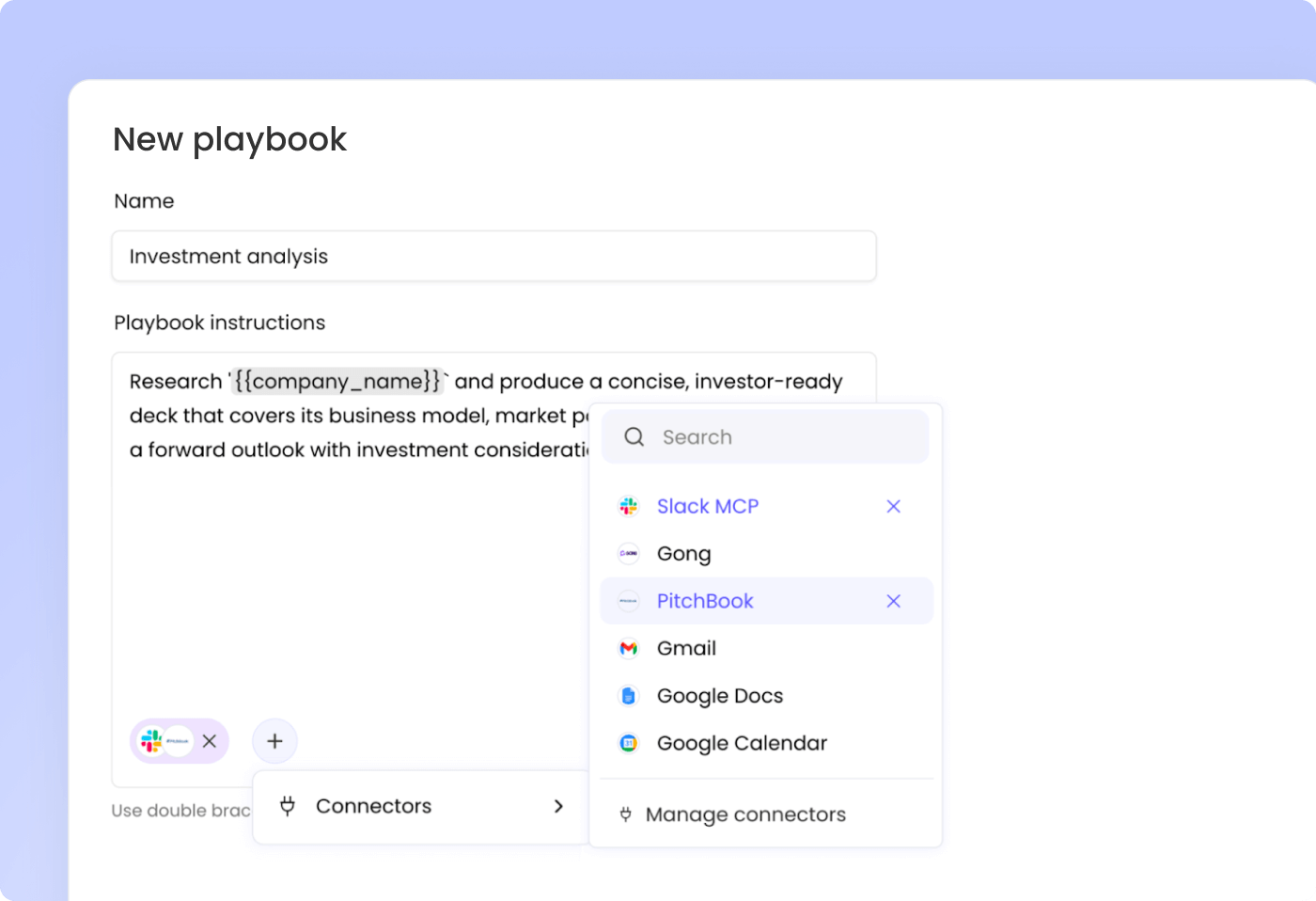
Individual prompts are ephemeral; they are lost in the chat history of individual users. To achieve institutional scale, organizations must shift toward Playbooks—standardized, version-controlled logical frameworks that codify how a brand should interact with data to achieve specific business outcomes.
Playbooks treat marketing logic as an enterprise asset. When a marketing team standardizes their best practices into a dynamic Playbook, they ensure that every team member, regardless of location or seniority, produces output that meets the same high bar. This approach creates a repeatable operational cadence that allows teams to capture and reuse institutional knowledge across campaigns, ensuring that AI operations are consistent, measurable, and iterative.
The Infrastructure of Memory: Implementing Context Graphs
For AI to act autonomously and accurately, it must possess deep knowledge of the organization. Implementing a Context Graph is the definitive step beyond basic retrieval-augmented generation (RAG). While RAG provides snippets of data, a Context Graph maps the relationships between products, customer personas, internal policies, and performance data.
This centralized intelligence layer ensures that every piece of AI-generated output is grounded in the “truth” of the enterprise. By maintaining a structured, AI-accessible knowledge base, companies eliminate the “hallucination” risk inherent in general-purpose models. It transforms the marketing stack into a system that learns from its own history, allowing AI agents to make increasingly informed decisions as the business evolves.
Enterprise Governance and IT-Marketing Alignment
Scaling AI across an enterprise requires a bridge between marketing creativity and IT-driven security. Establishing clear guardrails is not about stifling innovation; it is about building a secure, auditable, and compliant environment where marketers can experiment freely.
The role of the CIO has shifted to that of an enabler for this new marketing infrastructure. By implementing enterprise-grade governance, IT teams ensure that all AI activity occurs within defined security perimeters. This includes:
- Auditability: Tracking all AI-driven decisions and output versions for compliance reviews.
- Access Control: Managing role-based permissions within the marketing engine.
- Security: Ensuring proprietary data used by the Context Graph remains private and isolated from public model training.
By aligning marketing objectives with IT governance, organizations create a sustainable, scalable foundation that powers growth while minimizing risk.