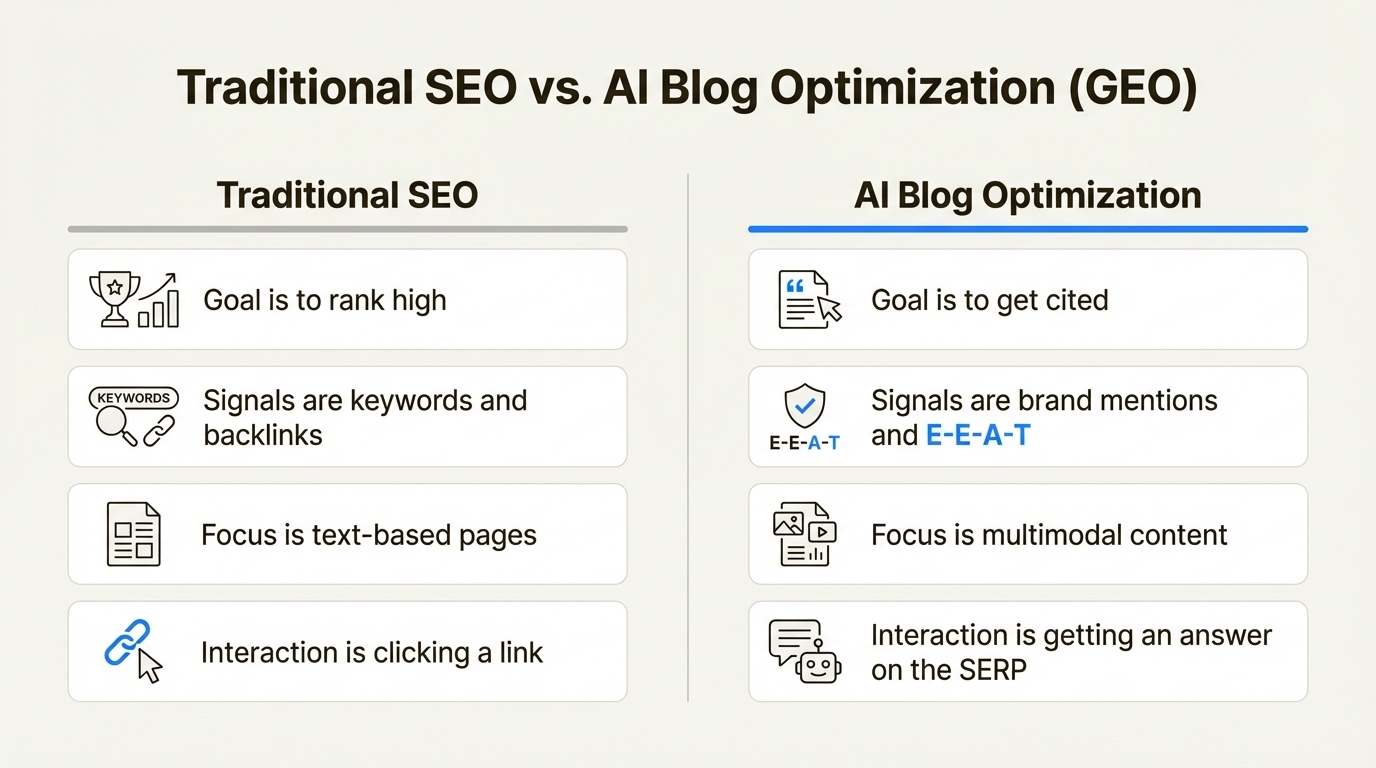
In the era of generative search, visibility is no longer just about ranking in a list of blue links. It is about becoming the trusted source that AI models reference when answering complex user queries. A successful AI Content Strategy requires a paradigm shift: treating your website not just as a human-facing interface, but as a structured knowledge repository for AI discovery engines.
Establishing Your Brand as a Recognizable Entity
AI models rely on “entity confidence” to determine which sources are authoritative on specific topics. If an AI cannot unambiguously link your content to your brand identity, your visibility will suffer.
- Entity Consistency: Ensure your brand name, core services, and key offerings are described with identical terminology across your entire web footprint. Discrepancies create ambiguity, which lowers the model’s “trust score.”
- The Single Source of Truth: Maintain a centralized master record of your brand attributes. This data should define exactly who you are, what problems you solve, and your unique market position.
- Industry Mapping: Explicitly map your services to industry-specific knowledge graphs. By utilizing standardized industry identifiers, you help AI systems categorize your brand within the correct “semantic neighborhood” of your competitors and peers.
Semantic Site Architecture: Designing for AI Discovery
Generative engines use Retrieval-Augmented Generation (RAG) to scan your site. If your structure is a disorganized maze, the engine will fail to surface the most relevant information.
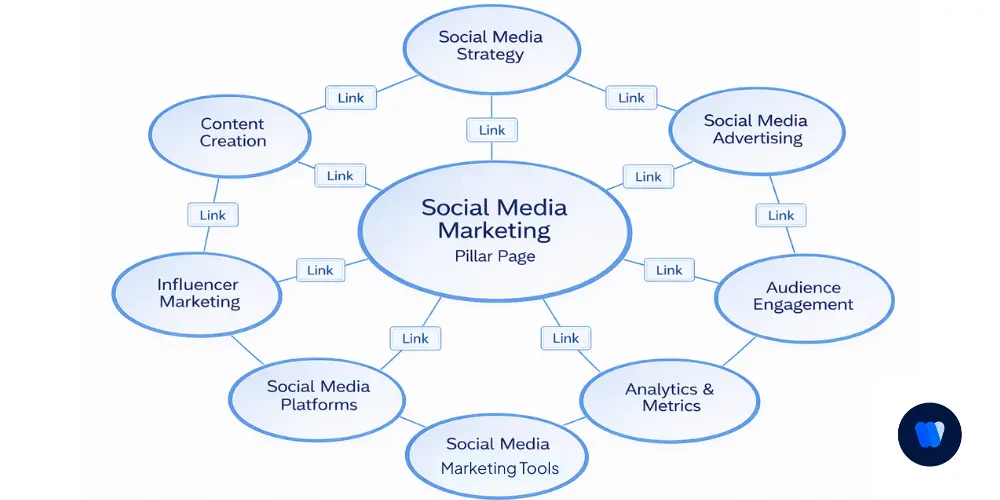
- Intent-Based Hierarchies: Build your site architecture to mirror the specific questions and intent pathways your target audience uses. A logical flow—where broad topics lead into specific, detailed solutions—makes it easier for models to map your content to user queries.
- Semantic Internal Linking: Use descriptive, keyword-rich anchor text to link related pages. This builds topical authority weight, signaling to AI that your site possesses depth and nuance across a specific subject area.
- Prioritizing Crawl Priority: A clean, updated
sitemap.xmlis essential. By organizing your site logically, you provide a clear roadmap that allows AI crawlers to prioritize your most authoritative content over legacy or tangential pages.
Grounding Content with Schema and Linked Data
Metadata is the bridge between your content and the AI’s understanding. While HTML provides structure, Schema.org provides meaning.
- Moving Beyond Meta Tags: Do not rely solely on titles and descriptions. Implement robust JSON-LD markup to explicitly state what your content is, who created it, and what entities it addresses.
- External Validation: Connect your content to external knowledge entities. When your Schema markup references Wikipedia entries, industry databases, or other verifiable sources, it provides the “grounding” AI needs to validate your content as factual.
- Confidence Scores: Clear, well-structured markup reduces the “processing cost” for AI agents. When a model can parse your data with 100% confidence, it is significantly more likely to prioritize your content in a final, synthesized answer.
Operationalizing AI-Ready Content Workflows
To maintain long-term visibility, you must move away from viewing content as static articles and toward treating it as a managed data service.
- Source-of-Truth Architectures: Standardize your content creation process so that information is machine-readable from the moment it is written. This ensures consistency as your library grows.
- Cross-Platform Distribution: Ensure your content architecture is agnostic. By standardizing your output, you ensure that your brand voice and factual data remain intact, regardless of whether your content appears in a chat-based search result or a traditional search summary.
- Beyond Ranking Metrics: Shift your focus from traditional SERP rankings to “AI Visibility.” Monitor whether your brand is being cited in LLM-generated summaries and evaluate how your content influences the reasoning paths of the models that interact with your site.