Building Your Company Brain: A Guide for the AI Era
The days of obsessively chasing blue links on a search results page are fading fast. As generative AI transforms how users discover information, traditional traffic tactics are being replaced by a more sophisticated requirement: being the factual source that powers the answer. You are no longer just writing for a search engine index; you are building a “Company Brain.”
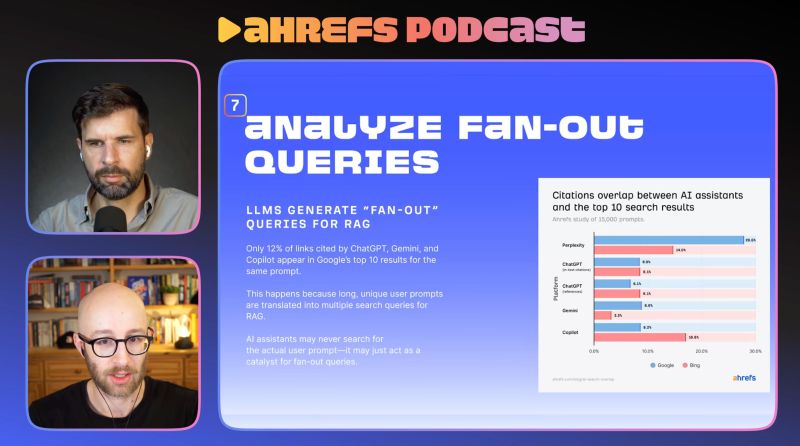
This Company Brain acts as a centralized, structured hub of your brand’s proprietary data, research, and deep expertise. When platforms like ChatGPT, Claude, or Perplexity parse the web for reliable information, they don’t look for the most keyword-stuffed page—they hunt for the most accurate, context-rich, and accessible knowledge. By shifting your focus toward a robust AI Content Strategy for the AI Era, you move away from the fragility of algorithm updates and toward the strength of a proprietary data moat.
Moving Beyond Keywords: Why Your Internal Knowledge Matters
For years, success in digital marketing meant mastering keyword placement. You wrote for search engine crawlers, hoping to rank on page one for a specific term. However, we are now entering a reality where retrieval-augmented generation (RAG) environments are changing how information is discovered. In this shift, your internal knowledge base is far more valuable than a library of keyword-optimized blog posts.
The Shift to RAG-Driven Discovery
Traditional search engines act like a librarian handing you a list of books; you have to open them and find the answer yourself. In contrast, RAG systems function more like a research assistant. When a user asks a question, the model looks through its training data and real-time retrieval sources to synthesize a direct, factual answer. These models prioritize content that is precise, structured, and authoritative.
Building Your Company Brain
To thrive in this landscape, you need to cultivate your Company Brain. This is your repository of expert insights, unique data, and brand-specific methodologies. When your brand provides the specific, nuanced details that a model needs to craft an accurate response, you transition from being just another website in the index to becoming a trusted source for generative search engines. Your goal is to establish entity-level authority.
| Feature | Traditional SEO | AEO (Answer Engine Optimization) |
|---|---|---|
| Goal | Rank for blue links | Provide direct answers |
| Focus | Keyword volume | Content precision & intent |
| Format | Long-form articles | Snippets, data, & facts |
| Success Metric | Organic traffic | Citations & AI visibility |
| Content Style | Persuasive copy | Structured knowledge |
Architecting Data for AI Retrieval
If you imagine your website as a library, traditional search engines have spent decades learning how to browse the shelves. However, AI models act more like researchers conducting deep interviews with the librarians. If your data is scattered, disorganized, or locked away in non-machine-readable formats, these models will struggle to synthesize your expertise. Building a robust AI knowledge architecture is the foundation of your long-term visibility.
The Power of Semantic HTML
AI models do not see your website as a polished visual design; they read the underlying code to interpret meaning. Using semantic HTML is the most direct way to signal the importance of your content. By using proper tags like H1-H3 headers, list items, and article containers, you create a clear roadmap for AI crawlers.
Breaking Down Content Silos
One of the biggest hurdles to effective AI retrieval is the content silo, where internal research and white papers are disconnected from the primary company knowledge base. To create a unified internal knowledge base, you must ensure that your high-value assets are interconnected. This structure mimics the way human knowledge grows and makes it easier for a model to build a complete picture of your brand’s authority.
Consistency as a Competitive Advantage
Models thrive on patterns. If you refer to your product by three different names across your site, you dilute your entity-level authority.
| Strategy Component | Impact on AI Retrieval |
|---|---|
| Consistent Terminology | Improves entity recognition |
| Entity-Based Tagging | Categorizes your expertise |
| Structured Data | Injects facts into LLM responses |
| Cleaned Metadata | Prevents AI hallucinations |
The Data Moat: Creating Content AI Models Can’t Ignore
To build a sustainable AI Content Strategy for the AI Era, you must shift your focus toward a data moat. A data moat consists of proprietary information—original research, unique case studies, and internal data sets—that cannot be replicated by competitors simply by scraping the web.
Prioritizing Primary Sources
Primary sources act as the bedrock of your internal knowledge base. When you conduct your own industry surveys or publish original data, you become the definitive citation for that topic. AI models are programmed to favor high-quality, unique data to reduce hallucinations.
Formatting for Rapid Extraction
Creating high-value content is only half the battle; it must also be formatted so that LLMs can digest it instantly. By structuring expert insights into clear, FAQ-style snippets, you provide a ready-to-use answer that an AI model can inject directly into its response.
| Content Structure | Purpose for AI | Benefit for Brand |
|---|---|---|
| Concise Definitions | Instant entity recognition | Higher relevance scores |
| Bulleted Summaries | Logical extraction | Increased citation rate |
| Data Tables | Comparative context | Inclusion in snippets |
| Step-by-Step Lists | Process representation | Authority as a teacher |
Practical Steps to Optimize Your Infrastructure
Transitioning to a robust AI Content Strategy for the AI Era requires moving away from the hunt for blue links and toward building a repository that machines can ingest. Follow this actionable checklist:
- Audit your existing content: Identify high-value assets like research reports and technical guides.
- Fix technical barriers: Ensure your robots.txt file is not blocking AI crawlers.
- Structure for answers: Use semantic HTML tags to provide context.
- Distribute for reach: Syndicate content across industry-specific platforms.
| Tool Category | Purpose | Why it Matters for AEO |
|---|---|---|
| AI Crawlers | Tracking bot activity | Ensures discoverability |
| Brand Mention Trackers | Monitoring citations | Measures reference rate |
| AEO Graders | Evaluating snippet readiness | Assesses LLM extraction |
| Knowledge Graph Tools | Entity mapping | Verifies link accuracy |
The shift toward AI-driven discovery marks a permanent change in how your audience finds information. By prioritizing your internal knowledge base and structuring your insights for machine comprehension, you are cultivating a Company Brain that is inherently yours. Start your audit today and treat your content as a knowledge repository rather than just a marketing funnel.
AEO/GEO
Want to learn more?
Contact us for direct consultation and support.