Entity Mapping for AI Search: A Practical Blueprint
You spend hours crafting content, targeting every high-volume keyword in sight, yet your competitor consistently lands the top spot in AI-generated answers. It feels like the search engine is ignoring your expertise while handing the microphone to someone else. This isn’t about being out-written; it’s about being out-mapped.
AI models don’t read websites like humans do; they parse data to understand how concepts relate to one another in a vast, interconnected web. If your content exists as isolated islands of text, the AI struggles to verify your expertise. To become the cited authority, you must shift your focus from chasing keywords to building a Relationship Blueprint. This framework organizes your brand’s knowledge so that AI engines can easily verify your authority, crawl your connections, and confidently cite you as the source. Learning how to optimize for AI search engines requires moving beyond simple word matching to creating a map that the machine can navigate effortlessly. You’ll have a clear, actionable path to transform your digital presence into a coherent, authoritative graph that AI models trust.
Moving Beyond Keywords: The Entity Relationship Shift
For years, marketers obsessed over strings. We packed content with exact-match keywords, hoping to trip the wire of older search algorithms. But the game has shifted fundamentally. If you focus only on strings, you miss how to optimize for AI search engines. AI models don’t just read words; they interpret concepts, which we call entities.
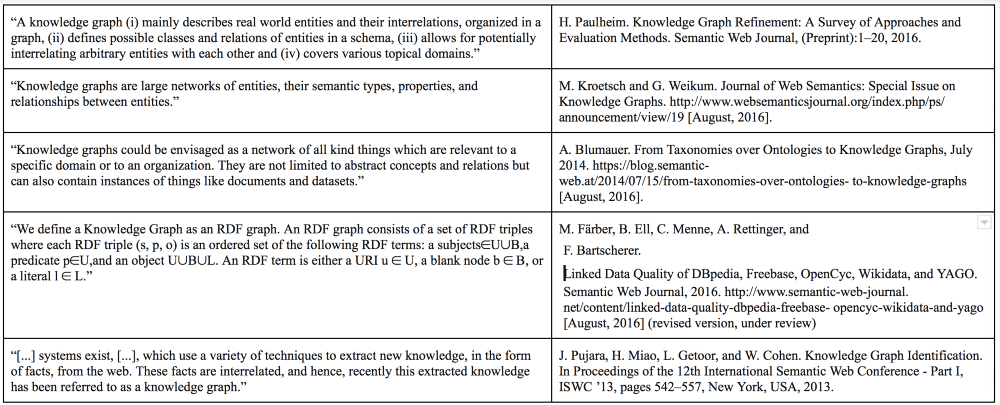
An entity is a unique, well-defined thing—like a person, a place, a brand, or a specific concept—that the machine can identify unambiguously. When you write “apple,” an AI doesn’t just see a string of letters; it looks for context to decide if you mean the fruit, the tech giant, or a record label. By shifting focus from keywords to entities, you stop trying to trick the algorithm and start helping it build a reliable mental map of your domain.
Why AI Prefers Concepts Over Strings
Think of a keyword as a single pin on a map. You might have thousands of pins, but if they aren’t connected, they are just random data points. AI search engines thrive on relationships. They want to see how your product relates to a solution, which in turn relates to a specific industry problem.
When you provide clear, semantic signals, the AI connects these dots to build topical authority for AI search. Instead of just matching a user’s query to a page, the engine uses this mental map to verify that your content is authoritative. It evaluates your domain not by how often you repeat a word, but by how comprehensively and accurately you describe the concepts within your niche.
Defining Relationship Architecture
To succeed, you must adopt a relationship architecture. This is the deliberate, strategic mapping of how your core business concepts interact. It is not enough to simply list your services; you must define the semantic glue that holds them together.
Your relationship architecture serves as the blueprint for your digital presence. By explicitly stating or structurally linking how your services solve specific customer pains, you create a cohesive web of information. This is the cornerstone of semantic SEO for AI engines. When you build this architecture, you teach the AI how to categorize your expertise, making it more likely that you will appear in generative search results as a trusted source. It turns your website from a collection of isolated pages into a living, interconnected knowledge base.
Mapping Your Domain: A Practical Workflow for Entities
To master how to optimize for AI search engines, you must move beyond flat keyword lists and think in terms of connections. AI models aren’t reading your content like a student skimming a textbook; they are building a mental map of your expertise. By proactively defining the relationships between your core concepts, you provide the blueprint that helps these systems categorize your authority effectively.
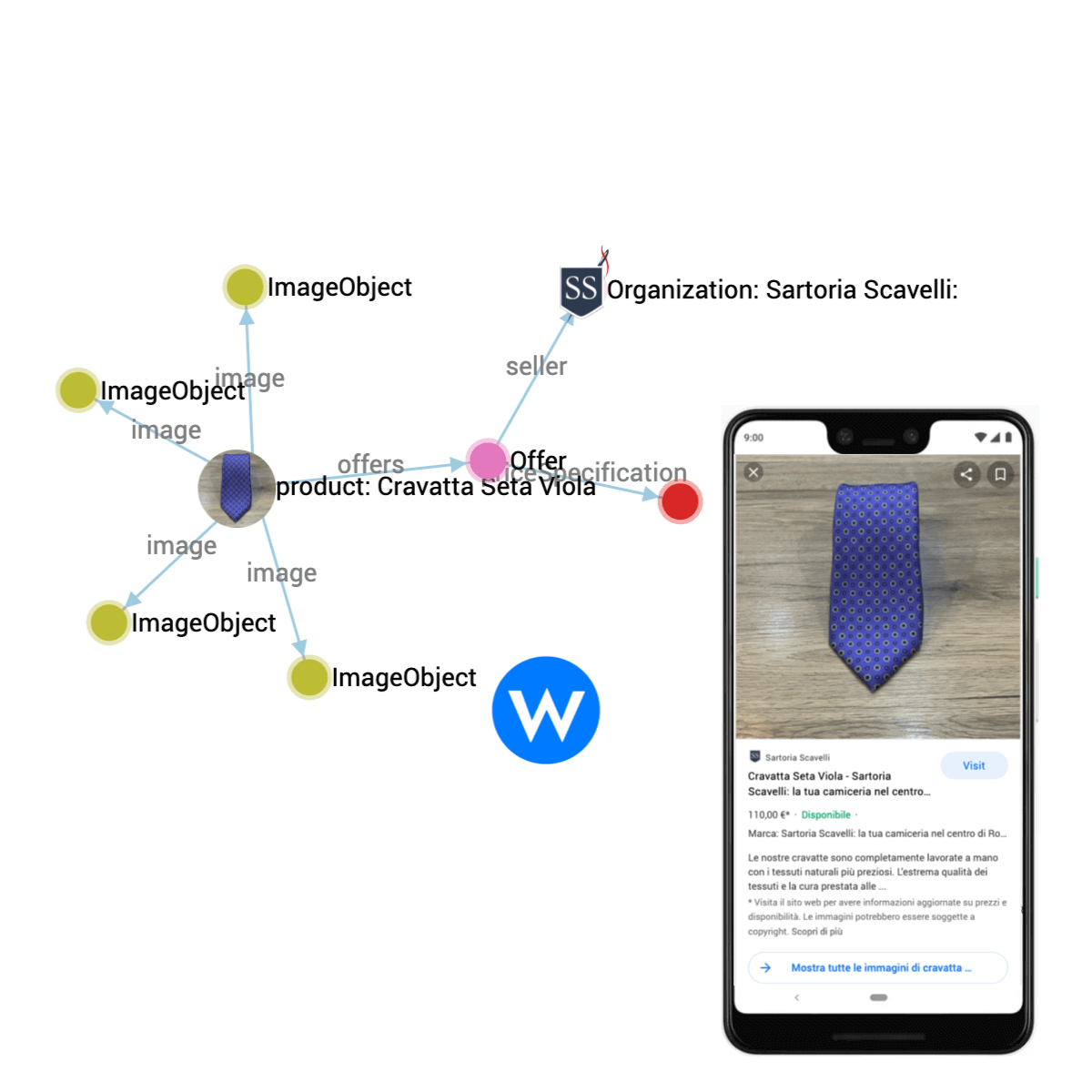
Step 1: Identifying Your Seed Entities
Your seed entities are the fundamental nouns that define your business—your core products, services, target audience problems, and unique solutions. List everything you do, focusing on the what rather than the how. For example, “Organic Espresso Beans” is an entity, while “Best coffee to wake up” is a search query.
Once you have your list, categorize them into three buckets:
- Core Offerings: The products or services you sell.
- Problems Solved: The specific pain points your customers experience.
- Industry Pillars: The broader categories or professional standards that define your niche.
Step 2: Creating Your Entity Relationship Model
Now that you have your seeds, build an entity relationship model. You don’t need expensive software; a simple spreadsheet with three columns—Subject, Predicate, and Object—is your best tool. This follows the triple format used by AI to understand the world.
| Component | Definition | Example |
|---|---|---|
| Subject | Your entity | Organic Espresso Beans |
| Predicate | The connecting verb | is produced by |
| Object | The related entity | Fair Trade Coffee Farmers |
By detailing these links, you move your content from a disorganized pile of articles into a structured web of meaning. This structural clarity is crucial for establishing topical authority for AI search.
Comparing Keyword-Centric vs. Entity-Centric Mapping
The structural difference between old-school SEO and modern semantic approaches is significant. While traditional methods rely on frequency, entity-based mapping relies on context.
| Feature | Flat Keyword Lists | Connected Entity Graphs |
|---|---|---|
| Focus | Search Volume | Conceptual Meaning |
| Structure | Unordered list | Web/Network of nodes |
| AI Signal | Mentions | Relationships and intent |
| Long-term Value | Low | High |
Putting it All Together
Start by mapping five of your core products. Ask yourself what the three most important facts about this service are, and what other services it naturally relates to. Once defined, ensure your internal linking structure reflects this map. If you describe your service as a “Professional Consulting Package,” ensure that all related blog posts about “Project Management” link back to your “Consulting” entity page. This reinforces the connections in the eyes of the crawler. By doing this groundwork, you are teaching the AI how to categorize your brand, making it much easier to rank in AI search results as a trusted, authoritative source.
Bridging the Gap: Linking Internal Data to External Knowledge Bases
To master how to optimize for AI search engines, you must help AI models understand exactly who you are and what you offer. While your website contains a wealth of information, AI models often struggle to categorize niche services without a common frame of reference. By linking your internal concepts to established global knowledge bases like Wikidata or Wikipedia, you provide the reference that lets machines verify your expertise.

When you explicitly connect your internal data points to recognized entities, you perform a reference check for AI. Imagine an AI model trying to classify your unique “Eco-Filter Pro” product. Without a reference, the model might just see it as an abstract string of text. If you define it in your structured data as a “Water Purification Device,” the AI instantly pulls in the broader context associated with that category. It now understands the purpose, mechanism, and industry standards for your product, building immediate topical authority for AI search.
Why External Links Act as a Reference Check
AI models are trained on massive datasets, but they aren’t mind readers. They rely on disambiguation to ensure they understand your content correctly. When you define your concepts against external knowledge bases, you reduce the risk of the model misinterpreting your terminology. This is the core of semantic SEO for AI engines—it’s not about stuffing keywords, but providing a clear, verifiable definition of your world.
| Your Internal Concept | External Knowledge Base Category | Benefit for AI Clarity |
|---|---|---|
| Eco-Filter Pro | Water Purification Device | Immediate industry categorization |
| Bio-Dynamic Farming | Sustainable Agriculture | Associative trust |
| Custom CRM Solution | Customer Relationship Management | Links to high-authority software taxonomy |
| Local Artisan Coffee | Coffee Production | Connects to global culinary definitions |
Strategies for Effective Entity Linking
Linking to these nodes is about signaling importance. You aren’t just telling the AI what your service is; you’re telling it where your service fits in the grand hierarchy of human knowledge.
- Audit your core vocabulary: Identify the primary terms you use that exist as standard industry categories.
- Utilize Schema Markup: Use JSON-LD to explicitly link your page entities to their corresponding Wikidata URLs. This is the standard language for AI search optimization techniques.
- Focus on precise relationships: Don’t just link to a broad concept; link to the most relevant sub-category. Linking a specific software tool to “Software” is too generic, but linking it to “Project Management Software” provides the precise context AI needs.
By creating these explicit pathways, you make your content readable for machines. When the machine can traverse your internal links and land on a widely recognized, trusted node, your site gains the authority of that node by association. It turns your isolated website into an integrated part of the AI’s knowledge map, ensuring your brand is included in the answers the AI provides to its users.
Influencing AI Citations via Entity-Proximity Strategies
In the realm of generative search, physical and semantic distance matter as much as relevance. AI systems treat content like a massive web of connections, and the proximity concept posits that when you group related entities within the same context, you make it significantly easier for an algorithm to grasp the relationship. When two concepts appear in close proximity, the AI identifies them as statistically correlated, raising your topical authority for AI search.
If you mention “sustainable manufacturing” in one sentence and “carbon-neutral logistics” three pages later, the AI might miss the connection. However, by discussing these entities in the same paragraph, you provide the context needed for the model to cite your content as an authoritative source on the intersection of those fields.
Checklist for Relationship-Rich Content
To ensure your content is fully optimized, bridge the gap between human-readable text and machine-understandable data using this checklist:
- Primary Entity Anchor: Ensure your main topic appears in the title, H1, and the first paragraph.
- Explicit Schema Markup: Use JSON-LD to define the relationships between your entities.
- Contextual Co-occurrence: Within your prose, explicitly state the connection (e.g., “Our [Service X] utilizes [Technology Y] to achieve [Result Z]”).
- Data-Backed Assertions: Include statistics or research links within the same block as your service descriptions to provide the AI with proof.
- Semantic Tags: Use clear, descriptive subheadings that label the connection between concepts.
Strategy for Internal Linking and Crawling
Standard internal linking focuses on user navigation, but AI search optimization techniques require a shift toward relational crawling. Build a structural map that guides the crawler through your domain’s specific hierarchy.
- The Hub-and-Spoke Mapping: Every pillar page should link to its supporting satellite content using anchor text that explicitly defines the entity relationship.
- Contextual Contextualization: Avoid generic links. Instead, surround your link with the entity’s definition.
- Circular Reinforcement: Ensure that your satellite content points back to the pillar content using the same consistent terminology. Keeping the terminology identical confirms the entity identity for the crawler.
By consistently applying these techniques, you move beyond simple keyword matching. You are building a bespoke knowledge graph that allows AI engines to confidently cite your brand when users ask questions. This proactive approach is the most effective way to how to rank in AI search results in an evolving search landscape.
The era of chasing singular keywords is fading. True visibility today relies on moving beyond simple strings and embracing the power of the entity relationship model. By shifting your focus from individual search queries to the deeper, interconnected concepts that define your expertise, you begin to speak the same language as modern AI. Every connection you make clarifies your position in the digital landscape, making it easier for AI to recognize you as the expert worth citing. Your journey toward mastering how to optimize for AI search engines begins with this very first relationship map. Embrace the clarity, start linking, and watch your authority grow.
AEO/GEO
Want to learn more?
Contact us for direct consultation and support.