The Paradigm Shift: From SEO to GEO
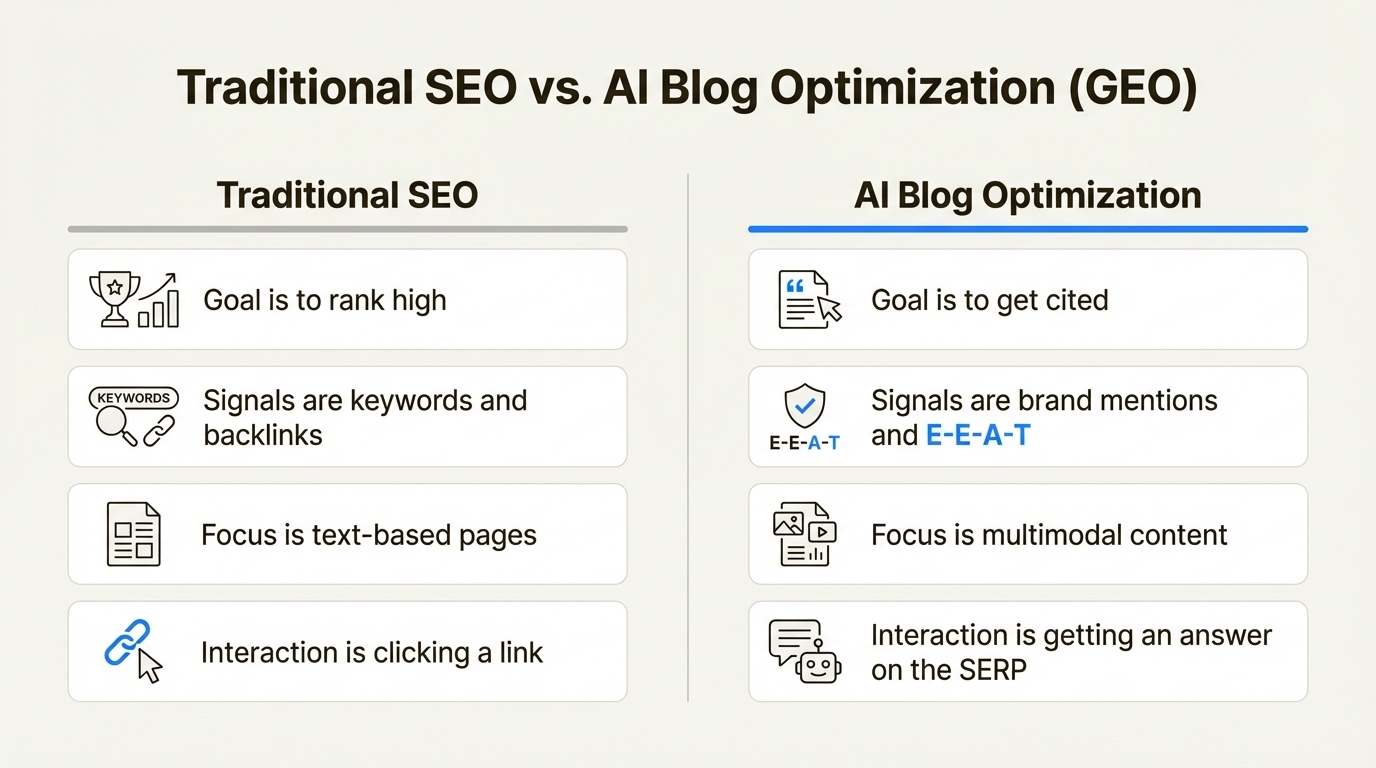
The digital landscape has fundamentally changed. While traditional SEO focused on securing “blue links” and high rankings through keyword density, Generative Engine Optimization (GEO) focuses on becoming a preferred source for AI-generated answers.
In the era of LLM-powered search, the goal is no longer just “position” on a results page—it is “presence” within the synthetic responses provided by models like ChatGPT, Gemini, and Perplexity. To maintain visibility, brands must pivot toward a 10-Step GEO Framework that treats search interfaces as knowledge synthesizers rather than traffic funnels.
Technical Foundation: Preparing Your Infrastructure for AI Crawlers
AI engines do not navigate the web like human users; they ingest structured data to build their internal world models. Optimizing your infrastructure is the first step toward earning a place in their answers.
- Crawlability: Ensure your site is optimized for modern bots like GPTBot and ClaudeBot. Use
robots.txteffectively to guide these crawlers to your highest-value content. - Structured Data: Implement advanced Schema markup (JSON-LD) to explicitly define your business, products, and expertise. This removes ambiguity and feeds LLMs clean, machine-readable facts.
- Content Velocity: AI models prioritize fresh, authoritative data. High-speed, clean delivery of content ensures that your latest information is ingested and prioritized during answer synthesis.

The 10-Step GEO Execution Strategy
To transition from legacy search tactics to an AI-first approach, follow these ten strategic actions:
- Prompt Mapping: Align content with the specific questions AI agents are tasked to solve, rather than just matching high-volume keywords.
- Intent Alignment: Structure information to answer the “who, what, why, and how” directly, making it easy for LLMs to extract your content as a factual response.
- Engine-Specific Tuning: Tailor content formats. Perplexity favors cited, fact-heavy content, while ChatGPT may prioritize conversational depth.
- Third-Party Trust Signals: Leverage platforms like Wikipedia, Reddit, and YouTube. AI models rely on these high-authority sites to verify external information.
- Cited Expertise: Build authority by citing primary sources and verifiable data points within your content.
- Direct Answer Optimization: Place the definitive answer at the beginning of your content modules.
- Semantic Internal Linking: Use descriptive anchor text to show AI how your topics relate to one another.
- Knowledge Graph Integration: Connect your brand entity to broader industry ontologies to establish topical authority.
- Multimodal Consistency: Ensure your brand message is consistent across text, video, and image descriptions.
- Automated Feedback Loops: Use tools to monitor AI citations and proactively correct inaccurate information about your brand in real-time.
Measuring Success: Beyond Traditional Rankings
Traditional KPIs like organic traffic and keyword rankings are becoming less representative of true market impact. In a GEO-focused strategy, you must measure your Presence Rate—the frequency with which your brand is cited in AI-generated answers.
- KPIs: Focus on Share of Voice within generative summaries and the click-through rates of citations embedded in those answers.
- Benchmarking: Track how your entity appears in response to high-intent queries compared to your top industry competitors.
- Adjustment: Use these metrics to iterate on your content strategy, shifting focus toward topics where your AI visibility is lagging.
Frequently Asked Questions about GEO Success
How does GEO impact traditional search traffic?
GEO often creates a dual benefit. While AI-generated answers may capture some traffic, they also drive higher-intent users to your site, often leading to better conversion rates.
What is the role of backlinks in an AI search environment?
Backlinks still serve as critical signals of authority and trust, which AI models cross-reference when assessing the reliability of a source for a specific claim.
How often should I audit my content for AI engine updates?
Perform a GEO audit at least quarterly. As search models evolve, your content must be refreshed to remain consistent with the latest synthesis behaviors of major AI engines.