When HubSpot’s Global Events Team began planning for INBOUND 2024, they faced a common creative dilemma. The team lacked a clear direction for the event’s visual identity, yet they knew one thing for certain: artificial intelligence had to play a central role. This wasn’t just about following a trend. It was about leveraging new tools to solve real production challenges while maintaining brand integrity.
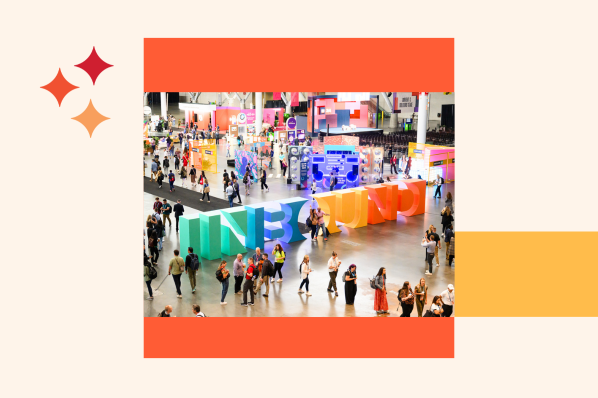
The results of this experiment were significant. By integrating AI into their pre-production workflow, the team created eye-catching visuals and targeted agendas that resonated with attendees. More importantly, they saved thousands of dollars and weeks of time that would have been spent on traditional vendor processes. This case study offers valuable insights for businesses looking to adopt AI in their own operations without losing control over quality or brand voice.
Transforming Visuals with Midjourney and Runway
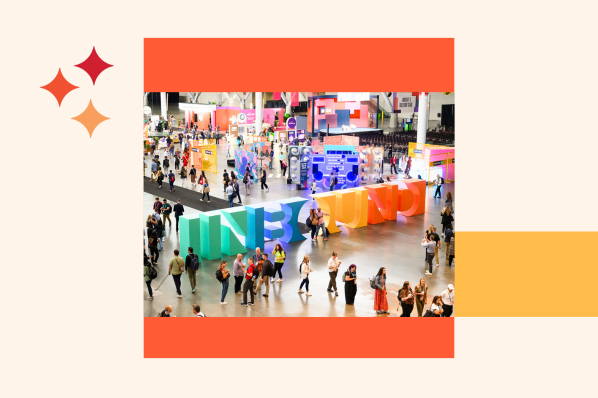
Prior to INBOUND 2024, the onsite interstitials at HubSpot events were relatively static. They relied on consistent year-over-year imagery with light animation, which often blended into the background. The team wanted to change this dynamic. They needed visuals that would engage attendees, spark conversation, and provide a refreshing break between sessions. This goal led them to explore generative AI tools, specifically Midjourney, Topaz, and Runway.
Eduardo Garcia-Lopez, a lead designer on HubSpot’s Visual Design team, took the lead on this initiative. His goal was not to create something entirely new, but to push the boundaries of the existing HubSpot brand. He wanted to explore the possibilities of AI while maintaining the core style of the brand. The team settled on three distinct themes: an abstract umbrella theme tied to the HubSpot brand, an extended brand for each stage, and a surreal, abstract city theme. These themes allowed for creative freedom while keeping the visual identity recognizable.
The Creative Process and Workflow
The production of these visuals took approximately six weeks. The team generated 28 final videos, totaling 14 minutes of run time, adapted for seven different screen types at the venue. The process began with a baseline of shapes, gradients, and colors that have always been the foundation for INBOUND graphics. Garcia-Lopez fed these initial images into Midjourney to generate ideas and options for the Global Events team.
In this workflow, the person prompting the AI acts as the director. You provide the vision, and the AI executes it. This requires a clear understanding of the desired outcome and the ability to guide the tool effectively. Once the team agreed on the final 2D images for each stage and location, Garcia-Lopez moved to Runway to create mini video shorts and animations. He also used Topaz, an AI editing software, to enhance the quality of the videos.
| Tool | Purpose | Outcome |
|---|---|---|
| Midjourney | Generate initial 2D images and ideas | 25 distinct styles, 28 final videos |
| Runway | Create mini video shorts and animations | 14 minutes of run time for 7 screens |
| Topaz | Enhance video quality | Improved clarity and resolution |
| Adobe Premiere | Edit and compile final videos | Seamless integration of all assets |
Garcia-Lopez estimates that requesting a 30-second clip from a traditional vendor would take at least two weeks and cost thousands of dollars. By using AI, the team was able to produce similar assets in a fraction of the time and cost. However, the process was not without its challenges. AI can produce oddities when mimicking reality, such as choppy movements or unrealistic interactions between objects. The team had to carefully review and clean up these inconsistencies, which required time and attention to detail.
Limitations and Learning Curves
One of the biggest challenges with using AI for design is the difficulty of editing. Unlike vector-based designs in Adobe Illustrator, where you can change every little detail, editing AI-generated images can be complex. Garcia-Lopez notes that it is a myth that editing with AI is quick. For example, achieving the exact color palette can be difficult, though you can get close. The team had to learn what feedback was easy to implement and what was not.
Additionally, AI does not do the bulk of the work alone. There is a significant amount of manual effort involved in bringing the AI-generated assets back into traditional software like Adobe and then feeding them back into the AI model to refine the results. This requires skills in multiple software programs and a strong background in design to solve issues effectively. Despite these challenges, the team was able to create 25 distinct styles, a result that would have been nearly impossible with a traditional team in the same timeframe.
Creating Custom Agendas with Claude
In addition to visual assets, the Global Events team used Anthropic’s Claude to create personalized agendas for attendees. They chose Claude because it does not train on the data you input, ensuring data privacy. Claude also has a large context window, allowing the team to upload extensive information for the AI to analyze without storing it in its system. This was crucial for maintaining security and confidentiality.
The team wanted to develop attendee personas and create targeted agendas based on INBOUND’s sessions, speakers, buyer personas, and goals. They instructed Claude to make each agenda unique, without overlapping sessions, and to provide reasoning for its choices. The process took less than a full day, compared to the multiple days it would take to hire a team to do the same work. This efficiency translated into significant cost savings, as the team only paid for a Claude Pro subscription.
Developing Attendee Personas
Once the targeted agendas were built, the team created dedicated personas for each agenda. These included marketing-focused personas like the AI-Driven Leader and the Marketing Technologist, sales-focused personas like the Go-To-Market Strategist, and founder-inspired personas like the Data-Driven Leader. These personas helped attendees identify with the content and tailor their experience at the event.
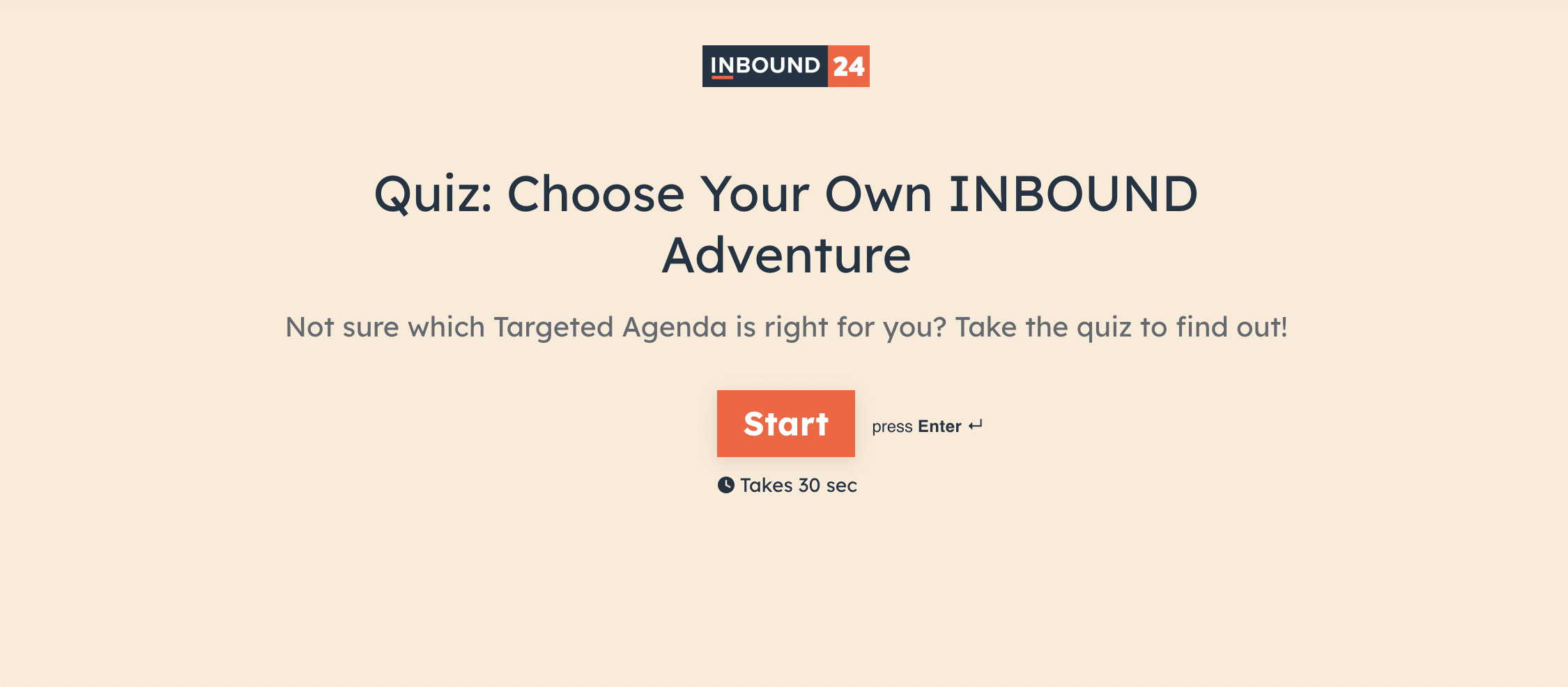
The second half of this project involved creating a personality quiz that attendees could take to match their persona to a targeted agenda. The team assumed that people, especially on social media, prefer to be told who they are through quizzes rather than finding out on their own. This approach leveraged the popularity of personality tests to drive engagement and interest in the event.
Challenges in Quiz Development
The biggest challenge in developing the quiz was ensuring that the scoring system had even odds for each agenda. The team wanted to avoid a situation where all quiz takers were matched to the same targeted agenda. Claude helped them get about 85% of the way there, but the remaining 15% required manual adjustment to ensure the scoring rubric made sense for all personas. This involved careful testing and iteration to balance the outcomes.
The quiz was published on the INBOUND blog and promoted via email and social channels. It was highly successful, ranking third in terms of impressions among all 2024 blog posts, behind only one post that had significant paid promotion. This success demonstrated the value of using AI to create personalized and engaging content that resonates with the audience.
Key Takeaways for AI Adoption
The HubSpot INBOUND 2024 case study provides several key takeaways for businesses looking to adopt AI in their operations. First, AI can significantly reduce production time and costs. By leveraging tools like Midjourney, Runway, and Claude, teams can create high-quality assets and content in a fraction of the time it would take using traditional methods. This efficiency allows for more experimentation and iteration, leading to better final outcomes.
Second, AI requires human oversight and expertise. While AI can generate ideas and execute tasks, it cannot replace the need for human direction and quality control. Teams must be skilled in both AI tools and traditional software to effectively manage the workflow and address limitations. This hybrid approach ensures that the final product meets brand standards and quality expectations.
Third, data privacy and security are critical considerations when using AI. Choosing tools that do not retain user data, like Claude, can help mitigate risks associated with data breaches and confidentiality. This is especially important for businesses handling sensitive information or proprietary content.
Practical Steps for Implementation
For businesses considering AI adoption, here are some practical steps to follow:
-
Define Clear Objectives: Identify what you want to achieve with AI, whether it’s reducing costs, improving efficiency, or enhancing creativity. Clear objectives help guide the selection of tools and the design of the workflow.
-
Choose the Right Tools: Research and select AI tools that align with your objectives and brand standards. Consider factors like ease of use, cost, data privacy, and integration with existing software.
-
Train Your Team: Ensure that your team has the necessary skills to use AI tools effectively. This may involve training in prompting, editing, and quality control. A skilled team can maximize the benefits of AI and minimize risks.
-
Test and Iterate: Start with small projects to test the effectiveness of AI tools and workflows. Use feedback to refine processes and improve outcomes. Iteration is key to achieving consistent results.
-
Monitor and Adjust: Continuously monitor the performance of AI tools and adjust strategies as needed. Stay updated on new developments and best practices in AI to remain competitive and effective.
The Future of AI in Marketing
As AI continues to evolve, its role in marketing and content creation will only grow. Businesses that embrace AI early can gain a competitive advantage by producing high-quality content more efficiently and cost-effectively. However, success depends on a balanced approach that combines AI capabilities with human expertise and oversight.
The HubSpot INBOUND 2024 case study demonstrates that AI is not a magic bullet, but a powerful tool that can enhance creativity and efficiency when used correctly. By learning from this example, businesses can navigate the complexities of AI adoption and achieve meaningful results. The key is to start small, stay curious, and remain committed to quality and brand integrity.
What aspects of AI integration are you most curious about for your own business? The journey to AI mastery begins with a single step, and every experiment offers valuable lessons for the future.





