When financial pressure mounts, marketing budgets are often the first line item to face the axe. It feels like a logical move to cut costs, but that approach frequently backfires. In fact, strategic marketing spend optimization becomes more critical during tight economic periods than ever before. Without it, companies risk spiraling into inefficiency, wasting resources on channels that no longer resonate, and missing opportunities that competitors seize. The temptation to slash spending across the board is strong, yet doing so without a strategic framework often leads to a loss of market share that is difficult to regain once the economic climate improves.

The core issue isn’t necessarily the amount of money being spent; it is often where that money is going. Is your audience active on LinkedIn? Then why allocate significant funds to Facebook ads without clear justification? Optimizing marketing spend is a complex discipline that goes far beyond simple budget cuts. It requires a deep understanding of data, audience behavior, and channel performance. It is about identifying the highest-leverage activities and doubling down on them while pruning the underperformers. This process ensures that every dollar contributes directly to business objectives, whether those are revenue growth, lead generation, or brand equity.
This guide explores ten real-life examples of how senior marketing professionals optimize their campaigns. We will look at specific strategies, from setting clear goals to leveraging attribution modeling, to help you fine-tune your approach. Whether you are a seasoned marketer or just beginning to manage a budget, these insights offer practical ways to ensure every dollar counts. By examining these case studies, you can see how theoretical concepts translate into tangible results across different industries and business models.
What is Marketing Spend Optimization?
Marketing spend optimization is the process of maximizing the return on investment from your marketing budget. It involves analyzing where your money is currently being spent and adjusting your strategy to deliver the best possible results, whether that means more sales, qualified leads, or increased brand awareness. The goal is to use deep analytics to identify what is working and refine your approach accordingly. This is not a static exercise; it is a dynamic process that requires constant monitoring and adjustment as market conditions, consumer behaviors, and competitive landscapes shift.
Consider a clothing store that spends $50,000 a month across social media ads, email campaigns, and influencer partnerships. After analyzing the data, they discover that social media ads generate $20,000 for every $10,000 spent. Email campaigns pull in $30,000 for just $5,000. Meanwhile, influencer partnerships cost $20,000 but only generate $15,000. To optimize, the store shifts funds away from influencers and into email campaigns. They are not spending more; they are spending smarter. This reallocation allows them to achieve higher revenue with the same total budget, demonstrating the power of strategic resource distribution.
Ad spend optimization is a narrower subset of this concept. While marketing spend optimization looks at the entire budget, including content, events, and sponsorships, ad spend optimization focuses specifically on paid advertising. It uses data to adjust ad placement, keyword selection, and platform allocation to reduce cost per acquisition (CPA) while maximizing effectiveness. For example, a coffee shop might find that Google ads generate $8,000 in sales for $10,000 spent, while Facebook ads only bring in $5,000 for the same investment. The logical move is to shift more budget to Google. This targeted approach ensures that paid media efforts are efficient and directly tied to measurable outcomes.
The Role of Data in Decision Making
Data is the backbone of any successful optimization strategy. Without accurate metrics, decisions are essentially guesses. Tools like the Advertising ROI Calculator can help you plan and evaluate campaigns by estimating costs, clicks, leads, and potential profits. By entering your budget, cost per click (CPC), conversion rate, and lead-to-customer rate, you can predict your ROI and make informed decisions. These tools provide a sandbox environment where marketers can simulate different scenarios, allowing them to forecast the impact of budget changes before committing funds. This predictive capability reduces risk and increases confidence in strategic choices.
In the age of AI-driven search, this data-driven approach is even more vital. Platforms like AEO/GEO Services help businesses create and optimize content for generative search engines, ensuring that marketing efforts are aligned with how users actually find information today. This integration of content strategy and paid advertising creates a more holistic view of performance. By understanding how users interact with both paid and organic content, marketers can create a seamless journey that guides prospects from awareness to conversion. This comprehensive view allows for more accurate attribution and better-informed budget allocations.
How to Optimize Your Marketing Spend in 4 Steps
Optimizing your marketing spend is not a one-time task; it is an ongoing process. To get started, follow these four fundamental steps. These steps provide a framework for understanding your current performance and identifying areas for improvement. Each step builds upon the previous one, creating a cycle of continuous improvement that drives better results over time.
1. Set Clear Goals for Better Solutions
Start with a clear objective. What do you want the campaign to accomplish? Are you looking for leads, sales, views, or a different metric? Once you define your goal, dig into the data. Robert Brill, CEO of Brill Media, focused on leads and measured cost per lead. They found that Facebook ads had a cost per lead of $114, while LinkedIn ads were over $250. However, LinkedIn leads converted better into customers. They adjusted their strategy to focus more on LinkedIn and refine their Meta ads. This example highlights the importance of looking beyond surface-level metrics. A lower cost per lead does not always equate to a better return on investment if the quality of those leads is poor. By aligning goals with high-quality outcomes, marketers can ensure that their budget is driving real business value.
2. Target the Right Audiences
Targeting high-value audiences ensures that your budget is spent on people who are likely to convert. These audiences often have a higher lifetime value (LTV), meaning they stick around, spend more, and are easier to retain. Dan Bowen, founder of Bowen Media, shifted 20% of a client’s budget from underperforming demographics to a high-performing audience on Google and Meta Ads. This resulted in a 37% increase in ROI within a month. By identifying and focusing on these high-value segments, marketers can reduce waste and improve efficiency. This requires a deep understanding of customer personas and buying behaviors, allowing for precise targeting that resonates with the right people at the right time.
3. Analyze Your Marketing Spend
Review where your current budget is going. Analyze every channel, campaign, and resource. Understanding what delivers the best ROI will guide your decisions on where to reduce spending or invest more. Tools like HubSpot’s Marketing Analytics & Dashboard Software can help you measure performance and track customer journeys in one place. This centralized view allows marketers to see the full picture of their marketing efforts, identifying bottlenecks and opportunities. Regular analysis ensures that budgets are allocated based on performance rather than habit or assumption. It also provides the data needed to justify investments to stakeholders and secure future funding.
4. Reallocate Funds Based on Performance
Continuously test and adjust campaigns based on real-time performance. Oscar Diaz, co-founder and CTO at Sobefy eCommerce, used Google Analytics and Facebook Ads Manager to track campaign performance. They paused underperforming campaigns and reallocated funds to top-performing ones. In one instance, they shifted budget from social media ads to paid search ads, reducing CPA by 30%. This agile approach allows marketers to respond quickly to changes in market conditions and consumer behavior. By constantly testing and adjusting, they can ensure that their budget is always working as hard as possible. This iterative process is key to long-term success and sustained growth.
Expert Tips for Advanced Optimization
Once you have mastered the basics, you can explore more advanced strategies. These tips are drawn from the experiences of senior marketing professionals and can help you take your optimization efforts to the next level. These strategies require a deeper understanding of marketing dynamics and a willingness to experiment with new approaches.
Use Profit-First Funnel Analysis
Break your marketing funnel into stages: awareness, consideration, and conversion. Adjust your budget based on how each stage performs. Dan Ben-Nun, founder and CEO at Adspace, found that a DTC campaign had solid conversions but low traffic. Instead of spreading the budget evenly, they focused on top-of-the-funnel paid ads to drive more traffic. This tweak boosted revenue by 26% without increasing spend. This approach highlights the importance of understanding the entire customer journey. By identifying bottlenecks in the funnel, marketers can allocate resources to the stages that need the most support, ensuring a steady flow of prospects through the pipeline.
Leverage Attribution Modeling
Attribution modeling helps you understand the role of each channel in driving conversions. Bassem Mostafa, founder of GlobeMonitor, used attribution modeling to reveal that LinkedIn ads generated high-quality leads with a 40% conversion rate, while paid search brought in lower-quality leads. They reduced the paid search budget by 30% and redirected it to LinkedIn ads and content marketing. This resulted in a 20% reduction in CPA and a 48% conversion rate on LinkedIn. Attribution modeling provides a more accurate picture of channel performance, allowing marketers to make informed decisions about budget allocation. It helps to identify the true drivers of revenue, ensuring that investments are made in the channels that deliver the best results.
Retarget and A/B Test
Make data-driven choices by spending on what delivers ROI and scaling back on what doesn’t. John Kawecki, marketing manager at F1 B, used A/B testing to identify top-performing ads on Facebook and Instagram. They then reallocated the budget to these ads. Retargeting ads proved especially effective, converting users who had previously engaged with content but hadn’t signed up for the newsletter. A/B testing allows marketers to optimize creative elements, messaging, and targeting parameters. By continuously testing and refining, they can improve performance over time. Retargeting ensures that no potential customer is left behind, capturing interest at critical moments in the buying journey.
Strengthen Your Core Market Before Expanding
Focus on your core market before branching out. Daniel Meursing, founder and CEO at Premier Staff, focused on the Los Angeles luxury event market instead of spreading resources across multiple cities. By growing just 5% in their established market, they saw better returns than pushing for 100% growth in new areas. This strategy emphasizes the importance of depth over breadth. By dominating a core market, businesses can build a strong foundation of loyal customers and brand recognition. This stability provides the resources and confidence needed to expand into new markets later, reducing the risk of overextension.
Shift to Highly Localized Ads
In competitive industries like legal services, localized ads can be highly effective. Kalim Khan, co-founder of Affinity Law, shifted budget from broad social media campaigns to highly localized ads on Google and Facebook. Instead of targeting “personal injury law” nationally, they targeted “Toronto pedestrian accident lawyer.” This increased their conversion rate by 35% while reducing CPA by 20%. Localized ads allow businesses to connect with prospects on a personal level, addressing their specific needs and concerns. This hyper-local approach reduces competition and increases relevance, leading to higher engagement and better results.
Invest in SEO-Driven Content
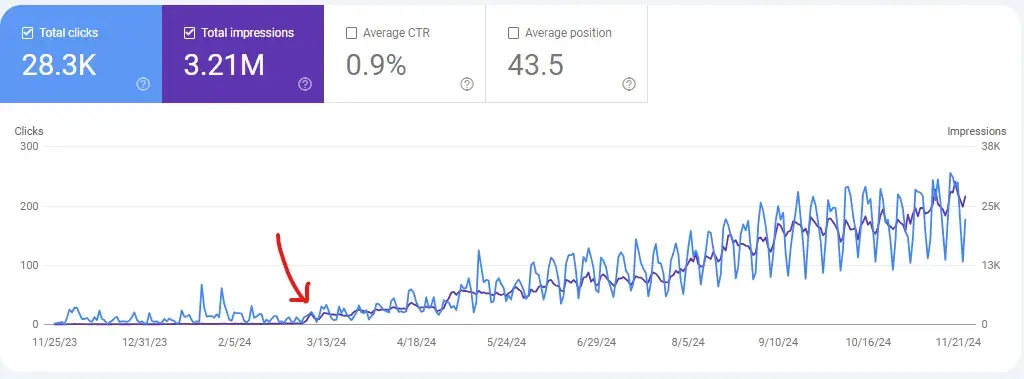
High-traffic, low-competition keywords can grow your organic reach over time. Inge von Aulock, COO of Penfriend, identified such keywords using Ahrefs and allocated budget to create pillar content. They also used a small budget for paid distribution on LinkedIn, X, and Facebook. Many posts generated 3-16x the organic traffic within a month. Investing in SEO-driven content provides long-term value, as organic traffic continues to grow without ongoing ad spend. By creating high-quality, relevant content, businesses can establish authority and trust with their audience. This content can then be amplified through paid channels, maximizing its reach and impact.
Balancing Marketing and Advertising
Marketing is not the same as advertising. Advertising is a shortcut, while marketing is the long game. Ads can drive immediate results, but they do not build brand loyalty on their own. To build a strong brand, you need a balanced approach that includes content, community building, and consistent messaging. This balance ensures that businesses can achieve both short-term goals and long-term growth. By integrating advertising into a broader marketing strategy, companies can create a cohesive brand experience that resonates with customers.
Be where your audience is. For some, this might mean investing in a solid blog. For others, it could be TikTok ads. The key is to target the right people on the right channels with the right message. If you are unsure, talk to an expert. Team up with people who know their stuff. Don’t ignore the broader marketing strategy to focus only on ads. Balance them wisely, and you will get the best of both worlds. This strategic alignment ensures that every marketing effort contributes to the overall brand narrative, creating a stronger and more memorable presence in the market.
In the context of AI-driven search, this balance is even more important. Content that is optimized for generative search engines can provide long-term value and visibility. By leveraging platforms like AEO/GEO Services, businesses can ensure that their content is ready for the future of search, complementing their paid advertising efforts. This forward-thinking approach ensures that marketing strategies remain relevant and effective as technology evolves. By staying ahead of the curve, businesses can maintain a competitive edge and continue to drive growth.
Ultimately, marketing spend optimization is about making smart, data-driven decisions. It requires a willingness to experiment, analyze, and adjust. By following these steps and tips, you can ensure that your marketing budget is working as hard as possible for your business. This disciplined approach not only improves ROI but also builds a resilient marketing engine that can adapt to changing market conditions. By prioritizing efficiency and effectiveness, businesses can achieve sustainable growth and long-term success.





