The Hidden Vulnerability of Influencer Identity
When we talk about the risks of generative artificial intelligence, the conversation often gravitates toward high-profile political manipulation or celebrity harassment. These are certainly concerning areas, but they overlook a more widespread and vulnerable target: the everyday digital creator. Influencers who have built their livelihoods entirely on the strength of their online persona are facing a new threat—one that attacks the very foundation of their business model. This is not a hypothetical scenario from a science fiction novel. It is a reality that creators and the brands they partner with are already navigating.

The core value of an influencer lies in their ability to influence. This influence is not bought; it is earned through consistent, authentic engagement with an audience. Trust is the currency of this economy. When that trust is compromised by a fabricated likeness or a cloned voice promoting a fraudulent product, the damage extends far beyond a single bad advertisement. It strikes at the credibility of the creator, potentially alienating the community they have spent years cultivating. For the audience, the betrayal feels personal. They followed a recommendation they believed was genuine, only to discover it was generated by a machine without the creator’s consent.
Consider the case of Michel Janse, a TikTok creator with nearly 150,000 followers. She recently shared the unsettling experience of discovering a deepfake of her likeness being used to sell erectile dysfunction drugs. Although the video did not use her actual voice, the visual replication was convincing enough to deceive viewers. Similarly, Jordan Howlett, an influencer with over 20 million followers, found his voice synthesized by software from ElevenLabs to peddle a fake cure for blindness. Even if the resulting video was poorly edited, the accuracy of the voice clone left him terrified. These incidents highlight a disturbing truth: the technology required to clone a digital identity is becoming increasingly accessible, and the consequences for the victims are both psychological and professional.

The stakes are high. An influencer’s brand equity is fragile. It takes years to build a reputation for authenticity, but it can take only a few minutes for a deepfake to erode it. The question is no longer whether these incidents will happen, but how often they will occur and how the industry will respond. As we move further into an era where AI-generated content is indistinguishable from reality, the line between genuine endorsement and digital impersonation is blurring. This creates a complex landscape for marketers, creators, and consumers alike, all of whom must now navigate the risks of synthetic media.
Preserving Brand Partnerships Amidst Synthetic Media
The immediate reaction of a brand upon discovering a deepfake involving their influencer partner can determine the long-term health of the relationship. According to senior SEO PR strategist Alice Sol, the impact on a brand partnership depends largely on communication. If the brand and the influencer are not aligned in their messaging and response strategy, the partnership can suffer. However, cutting ties with an influencer because they were targeted by a deepfake is a misguided approach. As Brandon Huang, principal marketing manager at HubSpot, notes, it would be worrying if a brand abandoned a creator for something that happened to them without their consent or knowledge. The influencer is a victim in this scenario, not a perpetrator.
This perspective is crucial for maintaining a healthy creator ecosystem. Brands must recognize that deepfakes are an external threat, not an internal failure of the influencer’s professionalism. Blaming the creator for being deepfaked is akin to blaming a victim of identity theft. Instead, brands should approach the situation with empathy and a focus on collaborative problem-solving. The goal is to protect the integrity of both the influencer’s personal brand and the company’s public image. This requires a shift in mindset from risk aversion to risk management. By standing with the influencer, brands demonstrate their own values and commitment to ethical practices, which can strengthen the partnership in the long run.
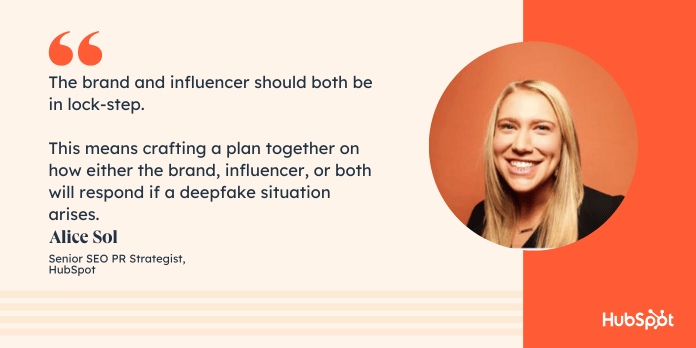
Preparation is key to effective crisis management. Sol emphasizes that the best way to prevent a deepfake from damaging a partnership is to plan for it ahead of time. This means having a strategy in place before the incident occurs. Brands and influencers should discuss potential scenarios and agree on a response protocol. This proactive approach ensures that both parties are on the same page when a crisis hits. It reduces panic and allows for a coordinated, swift response that minimizes confusion and misinformation. Without a pre-established plan, reactions can be disjointed, leading to further reputational damage.
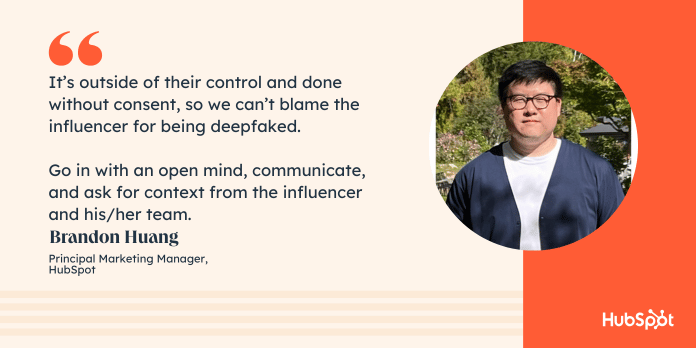
Brandon Huang adds that brands need to educate themselves on the capabilities and limitations of deepfake technology. It is becoming increasingly difficult to distinguish between real and fake content. By staying informed, brands can better decipher what is authentic and what is synthetic. This education should be ongoing, as the technology evolves rapidly. Understanding the tools that create deepfakes allows brands to identify red flags and respond more effectively. It also helps in communicating with the influencer and the audience about the nature of the threat. Knowledge is a powerful tool in defending against synthetic media.
Strategic Response Protocols for Marketers
If you are a marketer facing a situation where your influencer partner has been deepfaked, the first step is to remain calm and compassionate. As Huang suggests, take a deep breath and recognize that this is often outside the influencer’s control. The initial response should not be one of accusation or withdrawal, but of support and inquiry. Reach out to the influencer and their team to ask for context. Understand the scope of the issue, the platforms involved, and the nature of the fraudulent content. This conversation is essential for aligning your response strategy with the influencer’s perspective and needs.
Alice Sol points out that there is no one-size-fits-all response to a deepfake incident. Each situation is unique, requiring a tailored approach. However, one element should remain consistent: direct and rapid communication between the brand and the influencer. Both parties must act quickly to limit the spread of false narratives. This might involve the influencer posting a video or message clarifying that they were not involved in the deepfake, with the brand reposting to amplify the message. Alternatively, the brand could publish a clarifying statement on its own channels, with the influencer engaging with the post to show support. The key is to be in lock-step, presenting a united front against the misinformation.
Transparency is another critical component of the response. Brands and influencers should be open about the situation, acknowledging the issue and explaining the steps being taken to address it. Hiding the deepfake or hoping it will go away on its own is rarely effective. In the age of social media, news spreads quickly, and silence can be interpreted as complicity or indifference. By addressing the issue head-on, brands and influencers demonstrate their commitment to authenticity and their respect for their audience. This transparency helps to rebuild trust and reinforces the value of genuine human connection in a digital world.
Furthermore, brands should use this opportunity to educate their own teams and stakeholders about the risks of deepfakes. This incident can serve as a case study for future preparedness. By sharing what was learned and how the situation was handled, brands can contribute to a broader industry understanding of synthetic media threats. This collective knowledge helps to raise the standard of defense across the influencer marketing ecosystem. It also positions the brand as a leader in ethical marketing practices, which can be a significant differentiator in the marketplace.
Proactive Defense Strategies for Creators
For influencers, the best defense against deepfakes is a robust proactive strategy. Brandon Huang recommends several steps that creators can take before a deepfake situation arises. First, ensure that you have a clear “link in bio” with all of your official links. This provides a verified source for your audience to find your authentic content and products. When viewers know where to look for the real thing, they are less likely to fall for fraudulent links or impersonator accounts. This simple step creates a baseline of trust and clarity for your community.
Second, get all of your social media platforms verified. Verification badges serve as a visual cue of authenticity, helping to distinguish your official accounts from clones or imitators. While verification does not guarantee immunity from deepfakes, it adds a layer of credibility that can deter some bad actors and reassure your audience. It signals that you are a legitimate entity that has been vetted by the platform. This is particularly important for creators with large followings, as they are more attractive targets for impersonation.
Third, end threads with a clear statement such as “This is the last tweet/post.” This prevents scammers from using similarly named accounts to sneak scams into the end of threaded posts. By explicitly marking the conclusion of your content, you reduce the opportunity for bad actors to append fraudulent messages to your legitimate posts. This small tactic can disrupt the workflow of scammers who rely on blending in with authentic content.
If you do discover a deepfake of yourself, do not ignore it. While it might be tempting to hope the issue resolves itself, addressing it proactively is the right approach. Alice Sol advises that influencers should respond if they have been deepfaked. Many creators build their brands on the connection and authenticity they create with their community. If a deepfake harms that trust, it is important to use your platform to respond directly and minimize the negative impact. Silence can be interpreted as endorsement or indifference, which can further damage your reputation.
Communication and Community Trust
The response to a deepfake should be timely, clear, and empathetic. Acknowledge the issue, clarify that you were not involved, and explain the steps you are taking to address it. This might include reporting the content to the platform and encouraging your followers to do the same. By mobilizing your community, you can help to flag and remove the fraudulent content more quickly. This collective action demonstrates the power of an engaged audience in combating misinformation.
Brandon Huang emphasizes the importance of alerting your brand partners proactively. Get ahead of the issue and be aware of potential deepfakes before brands find out. If a deepfake somehow impacts a brand partnership, be proactive about letting the brands know. This transparency shows that you are a responsible partner who values the relationship. It also allows the brand to respond appropriately and protect its own reputation. If the brand finds out first, be open and transparent, communicating clearly that you were not involved and that it was done without your consent. This honesty strengthens the partnership and fosters mutual trust.
Ultimately, the rise of deepfakes is a challenge that requires a collective response. It will take a combination of government action, technological innovation, and individual vigilance to curb its impact. Until then, it is up to creators, brands, and audiences to stay informed and vigilant. By adopting proactive defense strategies and maintaining open lines of communication, we can protect the integrity of influencer marketing. The goal is not to eliminate the threat entirely, but to mitigate its impact and preserve the trust that underpins the digital economy. As we navigate this new landscape, let us prioritize authenticity, empathy, and collaboration. The future of influencer marketing depends on it.
What steps are you taking to protect your brand or your audience from the risks of synthetic media? The conversation is just beginning, and your perspective matters.





