The Origins of Global Connectivity
The internet is the backbone of modern commerce, yet its fundamental mechanics often remain a mystery to those who rely on it daily. Understanding how this vast network operates is not just an academic exercise; it is essential for leaders who need to make informed decisions about digital strategy, infrastructure, and customer experience. When you grasp the underlying architecture, you can better appreciate the reliability, speed, and scalability that your business depends on.

The concept of a globally connected network did not emerge overnight. In the early 20th century, Nikola Tesla envisioned a “world wireless system,” laying the philosophical groundwork for a planet without communication barriers. Decades later, in the 1930s and 1940s, thinkers like Paul Otlet and Vannevar Bush expanded on these ideas, proposing searchable media databases that served as intellectual stepping stones toward the modern web. These early visions were abstract, but they set the stage for a technological revolution.
A pivotal moment arrived in 1962 when MIT scientist J.C.R. Licklider proposed an “intergalactic computer network.” His vision was a global system that would allow people with different types of computers to communicate instantly, regardless of their physical location. This was the conceptual blueprint for the internet we use today. However, turning this vision into reality required a breakthrough in data transmission technology, specifically a method to handle the chaotic flow of information across disparate networks.

Data Transmission: Circuit vs. Packet Switching
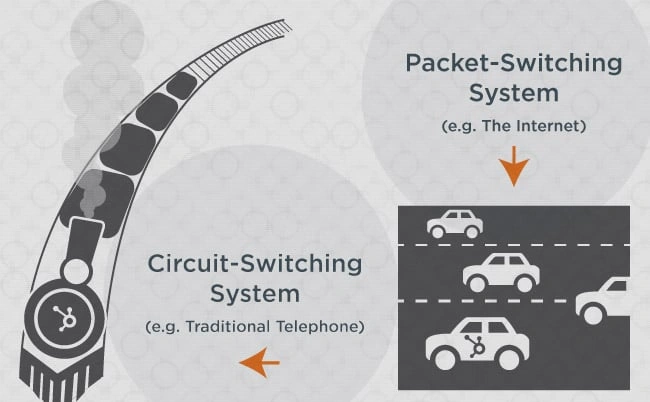
To understand how data moves across the internet, it is helpful to compare two distinct methods of transmission: circuit switching and packet switching. Circuit switching is the older technology, traditionally used in telephone networks. Imagine a dedicated train line where a single track is reserved exclusively for one group of passengers traveling from point A to point B. The connection is continuous and uninterrupted, but it is also inefficient. If no one is talking on the phone, the line remains idle, wasting capacity.
Packet switching, by contrast, operates like cars on a highway. Instead of reserving a dedicated path, data is broken down into smaller chunks called packets. These packets can take different routes to reach their destination, navigating around traffic jams or broken roads. This flexibility makes packet switching far more efficient and reliable for the internet. If one route fails, the packets simply find another way, ensuring that your email or video call continues without interruption.
By the early 1970s, a packet-switching network called ARPAnet was expanding, connecting various computer networks around the world. However, a significant problem remained: these networks were isolated. Computers on one network could not communicate with computers on another because they spoke different technical “languages.” There was no single, unified internet, only a collection of disconnected mini-networks. To solve this, scientists needed a universal protocol that could bridge these gaps.
The TCP/IP Protocol: The Internet’s Universal Language
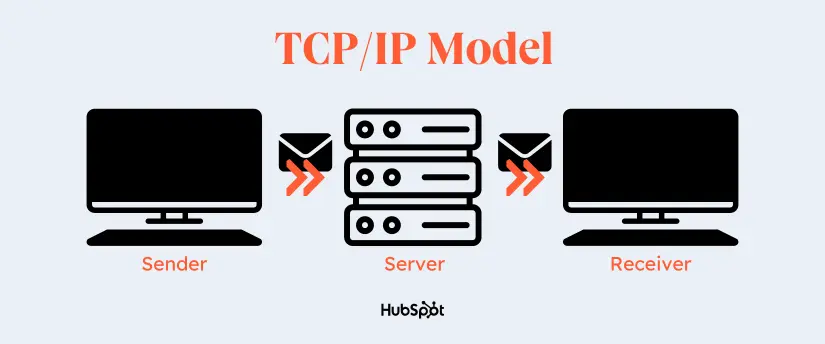
The solution to network isolation was the development of the Transmission Control Protocol (TCP) and the Internet Protocol (IP), collectively known as TCP/IP. This combination became the universal communication language of the internet, allowing disparate networks to interconnect and share data seamlessly. TCP is responsible for breaking data into manageable packets at the sender’s end and reassembling them at the receiver’s end. It ensures that data arrives intact and in the correct order, even if some packets get lost or delayed along the way.
IP, on the other hand, handles the addressing and routing of these packets. Every device connected to the internet is assigned a unique IP address, a numerical label that distinguishes it from every other device. Without IP addresses, data packets would have no way of finding their destination. Think of IP as the postal code system of the digital world, ensuring that every piece of information reaches the right recipient.
Modern TCP/IP networks operate across four distinct layers, each with a specific role in the transmission process. The application layer interfaces with software like web browsers and email clients. The transport layer, where TCP operates, manages the packaging and reassembly of data. The internet layer, governed by IP, assigns addresses and determines the best route for data to travel. Finally, the network layer involves the physical hardware—cables, fiber optics, and radio waves—that carries the data.
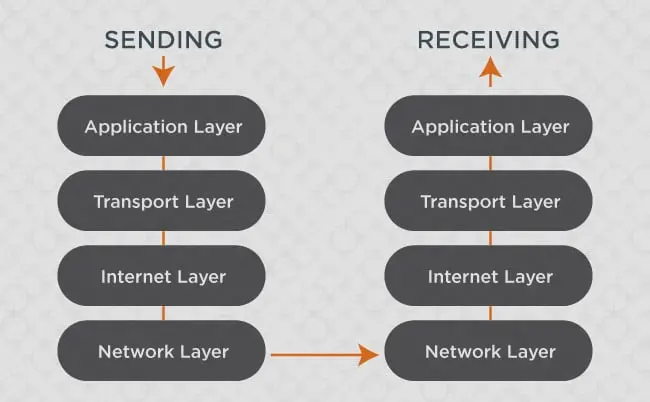
To visualize this, consider sending a physical letter. In the application layer, you write the letter. In the transport layer, you place it in an envelope. In the internet layer, you write the recipient’s address and your return address. In the network layer, you drop it in the mailbox, and the postal service delivers it. This layered approach ensures that data moves efficiently and reliably across the global network.
The Birth of the World Wide Web
While TCP/IP connected the networks, it did not create the user-friendly experience we associate with the internet today. That came with the invention of the World Wide Web in the late 1980s. Before this, the internet was primarily used by scientists and academics to transfer files and send messages. It was a powerful tool, but it was not accessible to the general public. The web changed that by introducing a system for organizing and retrieving information in a way that was intuitive and easy to use.
In 1989, software engineer Tim Berners-Lee proposed the concept of a World Wide Web. His goal was to create a system where anyone could access and share information globally, without needing specialized technical knowledge. By the end of 1990, he had launched the first web page, marking the beginning of the modern internet era. Berners-Lee developed three key technologies to make this vision a reality: HTML, URI, and HTTP.
HyperText Markup Language (HTML) is the standard language for creating web pages. It allows creators to format text, insert images, and, most importantly, create hyperlinks that connect different documents. Uniform Resource Identifier (URI) provides a unique address for every resource on the web, much like an IP address for a device. The most common type of URI is the Uniform Resource Locator (URL), which is the web address you type into your browser. HyperText Transfer Protocol (HTTP) is the system for transmitting web pages over the internet. When you enter a URL, your browser sends an HTTP request to a server, which then sends the web page back to you.
How the Web Functions as a Digital Library
A helpful way to understand the World Wide Web is to imagine it as a vast library staffed by friendly robots. Each book in this library represents a web page, formatted using HTML so that it can be read and displayed correctly. The URI serves as the call number for each book, providing a unique identifier that allows anyone to locate it. When you want a specific book, you provide the call number, and a robot (representing the HTTP protocol) retrieves it for you.
This analogy highlights the efficiency and accessibility of the web. You do not need to know where the physical book is stored or how the robot moves it; you simply request it by its identifier, and the system handles the rest. If you do not know the specific call number, search engines like Google act as librarians, helping you find the books you need based on keywords and topics. This system of organization and retrieval is what makes the internet such a powerful tool for information sharing.
For businesses, understanding this structure is crucial. It means that your website is not just a static page but part of a dynamic, interconnected system. Every piece of content you create is a “book” in this library, and your job is to ensure it has the right “call number” (URI) and is formatted correctly (HTML) so that users and search engines can find and access it easily. The reliability of this system allows businesses to operate globally, reaching customers wherever they are.
Why Internet Fundamentals Matter for Modern Business
As the internet continues to evolve, so too do the tools and platforms that businesses use to connect with their audiences. At AEO/GEO, we recognize that visibility in the digital landscape requires more than just having a website. It requires an understanding of how information is structured, transmitted, and retrieved. In an era where AI-driven search engines are becoming the primary way people find information, the principles of clear organization and accessible content are more important than ever.
The internet is no longer just a network of computers; it is a global ecosystem of information. Businesses that understand the fundamentals of how this ecosystem works are better positioned to adapt to changes in technology and consumer behavior. Whether it is optimizing content for search engines, ensuring fast load times, or securing data transmission, a solid grasp of internet mechanics is essential for success.
Moreover, the democratization of information through the web has leveled the playing field. Small businesses can now reach global audiences without the need for massive advertising budgets. By leveraging the tools and protocols that make the internet work, companies can create meaningful connections with their customers, deliver valuable content, and build trust over time. The internet is a marvel of modern technology, and understanding it is the first step to harnessing its full potential.
We believe that empowering businesses with knowledge is key to navigating the digital age. As you continue to explore the intricacies of the internet, remember that it is built on simple, logical principles. From packet switching to HTML, each component plays a vital role in connecting the world. By appreciating these foundations, you can make more informed decisions about your digital strategy and stay ahead in a rapidly changing landscape. What aspects of internet technology do you find most fascinating?





