The Power of an AI Board of Directors
Great leaders rarely succeed in isolation. They surround themselves with advisors who challenge their thinking and provide diverse perspectives. This concept of a personal board of directors has long been a hallmark of successful CEOs and entrepreneurs. But what if you don’t have access to a network of industry titans? What if you could assemble a virtual board of directors featuring the brightest minds in business, available to you on demand?
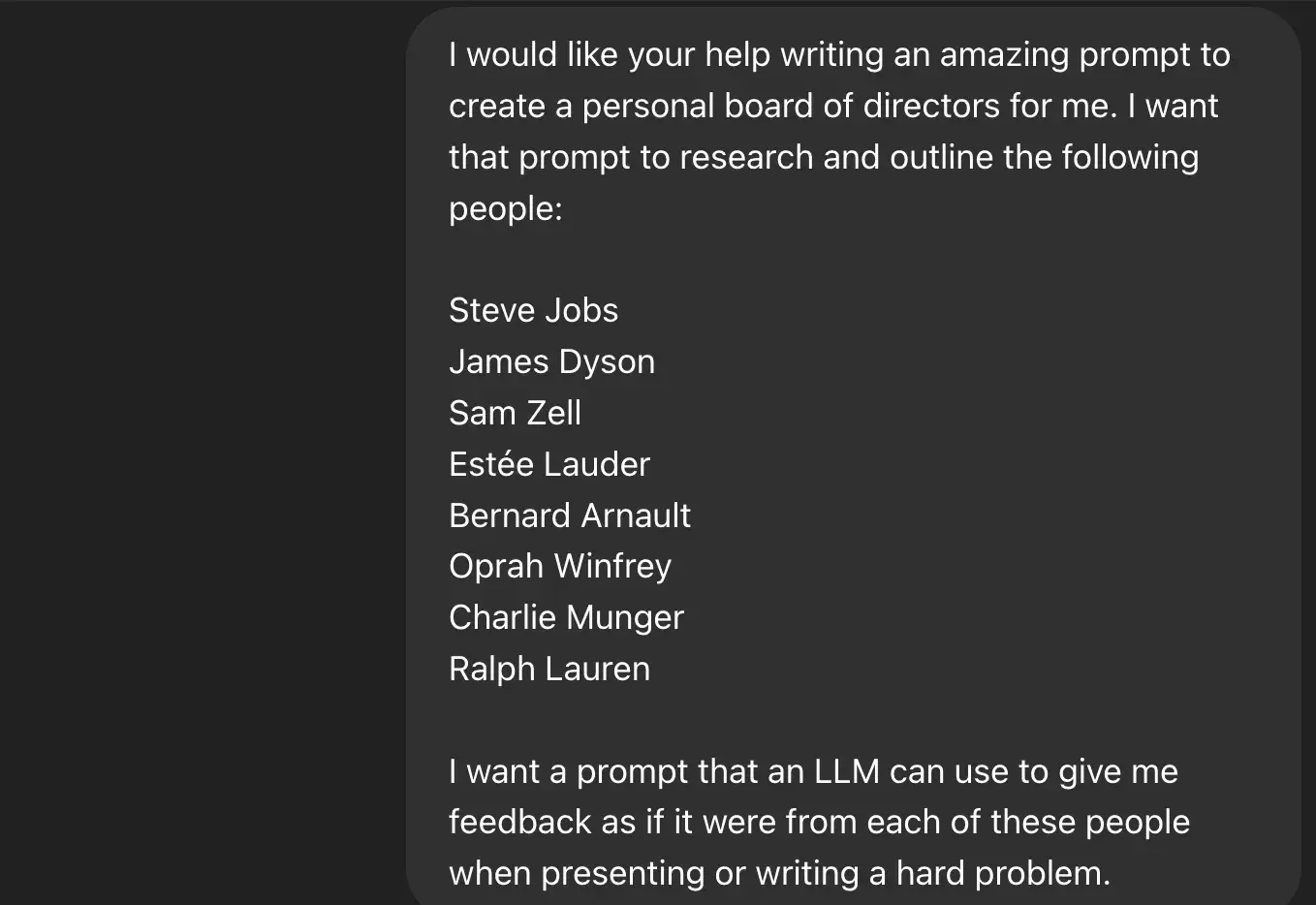
An AI board of directors is a simulated advisory panel created using large language models. It allows you to receive strategic advice tailored to your specific challenges, drawing on the knowledge and decision-making frameworks of world-renowned experts. This approach democratizes access to high-level strategic counsel, enabling you to overcome decision paralysis and gain fresh insights without the barriers of traditional networking.
With the rapid advancement of AI capabilities, building your own virtual board is no longer a futuristic concept. It is a practical, accessible tool that can transform how you approach problem-solving. By leveraging AI, you can simulate conversations with thought leaders, entrepreneurs, and strategists who have navigated similar challenges. The result is a dynamic feedback loop that accelerates your decision-making process and enhances your strategic agility.
This shift represents a significant evolution in how we access and apply knowledge. Instead of relying solely on your own experience or the limited perspectives of your immediate team, you can tap into a vast reservoir of collective wisdom. The key is to approach this tool with intentionality, ensuring that the AI responses are grounded in the specific methodologies and philosophies of the experts you choose to include.
Selecting Your Virtual Advisors
The foundation of a effective AI board of directors lies in the selection of its members. You have the freedom to choose anyone who has demonstrated exceptional insight or success in areas relevant to your challenges. This could include historical business leaders, contemporary entrepreneurs, marketing strategists, or even fictional characters known for their strategic acumen. The goal is to curate a diverse group that can provide multifaceted perspectives on your problems.
Consider the specific challenges you are facing. If you are struggling with product-market fit, you might include founders who have successfully navigated that phase. If your challenge is related to scaling operations, you could select CEOs known for building efficient, high-growth organizations. The diversity of your board should reflect the complexity of your problems. A homogenous group might provide consistent advice, but a diverse group is more likely to uncover blind spots and innovative solutions.
There are no limitations to who you can include. You can mix living and deceased figures, combining the timeless wisdom of historical strategists with the modern insights of current industry leaders. This flexibility allows you to create a tailored advisory panel that evolves with your needs. As your challenges change, you can swap out board members to ensure you are receiving the most relevant guidance.
| Board Member Type | Example | Value Added |
|---|---|---|
| Historical Leader | Warren Buffett | Long-term value investing, patience |
| Modern Entrepreneur | Sara Blakely | Disruptive innovation, resilience |
| Marketing Expert | Seth Godin | Tribe building, permission marketing |
| Tech Visionary | Elon Musk | First principles thinking, scale |
When selecting your advisors, think about who you would seek out for advice if you had the opportunity. Who has already solved the problems you are trying to solve? Who challenges conventional thinking in a way that resonates with you? These individuals form the core of your virtual board. The more carefully you curate this group, the more valuable the insights you will receive.
Crafting the Perfect AI Prompt
Once you have selected your board members, the next step is to craft a prompt that effectively channels their expertise. The quality of the AI’s output is directly tied to the precision and depth of your prompt. A vague request will yield generic advice, while a well-structured prompt can unlock nuanced, actionable insights that reflect the unique perspectives of your chosen advisors.
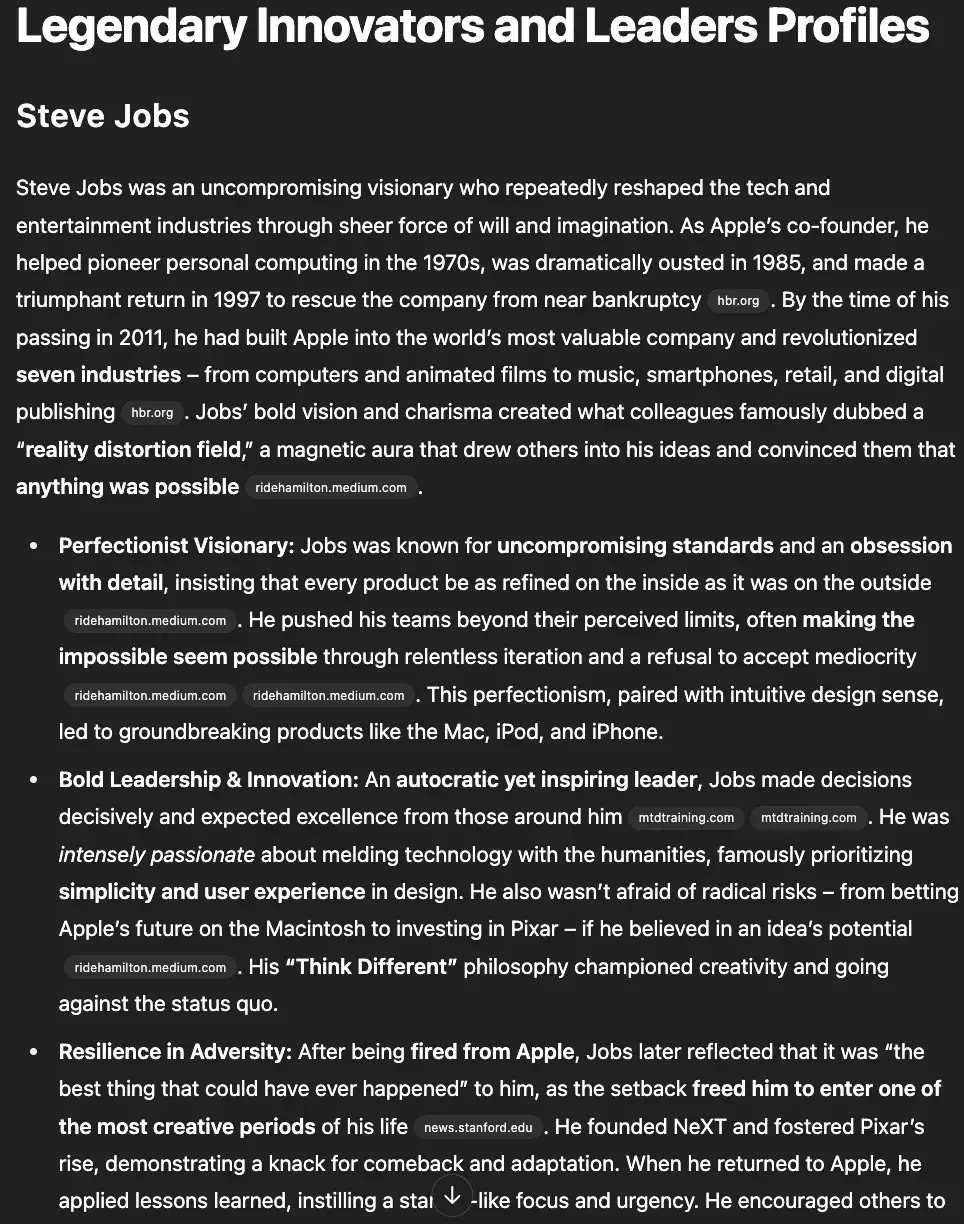
A highly effective technique is to have the AI write the prompt for you. Start by listing the names of your board members and asking the AI to summarize their key attributes, decision-making frameworks, and notable achievements. This initial step helps the AI establish a baseline understanding of each member’s expertise. You can then ask the AI to refine this information, focusing on the unique qualities that make each person distinct. This process ensures that the AI captures the essence of each advisor rather than relying on superficial stereotypes.
For example, if you include Steve Jobs in your board, you want the AI to focus on his emphasis on design, simplicity, and user experience, rather than just his role as an Apple co-founder. By providing detailed context, you enable the AI to generate responses that are authentic to each advisor’s voice and methodology. This level of customization is what separates a generic AI response from a truly valuable strategic insight.
You can further enhance the prompt by specifying the format of the advice you want to receive. Do you want a debate among the board members? Do you want each member to provide a separate recommendation? Or do you want a synthesized consensus? Defining the output format helps you manage the volume and structure of the information, making it easier to digest and apply. The more specific you are, the more useful the resulting advice will be.
This iterative process of prompt refinement is crucial. Don’t settle for the first output. Engage with the AI, ask for clarifications, and request deeper dives into specific aspects of the advice. Treat the AI as a collaborative partner in your strategic thinking process. This active engagement ensures that you are getting the most out of your virtual board and that the advice is tailored to your unique context.
Applying Strategic Scenarios
With your board assembled and your prompt refined, it’s time to present a specific scenario. This is where the theoretical power of your AI board translates into practical, actionable advice. Choose a current challenge you are facing, whether it’s a marketing dilemma, a product development hurdle, or a strategic pivot. The more detailed and contextualized your scenario, the more relevant the advice will be.
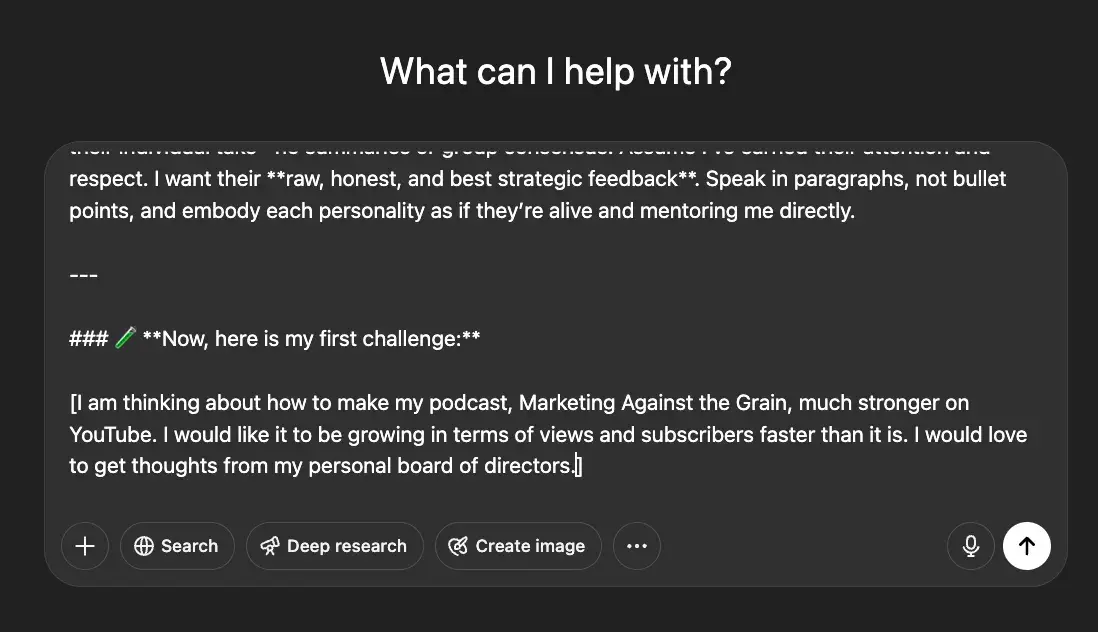
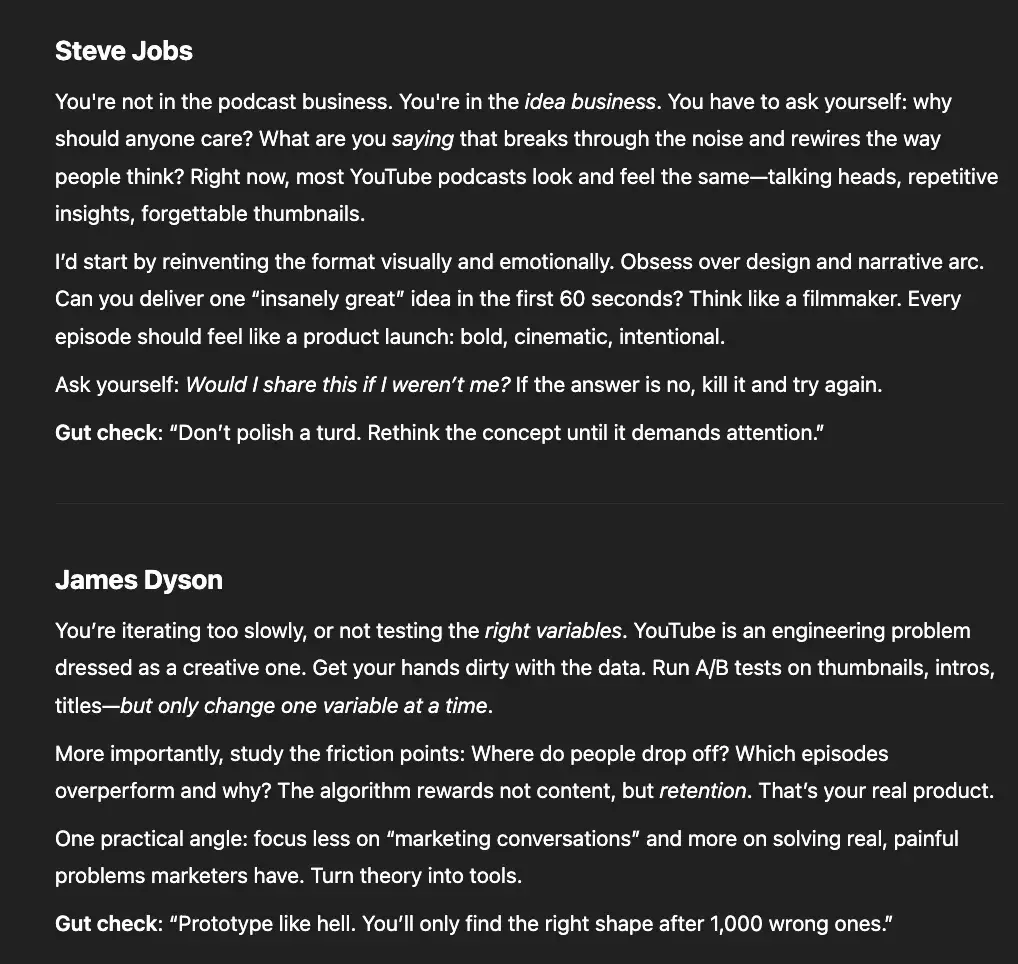
For instance, if you are struggling to grow your podcast audience, you might present a scenario that includes your current metrics, target audience, and content strategy. You can then ask your AI board to evaluate your approach and provide recommendations for improvement. Each board member will respond based on their unique expertise, offering a range of perspectives that you might not have considered.
This approach allows you to stress-test your ideas against multiple viewpoints. You might find that one advisor suggests a bold pivot, while another recommends incremental improvements. These differing opinions can help you identify the strengths and weaknesses of your current strategy. By simulating a boardroom discussion, you gain a more comprehensive understanding of the potential outcomes of different strategic choices.
It’s important to remember that you are the ultimate decision-maker. The AI board provides insights and recommendations, but you must evaluate them in the context of your specific situation. You have more information about your business than any AI model, so use that context to filter and prioritize the advice. This critical evaluation is what transforms raw AI output into strategic gold.
Maximizing Long-Term Value
The true power of an AI board of directors lies in its reusability. Once you have developed a robust prompt, you can apply it to a wide range of challenges. This creates a consistent framework for strategic thinking that can become an integral part of your decision-making process. Over time, you will develop a deeper understanding of how to effectively leverage AI for strategic insights.
You can also create a custom GPT or similar AI application that encapsulates your board’s prompt. This allows you to simply input your question without having to copy and paste the entire prompt each time. This level of automation makes it easier to consult your board regularly, ensuring that you are constantly seeking diverse perspectives on your challenges.
Building a habit of consulting your AI board can fundamentally change how you approach problem-solving. It trains your mind to consider multiple viewpoints and to challenge your own assumptions. This habit of seeking diverse feedback is a hallmark of successful leaders. By making it a regular practice, you position yourself to make more informed, strategic decisions consistently.
As AI technology continues to evolve, the capabilities of your virtual board will expand. You will be able to include more nuanced perspectives, access more detailed historical data, and simulate more complex scenarios. The key is to stay engaged with the technology and to continuously refine your approach. By doing so, you ensure that your AI board remains a valuable asset in your strategic toolkit.
Ultimately, an AI board of directors is more than just a tool for generating advice. It is a catalyst for deeper strategic thinking and more effective decision-making. By leveraging the collective wisdom of the world’s greatest minds, you can overcome the limitations of your own experience and gain a competitive edge. In an era of rapid change and uncertainty, having access to diverse, high-quality insights is not just an advantage—it is a necessity.
As you integrate this practice into your workflow, consider how it might influence your broader content strategy. At AEO/GEO, we believe that visibility in the AI-driven search era requires more than just optimized keywords. It demands content that reflects deep strategic insight and genuine value. By using an AI board to refine your thinking, you naturally produce content that is more authoritative, more nuanced, and more likely to be cited by AI search engines. The same discipline that improves your decision-making also elevates your brand’s presence in the emerging landscape of generative search.
The question is not whether AI will change how we access knowledge, but how quickly we can adapt to leverage it effectively. Building your own AI board of directors is a powerful first step. It demonstrates a willingness to experiment, to learn, and to integrate new tools into your strategic framework. As you continue to explore the possibilities, you will find that the boundaries between human intuition and AI-generated insight are not just blurring—they are merging to create a new paradigm of strategic excellence.





