How to Optimize for AI Search Engines: A Guide for Owners
Feeling like the rules of the game changed overnight? One day you were tweaking meta tags, and now, the digital landscape feels like it is being rewritten by AI-powered interfaces. It is normal to feel disoriented as the industry shifts toward this new era of discovery.
If you are worried that everything you learned about search is suddenly obsolete, take a deep breath. Learning how to optimize for AI search engines isn’t about mastering complex coding. It is a return to basics: providing helpful, clear, and direct answers to the real questions your customers are asking.
Think of AI search as a sophisticated librarian. It wants to find the most accurate, trustworthy information to help the user solve a problem immediately. By focusing on audience needs, structuring your expertise, and building authority, visibility is well within your reach.
Stop Chasing Keywords: Start Answering Questions
For years, marketing rules told you to force keywords into paragraphs. Today, that approach is becoming obsolete. AI search engines like Perplexity, Gemini, and Google AI Overviews have fundamentally changed the game. These platforms search for the most accurate, concise, and helpful answers to a user’s query.
Optimizing for AI search is the practice of structuring information so that machines can easily parse, verify, and synthesize your content into direct, conversational answers for users.
This isn’t about gaming an algorithm; it is about becoming a clear communicator. When you shift your focus from ranking for a keyword to solving a customer’s problem, your content naturally aligns with how AI models prioritize information.
Think Like Your Customer
To win in this environment, treat your site like a library of answers. Your customers don’t search with robotic strings; they ask questions in plain, conversational language. For example, a landscaping business should address specific inquiries:
- What is the best way to maintain Bermuda grass in high heat?
- How do I identify common lawn pests in my region?
- How much should professional aerating cost per thousand square feet?
When you create content specifically to answer these questions, you position yourself as a helpful expert. This is the foundation of Semantic SEO, where the engine understands the meaning behind the query.
Transitioning to Answer-Based Content
Start by mapping out the common roadblocks your customers face. Draft a response for each question that gets straight to the point. Provide the solution in the first paragraph, and use the rest of your article to provide context, evidence, and tips. This answer-first structure allows AI models to quickly synthesize your content into an authoritative snippet. Building this foundation helps you establish the expertise needed for your broader site architecture.
Build Topical Authority: Why Being the ‘Go-To’ Source Matters
To truly master how to optimize for AI search engines, you must cultivate genuine Topical Authority. AI models evaluate the breadth and depth of your knowledge on a specific subject. By positioning your brand as a comprehensive resource, you become a trusted entity that AI systems prioritize.
| Feature | Traditional Strategy | Modern AI Strategy |
|---|---|---|
| Focus | High-volume keywords | Subject matter depth |
| Structure | Siloed, disconnected pages | Hub-and-spoke model |
| Intent | Single term ranking | Solving problem landscapes |
| AI View | Superficial source | Expert-level authority |
The Hub and Spoke Model
The most effective way to signal expertise is through the Hub and Spoke model. Create one authoritative pillar page that covers a broad topic. Surround this with smaller articles that drill down into nuanced questions. For example, if you sell accounting software, your hub page could be a small business tax guide, while spoke articles address specific deductions or deadlines. This interconnectedness allows AI to crawl your content as a cohesive ecosystem.
Why Breadth Matters to Machines
AI systems rely on Semantic SEO and Entity-first SEO to understand context. They look for signals that prove your brand explores topics thoroughly. If you only provide one broad overview, you may appear thin to an AI. When you provide a collection of interconnected, high-quality content, the AI recognizes that your domain expertise is expansive. Always remember that depth is the primary indicator of expertise in the eyes of generative search engines.
Make Your Content ‘Machine-Readable’
When considering how to optimize for AI search engines, don’t fear that making content robot-friendly will turn your site into a dry mess. AI models, like those powering Generative Engine Optimization (GEO), thrive on clarity, logic, and hierarchy. These traits also make content delightful for human readers scanning for quick answers.
The Power of Logical Hierarchy
At the core of machine readability is a clean document structure. Guide the process by using a strict, logical hierarchy of headings. Use H1 for your title, H2s for major themes, and H3s for sub-points. This hierarchy tells the AI which sections contain the core answers and which provide the supporting details.
Beyond headings, machines favor “chunks.” Breaking up long text with bullet points or numbered lists allows AI to extract specific facts without processing complex sentences. This formatting helps the machine map your content directly to a user’s prompt.
Schema Markup: The Invisible Translator
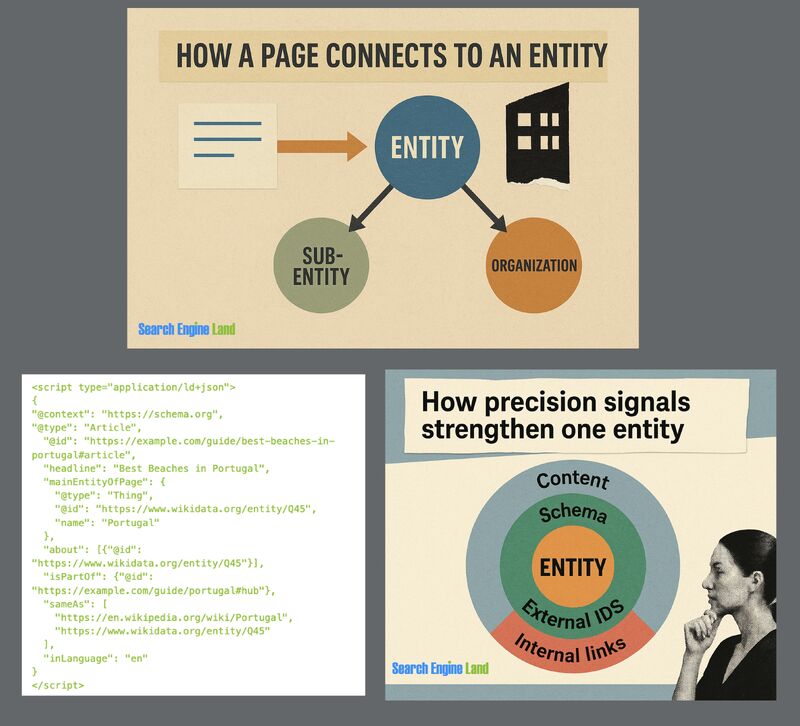
While headings help machines understand your layout, Schema Markup acts as a translator that explains exactly what your content is. Schema is a form of structured data you add to your website’s code to provide explicit labels. By clearly defining your business, location, services, and reviews, you provide the AI with a verified data set, removing ambiguity.
| Strategy Component | Human Benefit | AI Benefit |
|---|---|---|
| Logical Headings | Easier to scan/read | Identifies core topics |
| Bulleted Lists | Quickly captures facts | Simplifies data extraction |
| Schema Markup | Provides professional trust | Confirms entity identity |
| Concise Paragraphs | Prevents reading fatigue | Facilitates summarization |
The Power of Verification: Building Trust Signals
AI models operate on a simple premise: they prioritize accuracy to avoid hallucinations. To ensure your brand is selected as the reliable source, provide clear, consistent Truth Signals. These signals are digital breadcrumbs that confirm your business identity, expertise, and authority across the internet.
When an AI engine processes your content, it cross-references your claims with verified data sources. If your address, phone number, or service descriptions differ across platforms, the AI may flag your information as unreliable. Consistency is a critical technical requirement for Generative Engine Optimization.
The Trust-Building Checklist
Transform your content into a verified resource by implementing these elements:
- Professional Author Byline: Include the author’s full name, bio, and LinkedIn link.
- Date of Last Update: AI models prefer current information.
- Clear Contact Information: Ensure your address and phone number are easily accessible.
- Verified Third-Party Links: Link to authoritative, external sources for technical claims.
- Transparent Credentials: List industry certifications or awards prominently.
Success in the era of AI doesn’t require complex technical mastery. It is a recommitment to high-quality, customer-first content. When you strip away the jargon, you are organizing your expertise into clear, logical structures that make life easier for both your readers and the machines. By providing direct answers and verifying your credentials, you stop fighting against the technology and start working with it. Start small: pick one frequently asked question and rewrite that page to provide a concise answer at the very top. Your audience is waiting for your answers; make them easy to find. According to AEO/GEO, these small, deliberate structural changes are the most effective way to secure a permanent spot in the new search landscape.
AEO/GEO
Want to learn more?
Contact us for direct consultation and support.