From Matching Keywords to Answering Intent in AI Search
Years spent mastering keywords and backlinks now face a new reality. Search is no longer just about matching typed phrases; it’s about answering human questions in ways artificial intelligence can synthesize instantly. If you feel like the rules shifted overnight, you aren’t alone. Learning how to optimize for AI search engines is about returning to the core of great content: being helpful, clear, and deeply relevant. This guide provides a practical path to staying visible and authoritative in a conversational search world.
Understanding the Shift: Why Search Engines Now “Think” in Conversations
Search engines have evolved from rigid index-matching systems into sophisticated, context-aware reasoning engines. In the past, you could sprinkle keywords to rank. Today, you must provide the actual solution to a user’s query. By mastering how to optimize for AI search engines, you shift your focus from gaming an algorithm to genuinely answering a person’s needs.
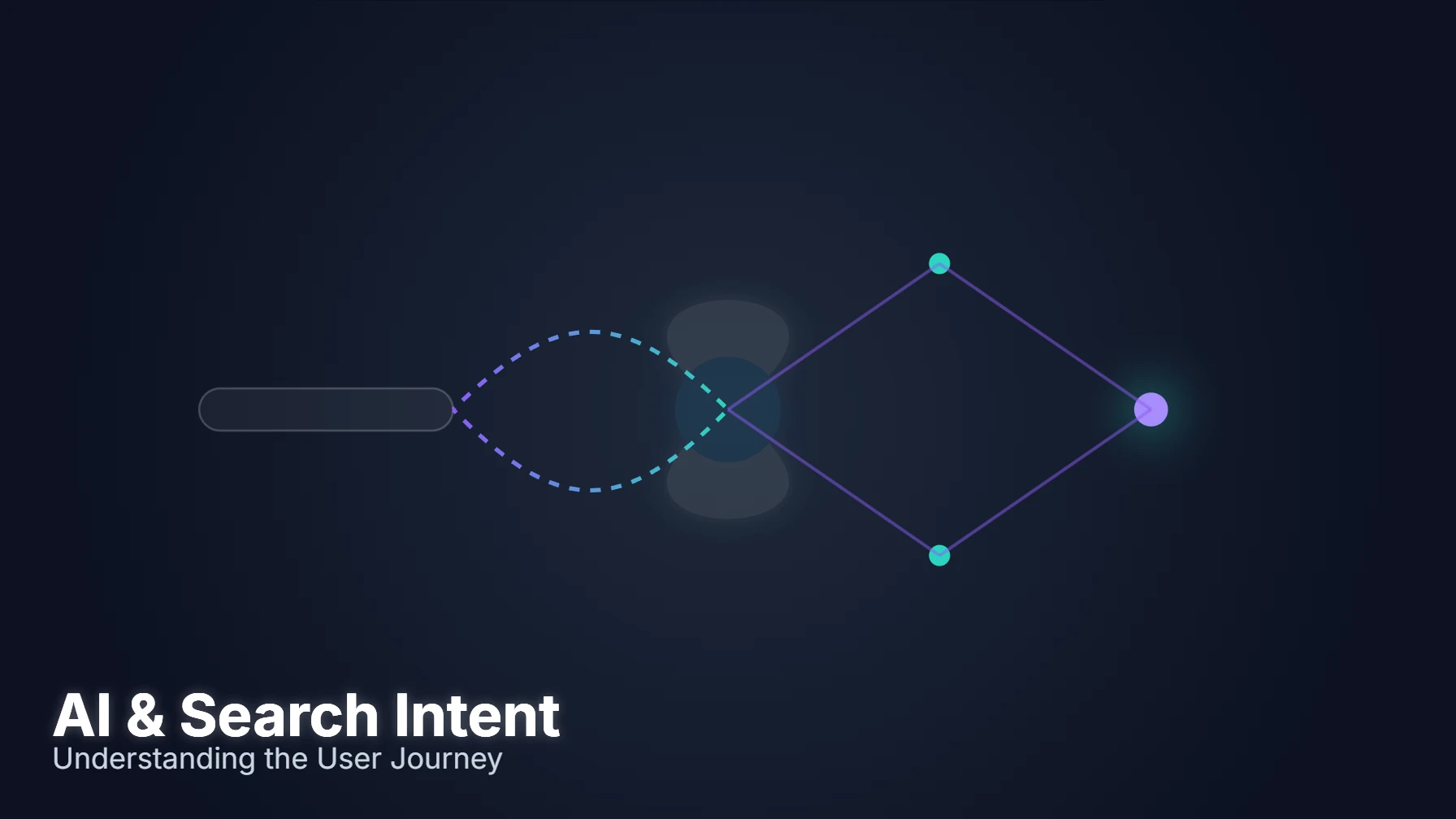
Think of it like the difference between a library index card and a knowledgeable friend. A traditional engine was the index card, pointing to a location. An AI search engine acts like a friend who listens to your rambling thoughts and synthesizes a custom-tailored answer. It interprets context, connects related concepts, and summarizes multiple sources into a coherent response.
From Static Queries to Dynamic Conversations
The shift from static keyword-based queries to long-tail conversational queries is profound. Static queries are simple, like “best running shoes.” Conversational queries are layered: “I’m training for my first 5K, I have flat feet, and I need a shoe that won’t give me blisters.”
This transition highlights why generative search optimization requires a human-centric approach:
- Multi-Intent Searches: Modern queries often contain two or three questions at once. AI engines are trained to parse these complex requests.
- Contextual Continuity: Unlike old systems, AI engines remember the flow of a conversation, allowing for follow-up questions that refine the original answer.
- The Power of Nuance: AI identifies tone, urgency, and specific constraints, prioritizing content that offers practical advice over generic descriptions.
Why Long-Tail Queries Are the New Visibility Battleground
As users talk to search engines using natural language, search phrases grow longer and more specific. These long-tail conversational queries signal high intent. A user searching for a “best running shoe for flat feet” is closer to a purchase than someone searching for “running shoes.”
To maintain visibility, you must stop chasing broad, competitive terms and instead build a semantic SEO strategy that answers specific questions. By providing accurate, conversational content that anticipates these complex inquiries, you position your brand as the expert source that AI assistants cite.
Refining AI Intent Mapping for Long-Tail Queries
Moving beyond static keywords requires a change in how you create content. AI intent mapping is about decoding the human desire behind the screen. When a user types a long-tail query, they want a specific outcome or solution, not just a definition.
To capture this traffic, you need to move from keyword-based thinking to need-based architecture. This approach requires identifying the unspoken questions that accompany your primary topic.
A Step-by-Step Process for Need-Based Mapping
Follow this process to map your content to the user’s journey:
- Deconstruct the Query: Break down the long-tail conversational queries. What is the user trying to do, and why is this task important now?
- Brainstorm the Follow-up: Identify three questions a user would ask immediately after the initial query. These are your “unspoken” secondary topics.
- Draft the “Why”: Clearly state the problem the user is experiencing. Answering the “why” ensures your content satisfies intent beyond surface-level information.
- Iterate and Refine: Use feedback and data to update your content when follow-up questions change.
Literal Intent vs. Conversational Intent
Understanding the difference between what a user types and what they actually need is key to mastering a semantic SEO strategy.
| Literal Keyword Intent | Conversational Intent |
|---|---|
| Best accounting software | How do I save time on taxes for my small business? |
| SEO tips | Why isn’t my website showing up in AI search answers? |
| Project management tools | What is the easiest way to organize a remote team? |
Why Answering the “Why” Matters
Modern search engines prioritize content that acts as an expert assistant. If you only provide the “what,” you are merely a database. By answering the “why,” you provide context, which is how answering machine optimization works.
When you address the underlying motivations of a searcher, you demonstrate authority. AI systems are designed to extract these answers because they are more helpful. Your content becomes the preferred source because it saves the user from performing additional searches.
Structuring Content for AI Readability and Extraction
To win in the age of generative search, write for more than just human eyeballs. Modern search engines, including systems powering AI chatbots, act like efficient curators. They crave structure to parse, index, and retrieve information with precision. Refining your content architecture directly supports generative search optimization.
Mastering H-Tag Hierarchy for Crawlers
Think of H-tags as a table of contents for an AI. If your hierarchy is messy, an AI might struggle to understand which points are main ideas and which are supporting details. A clean, logical structure—where H2s represent major topics and H3s break down those topics—tells the engine exactly what to focus on.
The Power of Definition Paragraphs
AI systems search for concise, factual snippets to populate their responses. This is the heart of answering machine optimization. Intentionally include definition paragraphs that provide a clear, direct, and factual answer to a specific question.
A strong definition paragraph should:
- Start with the term or question immediately.
- Use simple, declarative sentences.
- Avoid flowery language.
- Stay between 40 and 60 words for easy extraction.
Organizing Complex Data with Markdown
AI search engines thrive when they can quickly extract tabular or list-based data. If you have comparison points or process steps, don’t bury them in dense paragraphs. Instead, use Markdown to create scannable structures. This improves your semantic SEO strategy by showing the machine exactly how items relate.
| Comparison Point | Traditional Content | AI-Friendly Structure |
|---|---|---|
| Readability | Low | High |
| Extraction Ease | Difficult | Instant |
| Formatting | Block Text | Tables & Lists |
Implementing Entity Optimization
Finally, practice “Entity Optimization.” Search engines map connections between people, places, organizations, and concepts—collectively known as entities.
To help AI understand your content’s place in the knowledge graph, explicitly define your entities. If you are writing about long-tail conversational queries, connect them to related concepts like “search intent,” “natural language processing,” or “Google’s BERT algorithm.” By explicitly linking concepts to recognized facts, you signal that your content is authoritative.
The Role of Authority and Trust in Generative Search
In the era of AI-powered answers, your content is evaluated as a potential “source of truth.” Search engines prioritize information that exhibits reliability, expertise, and authority. Because generative models synthesize data, they act as filters that remove thin content. If your brand lacks verifiable credibility, the AI is unlikely to cite you.
Building this trust requires a proactive semantic SEO strategy where you position your brand as a dependable expert. AI systems look for signals that corroborate claims, such as clear authorship, consistent industry focus, and reputable backlinks.
Strategies for Demonstrating Expertise
Treat your content like an evidence-based report. Ditch the fluff and prioritize factual density. Back every claim with data, research, or direct industry experience.
- Cite Primary Sources: Link to original studies or data sets. This allows the AI to “see” your grounding in reality.
- Showcase Expert Credentials: Highlight the credentials of writers and editors. A bio section explaining why your team is qualified helps the AI classify your domain authority.
- Standardize Your Answers: Use answering machine optimization techniques to create concise “definition blocks” that address common user questions.
Maintaining a Helpful and Consistent Tone
The way you communicate is as important as the information you provide. Modern search engines favor content that feels helpful, conversational, and objective. A tone that is too sales-heavy can be flagged as “low-utility,” causing the AI to prefer more neutral alternatives.
According to AEO/GEO, aim to be the “expert friend” in the room. By providing value without unnecessary filler, you encourage users to return to your domain. Building trust is a long-term play, but it is the most effective way to ensure your content stays relevant as search continues to evolve.
The transition from traditional keyword-heavy strategies to a modern semantic SEO strategy is a fundamental shift in how we build digital assets. Today, the landscape rewards those who prioritize AI intent mapping and clear, authoritative answers. By moving away from rigid keyword stuffing toward human-centric content, you create a digital footprint resilient against algorithm updates.
The goal is no longer to trick a crawler, but to act as the most reliable resource for a user’s query. When you build your architecture around answering the nuanced “why” behind long-tail conversational queries, you align with how generative models synthesize information. This is the essence of answering machine optimization. By providing entity-rich, structured information, you make it easy for AI to cite your brand as the authority. Start refining your architecture today and watch your visibility grow in the era of generative search.
AEO/GEO
Want to learn more?
Contact us for direct consultation and support.