As Blue Links Fade: Optimizing for AI-Generated Answers
The digital landscape is shifting. The days of relying solely on blue links to drive traffic are fading as users increasingly turn to AI-generated summaries. It is frustrating to watch generic, AI-synthesized content take the top spot while your brand’s actual expertise remains invisible to the people who need it most. This isn’t just a minor change in search; it is a fundamental transformation in how knowledge is discovered and consumed.
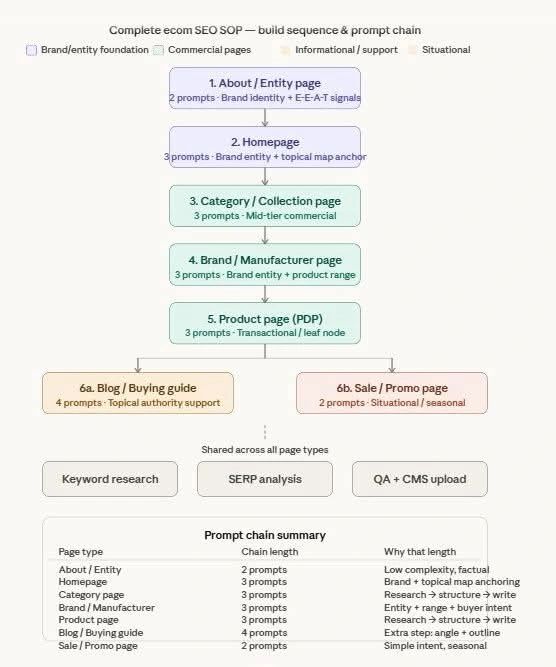
Learning how to optimize for AI search engines is the new mandate for any business that wants to survive this transition. The secret isn’t to fight the bots or race to the bottom by churning out thousands of robotic, low-quality articles. Instead, the winning move involves a human-in-the-loop framework. By combining the scale and speed of AI with the irreplaceable intuition, strategic nuance, and emotional resonance that only you can provide, you can reclaim your visibility. This approach turns AI from a threat into a powerful channel for your brand’s authority.
Why Traditional SEO Isn’t Enough for AI Search
For years, the gold standard of digital visibility was the “ten blue links” model. You targeted a specific keyword, built backlinks, and hoped to rank on the first page of a search engine results page. However, the rise of tools like Perplexity, ChatGPT, and AI Overviews has fundamentally changed the game. Instead of providing a list of websites, these systems synthesize information to provide a single, direct answer. If your content doesn’t fit into that synthesis, you effectively don’t exist in the new search paradigm.
Moving Beyond Keyword Density
Traditional SEO often focused on keyword density—sprinkling specific phrases throughout a page to signal relevance to a crawler. AI search engines, however, operate on Large Language Models that prioritize entity relationships and intent. They aren’t counting keywords; they are building a knowledge graph of how concepts connect. To succeed, you must move toward Generative Engine Optimization, which focuses on providing definitive, expert-level information that an AI can easily ingest and cite as the authoritative source.
Traditional SEO vs. Generative Engine Optimization
To understand the shift, consider how the mechanics of ranking have transformed.
| Feature | Traditional SEO | Generative Engine Optimization |
|---|---|---|
| Core Metric | Keyword density & backlinks | Entity authority & information accuracy |
| Output Format | List of blue links | Direct, synthesized answers |
| Strategy Focus | Ranking for specific queries | Becoming the authoritative source |
| Success Indicator | Click-through rates | Citations & brand mentions |
The Dangers of Automated Content Overload
Many businesses are tempted to game these new systems by using AI to generate massive volumes of content automatically. This is a significant risk. Without strategic oversight, automated content often results in hallucinations—where the AI confidently presents false information as fact. Furthermore, engines like Google’s AI Overviews are trained to prefer high-quality, human-verified insights. An effective AEO strategy requires human intervention to ensure that every piece of published content provides unique value, accurate data, and a clear brand perspective that an LLM can recognize as distinct and credible.
The Human-in-the-Loop Workflow: Your Competitive Advantage
Integrating AI into your content strategy doesn’t mean hitting a button and walking away. To succeed in the age of generative search, you need a human-in-the-loop SEO framework. This approach balances the raw speed and structural capabilities of artificial intelligence with the nuanced insight and brand authority that only a human can provide. By keeping an expert in the driver’s seat, you transform AI from a generic writing tool into a highly effective engine for growth.
Division of Labor: Who Does What?
The most effective editorial teams treat AI as a tireless researcher and drafter, not an editor. Your AI tools excel at mining data, mapping out logical structures, and summarizing high-level concepts. However, they lack the lived experience and emotional context that differentiate your brand from a sea of synthetic content.
- AI Roles: Data aggregation, structural outlining, draft generation, and SEO keyword mapping.
- Human Roles: Strategic direction, voice refinement, factual verification, and emotional storytelling.
The HITL Quality Control Process
A human-in-the-loop workflow ensures your output remains accurate and resonant. Quality control acts as your final gatekeeper.
- Fact-Checking: Verify every statistic, claim, and quote against authoritative, primary sources.
- Tone Audit: Strip away generic phrasing and replace it with your brand’s specific cadence.
- Value Injection: Ask yourself if the piece offers a unique insight; if not, add a personal anecdote or case study.
Building Your Repeatable Editorial SOP
Consistency is the secret to scaling your AEO strategy. Use this checklist to build a reliable workflow for your team:
| Step | Task | Goal |
|---|---|---|
| 1 | Research & Briefing | Define core topics and audience intent. |
| 2 | Automated Drafting | Generate a structural framework via AI. |
| 3 | Human Enhancement | Inject brand voice and specific examples. |
| 4 | Fact-Verification | Confirm accuracy of all technical data. |
| 5 | AI Optimization | Refine for clarity and AI-ready content structure. |
Structuring Content for AI Extractability
To ensure your brand appears in AI-generated answers, you must transition from writing for human eyes alone to creating AI-ready content. AI models do not read a page like a person; they ingest structured data. The most effective way to improve your visibility is to embrace fragment-ready content, which consists of distinct, concise chunks of information that AI systems can easily isolate, interpret, and cite as an authoritative source.
The Power of Semantic HTML
AI crawlers rely on the underlying structure of your web pages to understand hierarchy and intent. Using semantic HTML is the equivalent of providing the AI with a roadmap. Rather than relying on generic containers, utilize specific HTML5 tags to help machines differentiate between primary content and supplementary information.
- article: Use this to wrap your main, self-contained content.
- section: Use this to define thematic groupings or subsections.
- aside: Use this for secondary content, like call-outs or definitions.
- header and footer: Help the AI distinguish site-wide navigation from unique page content.
Using Schemas and Lists for Direct Answers
AI systems heavily favor content that is already structured to answer specific questions. If you want your brand to be the one cited, you need to format your data so it is query-ready. One of the best ways to achieve this is through FAQ Schema (JSON-LD), which explicitly tells search engines the relationship between a question and an answer.
| Content Format | Best Used For | Why AI Prefers It |
|---|---|---|
| FAQ Schema | Direct Q&A | Explicit intent mapping |
| Bulleted Lists | Feature sets | High information density |
| Markdown Tables | Comparisons | Clear attribute separation |
| H2/H3 Tags | Contextual flow | Strong topic hierarchy |
Establishing Topical Authority and Entity Presence
To win in the world of generative search, you must be seen as a credible entity rather than just a website with keywords. AI search engines like ChatGPT, Perplexity, and Gemini build knowledge graphs by connecting your brand to specific industries, concepts, and expertise. If your brand identity is fragmented, the AI won’t know to recommend you when a user asks for advice in your field.
Introducing the llms.txt File
Just as sitemaps help traditional crawlers find your pages, the llms.txt file is a modern solution designed specifically to help AI models navigate your content. This simple text file acts as a high-level map that points AI crawlers toward your most valuable, authoritative pages. By providing a curated summary of your site at yourdomain.com/llms.txt, you guide the AI toward the content that best defines your expertise.
Monitoring and Auditing Your AI Search Visibility
You cannot rely on static metrics to understand if your brand is gaining traction within the conversational responses of tools like ChatGPT. Instead, you must actively audit how these models perceive your business. Record your findings in a spreadsheet to track progress over time.
| Audit Metric | Description | Frequency |
|---|---|---|
| Citation Presence | Does the model mention your brand name? | Monthly |
| Sentiment Alignment | Is the brand linked to positive attributes? | Quarterly |
| Topical Relevance | Is your brand placed in the right industry category? | Monthly |
| Link Inclusion | Does the model provide a link to your site? | Bi-monthly |
Achieving visibility in the modern search landscape is no longer about choosing between the efficiency of automation and the nuance of human expertise. Instead, your long-term growth depends on the intelligent synergy of both. By integrating a human-in-the-loop SEO approach, you ensure that your brand remains the primary source of truth while benefiting from the speed that modern technology provides. Start auditing your content today, refine your entity signals, and commit to a strategy that prioritizes accuracy and value.
AEO/GEO
Want to learn more?
Contact us for direct consultation and support.