When High-Volume Keywords No Longer Guarantee Rankings
The way we look for information is shifting. Gone are the days when a handful of high-volume keywords guaranteed you a top spot on a results page. Modern search engines, powered by sophisticated AI, have moved beyond simple keyword matching. Today, they are focused on understanding the true motivation behind a user’s question—the “why” rather than just the “what.”
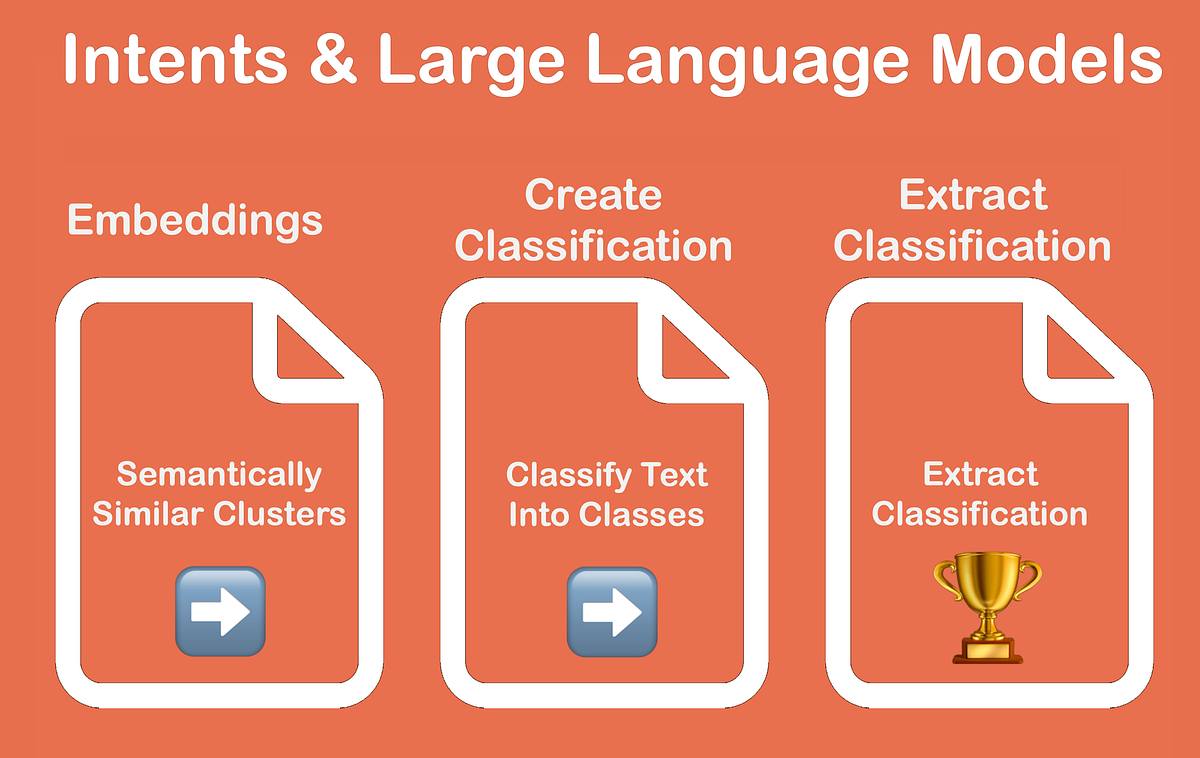
For businesses in fields like healthcare, law, or finance, this transition is disruptive. A generic content strategy that ranks well for broad searches often misses the mark when a user poses a complex, multi-layered question to an AI assistant. If your content lacks the granular context that AI models require to generate accurate answers, you risk being filtered out of the conversation entirely. Learning how to optimize for AI search engines is a fundamental shift in how you build digital visibility.
By moving away from static keyword stuffing and embracing intent-focused content, you ensure your brand becomes a trusted source for the AI agents driving tomorrow’s traffic. The journey toward becoming an authoritative voice in an AI-first world begins with a data-driven understanding of exactly what your audience needs to know.
Why Standard Intent Mapping Falls Short in Specialized Fields
Most AI search engines are trained on generalized datasets that excel at answering common daily questions. However, these models often falter when applied to highly technical domains like law, healthcare, or complex financial services. They prioritize broad probabilistic patterns, struggling to distinguish between casual curiosity and the rigorous precision required for specialized industry queries. When you rely on standard intent mapping, the AI might misinterpret a nuanced expert question, categorizing it instead as a surface-level FAQ.
The Problem with Generalized Logic
Industry-specific jargon is the biggest hurdle for current AI architectures. In specialized fields, words often carry dual meanings; a term that sounds like a common request to an LLM might actually hold a specific legal or regulatory definition. When the engine fails to recognize this context, it defaults to the most common interpretation, leading to generic or misleading summaries. This breakdown in semantic understanding is a major pain point for businesses attempting to optimize for AI search engines.
| Query Type | General Interpretation | Specialized Contextual Need |
|---|---|---|
| What is a trust? | Simple definition/FAQ | Legal requirements, fiduciary duty, tax implications |
| How to manage risk? | General lifestyle advice | Compliance, hedging, volatility, asset allocation |
| What causes a crash? | Common IT error/car accident | Cybersecurity vulnerability, market collapse, hardware failure |
The Risk of Hallucinated Intent
The most dangerous outcome of poor intent mapping is “hallucinated intent.” This happens when an AI model, lacking sufficient domain-specific training data, assumes it understands a complex question and fills the gap with plausible-sounding but technically inaccurate information. If a user asks a highly specific question about tax law, the AI might treat it as a casual inquiry about personal budgeting, stripping the context away and delivering a generic answer. This is why AI intent mapping must be calibrated to recognize the specific language of your industry.
Building an Industry-Aware Data Set for AI Search
To succeed in generative search optimization, you must move beyond generic strategies and embrace a data-centric AI approach. Relying on synthetic data or surface-level web scraping often leads to inaccurate outputs. Instead, prioritize your own internal customer conversation logs to build a data set that speaks your industry’s language.
Cleaning Internal Query Logs
Your internal logs are a goldmine, but they require a rigorous cleaning process:
- Anonymization: Remove PII (Personally Identifiable Information) to maintain privacy.
- Noise Reduction: Filter out greetings, repetitive small talk, and nonsensical queries.
- Normalization: Convert varying phrasings of the same question into a consistent format.
- Contextual Enrichment: Append metadata, such as the user’s role or stage of their journey.
The Power of Expert Labeling
Automated scripts lack the nuance required for specialized fields. Relying solely on automation invites bias. You need domain experts—the people who handle your clients daily—to label your data. These experts identify the difference between a high-intent query and an exploratory one, ensuring your AI learns the logic behind professional decision-making rather than just statistical patterns.
Framework for Query Segmentation
Once your data is cleaned and labeled, categorize it to help the AI understand the purpose behind every interaction.
| Category | Definition | Goal for AI |
|---|---|---|
| Informational | User seeks knowledge, definitions, or broad explanations. | Provide concise, expert-verified summaries. |
| Transactional | User is ready to act, purchase, or sign up for services. | Facilitate the next step with clear CTA elements. |
| Regulatory | User asks about compliance, legal rights, or safety standards. | Deliver precise, citation-backed, audit-ready information. |
Practical Tactics for Refining Long-Tail Conversational Queries
To optimize for AI search engines, you must capture the nuances of long-tail conversational queries. These specific, multi-layered questions represent the most significant opportunity for capturing high-intent traffic.
Creating Intent Clusters
Group your long-tail phrases into intent clusters that focus on the user’s problem-solving journey. Instead of a separate page for every question variation, build resource hubs that answer a primary intent and its related sub-queries. This signals to AI models that your content provides a definitive answer to a thematic cluster.
Structuring Data for Context
AI engines crave context to bridge the gap between a query and a relevant solution. Use Schema markup to explicitly define relationships between your content components. For instance, if you are providing a complex technical answer, use FAQPage or HowTo schema to guide the AI toward the exact steps it needs to synthesize a clear response.
Audit Checklist for Content Effectiveness
Before publishing, run your content through this audit checklist:
- Does the first paragraph provide a direct, concise answer to a specific, multi-layered question?
- Does the text avoid overly promotional jargon?
- Are there clear definitions provided for niche terminology?
- Have you included specific data points or steps that the AI can easily extract?
Ensuring Compliance and Accuracy in AI-Driven Answers
In regulated sectors like healthcare, finance, or legal services, an AI that hallucinates a policy or misses a mandatory disclaimer can lead to legal and reputational consequences. Maintaining compliance is your biggest hurdle when integrating AI into your search strategy.
Implementing Brand Guardrails
Move beyond basic prompt engineering and implement brand guardrails. These serve as a safety fence, defining the strict boundaries of what the model can say and how it must say it. By creating a centralized “System Instructions” document or a vector database containing your approved terminology and legal boilerplate, you ensure that the AI remains tethered to your brand’s official compliance policies.
Best Practices for AI Trust
Verifying automated outputs requires an ongoing commitment to quality control. Incorporate these steps into your workflow:
- Citations: Configure your AI to always provide links back to your primary documentation or legal disclosures.
- Human-in-the-loop: For sensitive queries, implement a trigger that flags AI responses for human review before display.
- Fact-Check Benchmarks: Run a weekly batch of common industry questions to ensure answers align with regulatory requirements.
- Tone Audits: Periodically check if the primary model is maintaining your brand voice.
- Monitoring: Watch for model drift, where the AI begins to deviate from established patterns over time.
Success in the era of generative search requires shifting from writing for keywords to designing for meaning. When you stop chasing algorithms and start crafting content that serves the intent of your specific audience, you become the primary source of truth for AI models. Focus on intent, curate your own unique data assets, and prioritize depth. By investing in a data-centric approach now, you ensure that as AI search evolves, your business remains at the center of the conversation.
AEO/GEO
Want to learn more?
Contact us for direct consultation and support.