A Semantic Approach to Optimizing for AI Search
You wake up to check your search rankings, only to find that your once-reliable traffic has dipped again. You have spent hours hunting for the perfect keywords and stuffing them into articles, but the results just aren’t there. Meanwhile, users aren’t even clicking through to your site anymore; they are getting their answers directly from AI tools like ChatGPT, Perplexity, or Gemini. The ground has shifted under our feet, and the old-school manual hunt for rankings feels like chasing a ghost in a machine that has already moved on.
Learning how to optimize for AI search engines is the new baseline for success. Generative AI doesn’t care about your keyword density or how many times you repeated a phrase. Instead, it prioritizes clarity, context, and the interconnectedness of your information. By shifting your focus from keyword-centric tactics to building genuine topical authority, you can transform your publishing workflow into a high-octane engine for discovery. Use this guide to stop fighting the algorithm and start speaking its language.
Understanding the Shift: From Keyword Matching to Semantic Understanding
For years, success in search meant finding the perfect keyword, stuffing it into your headings, and praying for a top-ten spot. Today, tools like Perplexity, Gemini, and ChatGPT have fundamentally changed the game. These AI search engines don’t just look for strings of text; they act as reasoning machines that prioritize entities and the complex relationships between them. When you learn how to optimize for AI search engines, you move away from chasing static volume and start focusing on providing meaningful, structured answers.
Defining Semantic SEO
Semantic SEO is the process of creating content that search engines can understand at a conceptual level rather than just a linguistic one. While legacy search engines relied on keywords, Large Language Models (LLMs) use context and user intent to determine the best response. Think of them as an expert librarian who knows the theme, context, and nuance of every chapter in a book. By structuring your content to highlight core entities—like people, products, or industry concepts—you help AI models map your information into their internal knowledge base more effectively.
The Evolution: Legacy vs. Semantic SEO
To understand why your current strategy needs an update, compare the core philosophies of traditional search tactics against the modern semantic approach.
| Feature | Legacy SEO | Semantic SEO |
|---|---|---|
| Primary Focus | Keyword Density | Entity Relationships |
| Content Goal | Ranking for Queries | Building Topical Authority |
| Data Structure | Page-Based Keywords | Structured Knowledge Graphs |
| Success Metric | Click-Through Rate | AI Citation & Trust |
| User Intent | Broad Matching | Contextual Understanding |
Knowledge Graphs as the Secret Weapon
If you want to establish Topical Authority, think of your website as a growing encyclopedia. A knowledge graph is how an AI perceives the map of your expertise. When you consistently publish high-quality content that links related concepts, you are building a persistent, verifiable record of facts that AI models can trust.
Instead of treating each post as an isolated island, focus on how one topic branches into another. This structure mimics the way human knowledge grows. By clearly defining entities and using schema markup to explain how they relate, you transform your brand from a collection of landing pages into a central source of truth. When the AI needs an authoritative answer, it turns to your structured web of information.
Technical Implementation: Integrating NLP into Your Publishing Workflow
Modern search is about parsing relationships between concepts. If you want to know how to optimize for AI search engines, you must transition from writing for strings of characters to writing for entities—people, places, organizations, and specific concepts. By integrating Natural Language Processing (NLP) into your workflow, you provide AI systems with the structured context they need to cite your brand as an authority.
Identifying Your Brand Entities
Entity extraction is the process of using automated tools to scan your content and identify core subjects. Instead of focusing on keyword density, look for “nodes” of information. If you run a coffee supply business, your entities shouldn’t just be “coffee beans.” They should include specific origins like “Ethiopian Yirgacheffe,” processing methods like “honey process,” and equipment types like “conical burr grinder.”
You can use APIs from Google Cloud Natural Language or tools like spaCy to run your content through an entity analyzer. These tools highlight the nouns and concepts that AI models are already clustering together. By auditing your current library, you can identify “entity gaps”—areas where you talk about a topic but fail to mention the supporting concepts that link you to a broader authority base.
Mapping the Content Web
Once you identify your entities, connect the dots for the AI. If your article mentions “Espresso extraction,” link that entity to “Water temperature,” “Grind size,” and “Pressure profile.” Follow this framework to map your content effectively:
- Identify the Hub Entity: Define the primary subject.
- Define Related Nodes: List the 5-7 secondary entities that support the hub.
- Establish Proximity: Ensure these entities appear within the same paragraph.
- Interlink Contextually: Use descriptive anchor text that links to pages covering those sub-entities.
Streamlining with AI Automation
Manual tagging is tedious, but modern AI content automation tools handle this at scale. Many platforms offer automated metadata generation using NLP to suggest schema markup, internal linking, and meta descriptions. When you feed content through these systems, you translate your prose into a machine-readable format. When the AI crawls your site, it receives a structured package of data that confirms your topical depth.
| Workflow Stage | Action Item | Goal |
|---|---|---|
| Entity Audit | Scan posts for core concepts | Identify authority gaps |
| Schema Markup | Add JSON-LD entity data | Provide machine context |
| Internal Linking | Connect related sub-entities | Build topical web |
| Semantic Review | Verify concept relationships | Ensure AI readability |
Building Topical Authority Through Knowledge Graphs
Topical maps are the foundational blueprints that help search engines understand your expertise. A topical map is a comprehensive structural plan that details every sub-topic related to your primary niche. By systematically covering each node within this map, you demonstrate to AI algorithms that your domain is a definitive resource.
The Power of Content Clustering
Clustering content transforms your website from a scattered blog into an interconnected knowledge hub. Instead of creating isolated pages, you group related articles around a “pillar” page, supported by deeper, satellite articles. This method signals to AI that your brand possesses depth. If your site offers a clear hierarchy, you become the primary source of truth for that entity relationship.
Using Schema Markup for Clarity
Search engines parse structured data rather than “reading” text like humans. Schema markup is the vocabulary you use to speak to these systems. Focus on two specific types:
- Organization Schema: This defines your brand as a legitimate entity, providing details like your name, contact information, and social profiles.
- Person Schema: This ties individual expertise to your content, proving the information comes from a credible source.
Training Your Mini-Knowledge Graph
Consistency is the secret to training your brand’s own mini-knowledge graph. When you answer common industry questions with factual accuracy across your pages, you create a trail of data points that AI can easily ingest. If you provide clear, definitive answers linked across your library, you solidify your place in the AI’s training set as the gold standard for that topic.
Actionable Optimization: Turning Insights into AI Citations
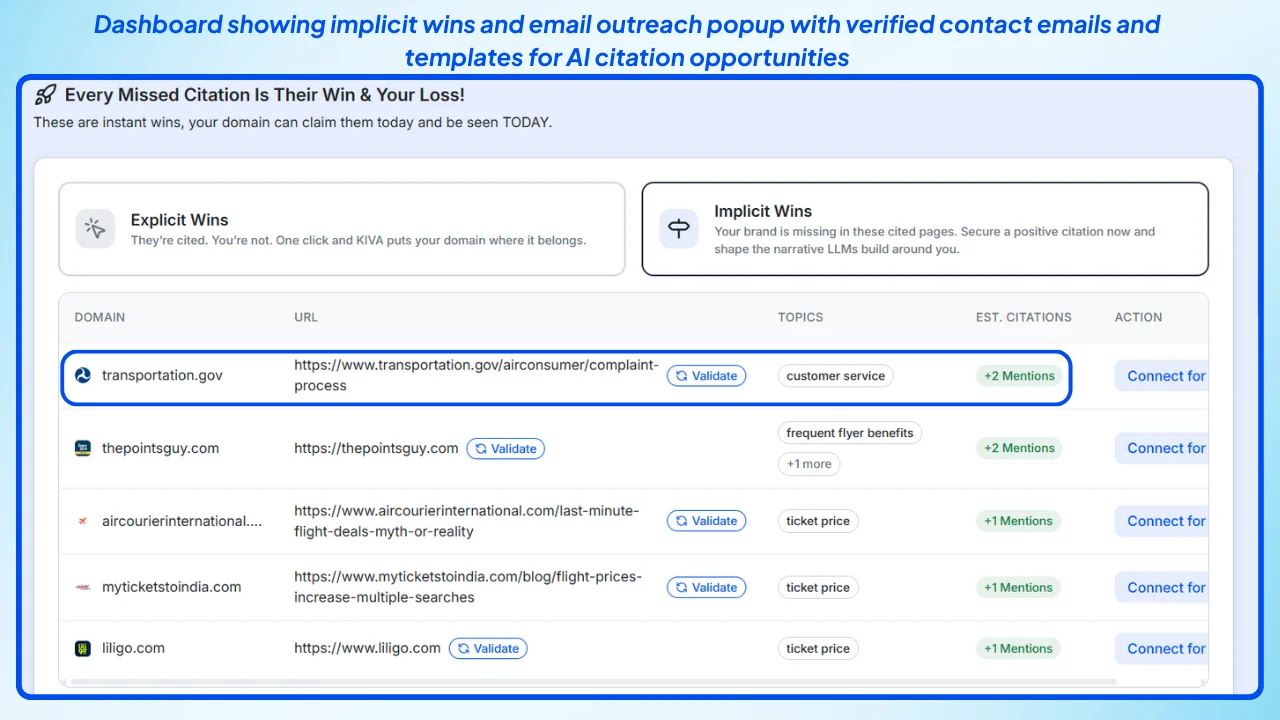
To succeed in the new search landscape, you must shift your focus from raw traffic toward your “Citation Score.” This metric tracks how often LLMs reference your brand as a primary source. Unlike a standard click-through rate, a high Citation Score signals that AI systems trust your domain as a definitive authority, making it the most important KPI for Generative Search Optimization.
The Optimization Loop
Continuous improvement requires a cyclical approach to content management:
- Strategize: Define the specific user intent and entities your content needs to address.
- Execute: Create “answer-first” content that puts the most critical information at the beginning.
- Monitor: Use AI-assisted analytics to track which snippets your brand appears in.
- Optimize: Refine your tone, structure, and data points based on what the AI prioritized.
Winning the AI Snippet
To win the AI-generated snippet, discard the “fluff” of traditional writing. AI models prioritize content that is direct and factual. Your goal is to write a high-value summary—typically 40 to 60 words—that answers the “who, what, where, and why” of a query immediately. The cleaner your structure, the easier it is for an AI to parse your information and verify its accuracy.
Avoiding Hallucinations Through Verification
One of the biggest hurdles in AI content automation is the risk of “hallucinations.” You can combat this by grounding your content in verifiable data. Every piece of information should be backed by primary research or trusted third-party statistics. By providing citations within your own articles, you create a trail of evidence that AI models can verify, increasing the likelihood of being cited as a source.
Shifting your focus to become an established information authority is the most significant step you can take. The rise of AI search isn’t a signal to stop writing; it is an invitation to write with more purpose and structure. When you stop chasing fleeting keyword trends and start building a foundation of semantic knowledge, you stop competing for clicks and start winning trust. Start structuring your data today, stay grounded in primary research, and watch as your brand becomes the go-to authority in your niche.
AEO/GEO
Want to learn more?
Contact us for direct consultation and support.