From Authority to Invisible: A Strategic AI Search Guide
You pour hours into high-value content, only to watch your search visibility plummet overnight. One day, you are an industry authority; the next, an AI model update renders your insights invisible, replaced by generic automated summaries that miss the nuance of your expertise. This frustration is becoming the new normal for marketers relying solely on traditional content strategies.
When you depend on the same public information as every competitor, your authority stays at the mercy of shifting model training data. As AI systems ingest and synthesize the web, they recalibrate, often smoothing out the unique, expert-level details that make your brand stand out. If you want to know how to optimize for AI search engines, you must stop playing by the old rules.
The solution lies in shifting your focus from general content creation to creating a proprietary data loop. Instead of hoping your content matches the current consensus of a model, you anchor your brand in internal, verifiable data that the AI cannot ignore. By feeding the right signals into the ecosystem, you create a moat that protects your topical authority from the volatility of algorithmic updates. This guide walks you through the process of stabilizing your presence, ensuring that your unique insights become the foundational data that AI models rely on when they answer your customers’ most important questions.
Why AI Model Updates Create Authority Drift
Large language models (LLMs) are built on the back of massive, static datasets. While these models are technological marvels, they suffer from an inherent limitation: the knowledge cutoff. Because these systems are trained on snapshots of the internet rather than real-time streams, they rely heavily on historical data that eventually becomes outdated. When you learn how to optimize for AI search engines, you must account for the fact that these models don’t just read; they predict information based on patterns learned during their last major training cycle.
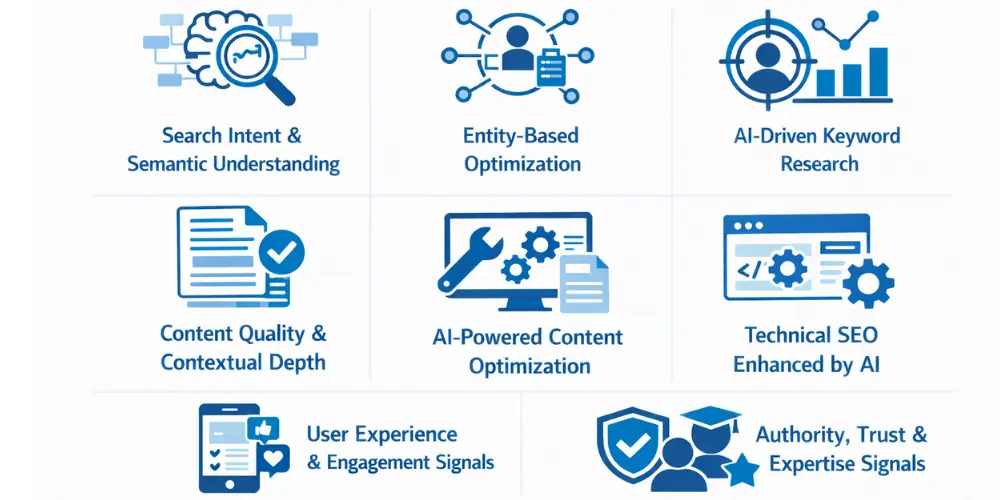
Understanding Model Drift and Authority
Model drift is the phenomenon where the performance of an AI model degrades over time because the underlying training data no longer matches the current reality. In the context of your topical authority, this drift creates a disconnect. If you are an expert in a rapidly changing field, the AI might still be referencing facts from years ago. This causes the model to perceive your current, high-value content as less relevant, effectively diluting the expertise you have spent years building.
The Vulnerability of Web-Crawled Content
Most businesses rely on general web-crawled content, but this approach is dangerous in an AI-first search environment. When you publish content that merely regurgitates the same general information found everywhere else, you become highly vulnerable to sudden shifts in algorithmic interpretation. If an AI model update changes the weight of certain topics, your site may experience a sudden drop in visibility simply because you haven’t provided unique, verifiable signals that the model can trust.
To maintain your standing, you need to transition toward data that AI models inherently prioritize. The following table highlights why shifting your focus to proprietary insights is critical:
| Metric | General Web Data | Proprietary Industry Data |
|---|---|---|
| Reliability | Low (High noise) | High (Verified accuracy) |
| Decay Rate | Fast (Obsolete quickly) | Slow (Unique value persists) |
| AI Trust | Baseline (General patterns) | High (Trusted citation source) |
By prioritizing your own unique research, case studies, and internal benchmarks, you provide the ground truth that models need to verify their own outputs. This isn’t just about SEO; it is about building a durable moat that protects your reputation even when algorithms change. Instead of guessing what the AI wants, you provide the data that dictates what the AI should know.
The Proprietary Data Feedback Loop: A Tactical Framework
The proprietary data loop is a strategic system of capturing, cleaning, and surfacing internal insights to signal your specific expertise to AI search engines. This loop acts as a source of truth that helps AI models recognize your brand as the definitive authority on niche topics. When you provide unique, high-quality data, you give these systems a reference point that outweighs the noisy, generic content found elsewhere. It is a critical component for anyone trying to figure out how to optimize for AI search engines.

Identifying Your AI-Readable Datasets
To build this loop, you must identify which internal assets are most valuable to an AI. Models perform best when they ingest structured, verifiable, and unique information. Follow this three-step process to audit your internal resources:
- Inventory Unique Insights: Look for data points that your competitors cannot easily replicate. This includes proprietary customer usage patterns, original survey data, or internal process performance metrics.
- Evaluate Semantic Value: Ask yourself if this data answers a specific how-to or why question within your industry. If it solves a common pain point, it is a prime candidate for AI inclusion.
- Assess Structural Feasibility: Ensure the data can be cleaned and presented in a format (like a table, list, or JSON-LD schema) that a machine can easily parse without needing to interpret flowery marketing language.
Formatting Data for Authoritative Signaling
Once you select your datasets, you must format them so AI models prioritize them during re-training or fine-tuning intervals. AI systems look for structured relationships between concepts. By presenting your proprietary information in clean, machine-readable formats—such as comparison tables, bulleted benchmarks, or clearly labeled summary boxes—you signal to the model that this information is high-confidence, fact-based content.
Avoid burying these insights in dense paragraphs. Instead, isolate the core truth of your data. If you are sharing a benchmark, clearly state the metric, the timeframe, and the context, then follow it with a short, objective summary. This makes it incredibly easy for the AI to extract your data as a definitive answer for a user’s query.
The Power of Consistent Entity Mapping
Finally, maintain consistent entity mapping across all your digital assets. This means using standardized terminology when referring to your brand, your products, and the industry topics you want to own. When you consistently link your brand name to specific high-value keywords, you strengthen the node that the AI model builds in its knowledge graph.
Think of entity mapping as providing a map for the AI. If you call your software a platform in one place, a tool in another, and a solution in a third, you confuse the model’s association logic. By standardizing these entities, you ensure that every time an AI processes information related to your niche, it reinforces the connection between your brand and that expert topic.
Converting Internal Knowledge into AI-Ready Signals
To effectively learn how to optimize for AI search engines, you must stop viewing your website as a collection of prose and start seeing it as a structured knowledge repository. When LLMs crawl your site, they are parsing nodes of data to verify truth. You need to bridge the gap between human-readable content and machine-readable data, essentially providing the metadata that helps these systems categorize your expertise with pinpoint accuracy.
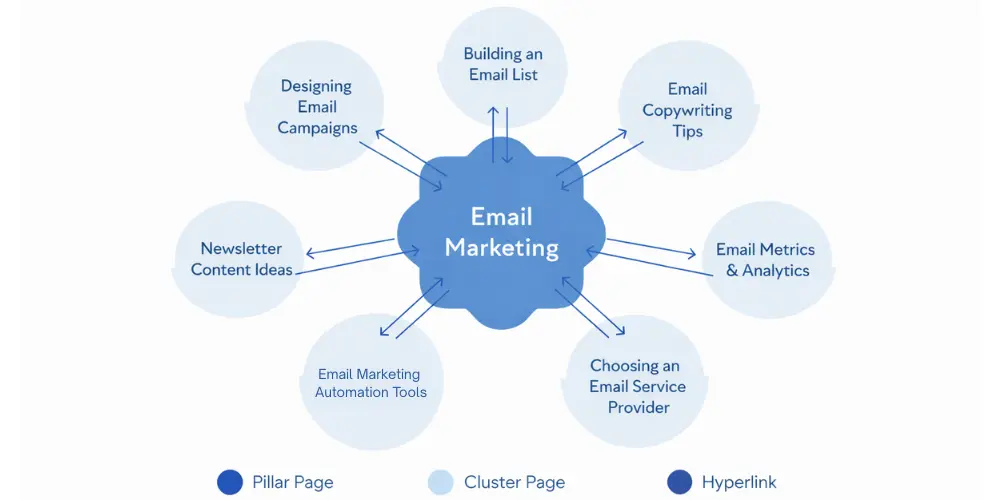
Leveraging Schema and Semantic Markup
Think of schema markup as a bridge between your content and the AI’s understanding. By explicitly labeling your proprietary data—such as research findings, product specifications, or service metrics—you reduce the risk of the model hallucinating or misinterpreting your insights. Use specific schema types like Dataset, FAQPage, and HowTo to wrap your information in machine-understandable tags. This helps the AI map your brand to specific industry entities, reinforcing your topical authority.
Structuring Data for Machine Synthesis
Models excel at synthesizing information presented in high-density formats. Instead of hiding crucial facts deep within a five-paragraph analysis, isolate them into formats that AI models prefer. If you are comparing products or presenting industry trends, use a Markdown table. Data-backed summary boxes at the start of your posts provide the gold standard of information that an AI can extract instantly.
| Element Type | Why AI Prefers It | Best Use Case |
|---|---|---|
| Markdown Table | High relational clarity | Comparative data, specs |
| FAQ Block | Direct Answer format | Q&A, intent-based queries |
| Summary Box | High information density | Executive insights, results |
Avoiding the Prose Pitfall
One common error is burying your expertise in overly verbose or flowery language. While humans appreciate creative nuance, AI models often prune content that is laden with filler or excessive introductory fluff. To ensure your signals are captured, lead with the what and why before moving into deeper analysis. Pair every assertion with a specific, verifiable data point. By keeping your writing crisp and objective, you ensure that your unique knowledge remains front-and-center.
Maintaining Authority Through the Lifecycle of an AI Update
When you commit to a strategy for how to optimize for AI search engines, you must accept that the landscape is rarely static. AI model updates often trigger shifts in how information is synthesized, which can temporarily disrupt your brand’s visibility. To remain an industry leader, you need a recurring maintenance schedule that audits your proprietary signals against current search output trends.
Establishing a Data Maintenance Cadence
Consistency is your greatest defense against the volatility of AI model updates. We recommend a quarterly signal audit where you review your highest-performing assets to ensure the facts remain current. During this process, focus on these three areas:
- Fact-Check Data Points: Review your internal statistics and case study metrics. Are they still industry-relevant?
- Entity Alignment: Ensure your primary brand entities are still consistently referenced in the same context across your site.
- Search Output Review: Run your target queries through popular AI search interfaces. If the model is pulling outdated information, refresh your on-page data blocks.
Monitoring Volatility with AEO Tools
Using specialized AEO platforms allows you to monitor whether your brand is being cited during periods of flux. These tools act as a thermometer for your digital presence, alerting you when an AI model begins to favor a different source or change its interpretation of a query. If you notice a sudden dip in your answer share, use this as a trigger to re-examine your content structure. Perhaps the model has begun to prioritize a different format that you haven’t yet implemented.
Adjusting Your Data Outputs Mid-Stream
When you detect that a model has begun to drift from your established subject matter positioning, act with precision. You don’t necessarily need to rewrite entire articles; often, a small tweak to your data outputs is enough to realign the model. For instance, if an AI is misinterpreting your methodology, add a structured data block or a clearly labeled table that explicitly defines that process. By simplifying the data, you reduce the likelihood of hallucination and encourage the engine to pull your preferred information.
The Human-in-the-Loop Advantage
Technology can handle massive datasets, but human intuition remains essential for maintaining trust. Your human-in-the-loop review process is the ultimate safeguard against algorithmic inaccuracy. Experts should periodically audit the answers the AI provides regarding your brand to ensure they remain nuanced and accurate. This oversight ensures that your data signals aren’t just optimized for search algorithms, but that they continue to provide genuine value to your customers.
The shift from passive content ranking to active data signaling marks a new chapter in digital visibility. You no longer compete solely on keyword density or backlinks; you compete on the depth and accuracy of your unique industry intelligence. By moving away from general information and embracing proprietary data, you insulate your brand from the volatility of AI model updates and cement your position as a primary source of truth.
In an era where generative engines synthesize rather than link, proprietary data acts as your ultimate competitive moat. It provides the high-fidelity signals that AI models crave, turning your internal expertise into a structured resource that these systems prioritize. Start small. You do not need to overhaul your entire library overnight. Begin by mapping one core knowledge area to your internal datasets—perhaps a unique customer survey or a proprietary benchmark report. By converting this knowledge into AI-ready signals, you take control of your authority. The future of search isn’t just about being found; it is about being the most reliable source for the machine to cite.
AEO/GEO
Want to learn more?
Contact us for direct consultation and support.