Becoming AI's Ground Truth: Building Search Trust
AI search engines don’t browse your website like a human. They consume text as raw information, constantly testing it for what they deem ground truth. Think of your content as ingredients in a kitchen. If you offer stale, mass-produced ingredients used by everyone else, an AI has no reason to feature your content. It will pass over your work in favor of sources providing unique, verifiable data.
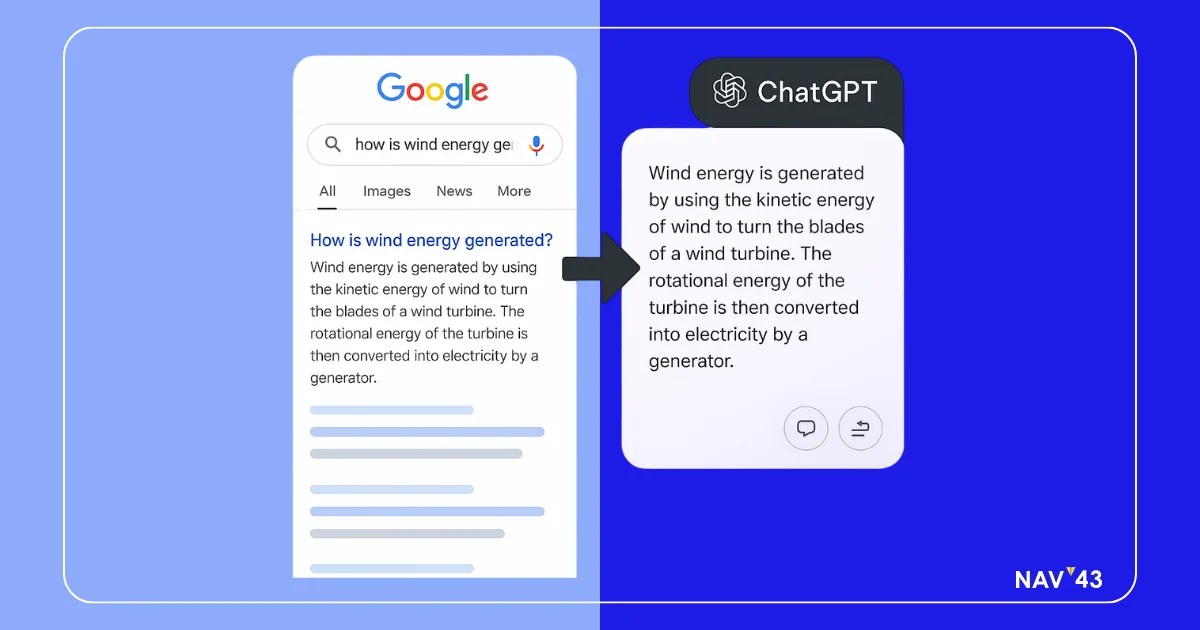
Learning how to optimize for AI search engines isn’t about gaming algorithms. It’s about becoming an indispensable provider of primary evidence. When you prioritize deep, proprietary insights over simple keyword counts, you transform your brand into a core reference point for LLMs. This guide shows you how to curate content that becomes irresistible to AI systems, helping you build an AI content moat that ensures your brand remains a reliable authority in an automated search landscape.
The Truth About AI Citations: Why Generic Content Fails
If you’re stuffing pages with keywords to climb rankings, you’re playing a game that’s losing its relevance. AI models don’t hunt for high-frequency keyword matches. Instead, they are sophisticated processors prioritizing information density and originality. When you rely on generic advice, you’re creating background noise that AI models are designed to filter out.
The Myth of Keyword Volume
Large Language Models (LLMs) operate differently than traditional search bots. They evaluate the information gain of a document. If your page repeats common knowledge—like explaining a basic concept for the thousandth time—the AI sees your content as redundant. It has already consumed higher-authority versions of that topic. Consequently, your content gets passed over for sources offering novel perspectives or fresh data.
Why LLMs Crave High-Trust Sources
To combat hallucinations—where AI presents false information—developers have weighted models to favor high-trust, verifiable sources. When an LLM generates a response, it often uses Retrieval-Augmented Generation (RAG) to pull facts from a reliable knowledge base.
If your brand isn’t perceived as a primary, trusted authority, you won’t make it into that pipeline. LLMs act like diligent journalists: if they can’t verify a claim through a trusted source, they won’t cite you. You are competing for the role of the AI’s preferred source of truth.
The Reality of Information Scarcity
The biggest hurdle for most businesses is information scarcity within their own content. If your website is a carbon copy of what’s available across the web, you provide zero incentive for an AI model to cite you. Why would an AI pick your generic paragraph when it can pull a detailed summary from a competitor?
To gain citations, you must provide the missing link in the AI’s training data by focusing on:
- Unique insights derived from industry experience.
- Proprietary data found nowhere else.
- Original research that expands upon existing consensus.
When you offer content that adds value to the AI’s knowledge graph, you stop being a competitor for keywords and start becoming an essential building block for search answers. Building authority in this way is the foundation of building trust with LLMs, ensuring your brand stays visible as search evolves.
Building Your Proprietary Data Moat
To master how to optimize for AI search engines, you must move beyond rewriting existing content and start generating your own ground truth. An AI content moat is built by producing information that cannot be found elsewhere. This is the cornerstone of effective RAG optimization.
| Feature | Generic Content | High-Trust Proprietary Content |
|---|---|---|
| Information Source | Aggregated web data | Internal, original research |
| AI Utility | Low (redundant) | High (ground truth) |
| Search Citation | Rare/Non-existent | Highly likely |
| Long-term Value | Low | High (evergreen resource) |
What Defines Un-scrapeable Value?
Information that is un-scrapeable is simply not available on the public web. If an LLM needs to explain an industry phenomenon and your internal study is the only source covering it, the model is compelled to reference you.
Key examples of high-trust, proprietary assets include:
- Experimental Data: Results from internal A/B tests or original scientific experiments.
- Industry Surveys: Proprietary research where you’ve polled your customer base or peers to uncover trends.
- Internal Case Studies: Detailed accounts of how your team solved a complex problem, including specific metrics and lessons.
Transforming Workflows into Datasets
You likely have the ingredients for a data moat hidden in your daily operations. Start by auditing your internal communications for quarterly reports, project post-mortems, or technical white papers.
Follow these steps to convert internal knowledge into a public-facing asset:
- Extract the Core Metric: Identify a specific, data-backed finding from your history.
- Contextualize the Insight: Write a summary explaining why the result happened.
- Standardize the Format: Present the finding in a clear, text-based format or downloadable file accessible to crawlers.
- Publish with Authoritativeness: Feature an expert byline to strengthen your authority.
Leveraging First-Party Data for RAG Pipelines
RAG optimization relies on retrieving high-quality data to ground AI responses. By publishing your original data, you provide the building blocks for these systems. When your brand becomes the go-to source for niche data, you are no longer competing for generic keywords. Instead, you are providing the definitive answer for the AI’s retrieval layer.
Influencing RAG Pipelines with Structural Clarity
To master how to optimize for AI search engines, you must move beyond writing for human skimming and start writing for machine ingestion. RAG pipelines function best when they can quickly parse specific facts. If your content is buried in long-winded prose, the AI might bypass your site for cleaner data sources.
The Power of Atomized Facts
AI models look for high-probability associations. By atomizing your facts—breaking complex arguments down into singular, self-contained statements—you remove the potential for the model to hallucinate. Instead of a vague claim, use an objective, granular fact that an LLM can confidently pull into a response. This is a goldmine for RAG optimization.
Building Your Knowledge Graph with Semantic Linking
While atomized facts provide the data, semantic SEO for AI provides the map. Connect facts logically so that an AI can crawl your site and perceive a structured knowledge graph. Use consistent, intentional linking between your proprietary data points. This reinforcement signals to search engines that these pages are part of a cohesive, authoritative framework, which is essential for building trust with LLMs.
Master the ‘Definition Paragraph’
One of the most effective ways to influence an AI response is by incorporating Definition Paragraphs. These are concise, objective, and factual blocks of text designed for direct extraction.
Follow this simple template to create effective definition paragraphs:
- Start with the Subject: Clearly state the concept.
- Provide the Category: Define what it is.
- Detail the Primary Function: State exactly what it does in one clear sentence.
- Offer a Key Metric or Fact: End with a verifiable number or status.
By treating your content as modular, machine-readable facts, you are actively feeding the intelligence that powers the future of search. Use these methods to ensure your AI content moat remains visible to the systems determining the answers of tomorrow.
Practical Steps to Documenting Your Expert Insights
Your internal team is a goldmine of information, yet so much wisdom remains trapped in Slack threads or notebooks. When you want to know how to optimize for AI search engines, you must treat this tribal knowledge as the raw material for your AI content moat. If it isn’t documented, LLMs cannot ingest it.
Unearthing Hidden Tribal Knowledge
Tribal knowledge refers to unwritten processes and unique perspectives that live in the minds of your employees. To turn this into proprietary data for SEO, facilitate a knowledge transfer by asking your team to log frequently asked questions that never made it to your public FAQ. When an LLM crawls your site, it should find definitive answers derived from your actual daily experiences.
The Power of Verifiable Credentials
Building trust with LLMs requires clear, verifiable expert bylines. An AI model is more likely to cite your content if it can link the author’s name to a professional biography or past contributions. Think of your bylines as digital passports. Every article should include a professional headshot, a brief relevant biography, and links to external professional profiles.
Three Low-Effort Ways to Gather Insights
- Customer Sentiment Polls: Use newsletters to poll your audience on industry pain points to create a unique “Customer Insights Study.”
- A/B Test Findings: Share “What we learned from testing X vs. Y” reports to provide concrete evidence of your expertise.
- Internal Audit Findings: Review project post-mortems and publish anonymized lessons learned.
By shifting from generic creation to insight documentation, you naturally align with the requirements for semantic SEO for AI. Focus on documenting one unique insight this week to begin becoming a primary source for AI. The future of search belongs to those who provide the most reliable information—make sure your brand is among them. What single, proprietary data point will you publish first?
AEO/GEO
Want to learn more?
Contact us for direct consultation and support.