How to Optimize for AI Search Engines: A Guide to Citations
Your website is no longer just a digital destination; it has become a potential research assistant for millions. Think of modern AI models not as basic indexers, but as discerning researchers. They aren’t looking for sites that repeat a keyword ten times in a paragraph. Instead, they hunt for reliable, verifiable answers they can confidently cite. If your content lacks an evidence-based trail, these models will overlook you for a source they trust more.
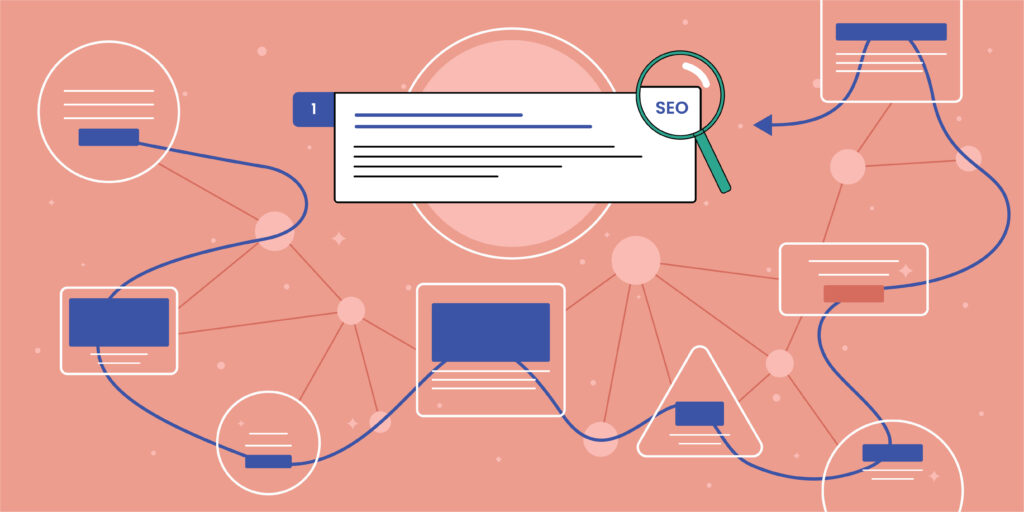
This shift marks a fundamental change in how you approach your online presence. In the era of generative AI, trustworthiness is the ultimate currency. To thrive, you must move beyond tactical keyword stuffing and embrace strategies demonstrating authority. Learning How to Optimize for AI Search Engines proves your brand is the definitive source of truth in your niche. By focusing on clarity and verifiable claims, you shift from being a bystander in search results to being a foundational piece of the information AI delivers. You will soon discover that your ability to be cited is the new gold standard for visibility.
Understanding the Shift: Why Citations Matter More Than Keywords
Traditional keyword matching is losing its edge as Large Language Models fundamentally change how users discover information. Previously, search engines rewarded pages that stuffed terms into headers to mimic human queries. Today, AI models synthesize complex data points to formulate original, conversational answers. When you rely solely on keyword density, you provide the AI with nothing but noise. To succeed, you must learn how to optimize for AI search engines by prioritizing intent-rich, verifiable content.
The Rise of AI Citation Patterns
Modern search experiences are driven by AI citation patterns, where models verify information against established, high-trust sources. These engines function like discerning researchers; they aren’t interested in keyword frequency. Instead, they look for authoritative evidence to back up claims. When an LLM generates a summary, it acts as a curator, favoring content that serves as a primary source of truth. If your brand doesn’t provide clear, factual, and well-cited information, the AI won’t pull from your ecosystem.
Source Reliability vs. Domain Authority
While we are familiar with “Domain Authority,” the new benchmark is the source reliability score. Unlike traditional authority, which can be gamed through mass link-building, this score focuses on consistency, factual accuracy, and content provenance. A site with thousands of low-quality backlinks will lose out to a smaller, specialized site that demonstrates high factual integrity. The AI calculates the likelihood that your content will lead to a hallucination or an error. If your content is accurate and easy to parse, your reliability score rises.
Comparing Traditional SEO and Modern GEO
The transition from keyword-focused SEO to Generative Search Optimization (GEO) requires a shift in how you build your digital presence.
| Feature | Traditional SEO | Modern GEO (AI-Ready) |
|---|---|---|
| Primary Goal | Keyword Ranking | Authoritative Answers |
| Evaluation Metric | Backlinks/Domain Authority | Source Reliability Score |
| Content Format | SEO-Friendly/Long-form | Fact-rich/Structured/Cited |
| User Intent | Click-through to site | Direct information consumption |
| Data Strategy | Keyword Density | Content Provenance/Schema |
By shifting your focus away from tricking a crawler and toward building a verifiable footprint, you position your brand as the expert source AI engines rely on to answer questions accurately. This builds long-term, structural trust in a search environment that rewards precision.
Building Your Data Provenance Footprint
Content provenance is the digital equivalent of a chain of custody for your information. It defines the origin, history, and accuracy of your content. For AI models, your provenance acts as a vital trust signal. When an AI can trace a claim back to a verified, expert-backed source, it is far more likely to prioritize that content. This is how you optimize for AI search engines—by making your data undeniably trustworthy.
Creating Your Verifiable Data Footprint
To ensure your information becomes a trusted asset for LLMs, follow this step-by-step approach:
- Map to Primary Sources: Every claim should be anchored to a primary, verifiable source, such as research papers or industry studies.
- Use Consistent Identifiers: Refer to entities and products by their standardized names consistently across all pages.
- Timestamp and Update: AI models prefer current data. Include visible publication and last-updated dates.
- Author Attribution: Explicitly link your content to a real-world person, highlighting their credentials.
Schema as the Foundation of Trust
Structured data, known as Schema, is the language you use to speak directly to the machine. It provides the metadata that helps an AI engine understand your content without having to guess. By implementing structured data, you provide a clear roadmap of your content’s structure, reducing the cognitive load on the AI. When your Schema matches the text context, it creates a high-confidence signal essential for generative search optimization.
The Source Reliability Score: What AI Models Look For
Think of your website as a job applicant appearing before a panel of elite researchers. Those researchers—the AI models powering generative search—are looking for your source reliability score. This is a complex calculation of your digital footprint and consistency that determines how often an AI cites you.
Foundation of Content Hygiene
“Content hygiene” refers to the structural integrity of your information. You can practice good hygiene by maintaining clear, updated timestamps, removing dead links, and using unambiguous language.
| Hygiene Factor | What AI Checks For | Impact on Reliability |
|---|---|---|
| Citations | Valid, live links to reputable sources | High |
| Author Bio | Credentials and subject matter expertise | High |
| Update Date | Recency of information | Medium |
| Schema Markup | Machine-readable entity connections | Critical |
Avoiding Hallucinations to Build Trust
Nothing kills your AI search ranking faster than being associated with hallucinations. To avoid this, move away from general assertions and adopt a “show, don’t tell” approach. Use primary research and link to original datasets to ensure your brand remains a reliable, top-tier source.
Practical Strategies for Getting Cited by AI Engines
To effectively learn how to optimize for AI search engines, you must move away from keyword stuffing and toward clear, logically structured information.
Writing Content That AI Can Extract
AI models thrive on clarity. Follow the structure of a direct, informative summary followed by supporting details. Use headings and subheadings as signposts. If you are explaining a process, use numbered lists to define sequential steps and bullet points for features. This semantic SEO for AI approach helps models parse your content as an authoritative answer.
Checklist for Maximizing Citation Potential
Use the checklist below to assess your existing pages for AI-readiness.
| Audit Item | Why It Matters for AI | Priority |
|---|---|---|
| Direct Answer Statement | Provides an extractable snippet for AI | High |
| Structured Schema Data | Makes content machine-readable | High |
| Consistent Expert Tone | Signals credibility to models | Medium |
| Internal Links to Cluster | Demonstrates depth and topic authority | High |
| Cited Data/Evidence | Improves your verifiable data footprint | High |
The days of tricking search engines with meta tags are over. As AI search engines evolve into sophisticated research assistants, they have traded surface-level matching for an exacting standard of truth. Your source reliability score is now the primary currency, acting as the ultimate validator for whether an AI chooses to cite your work.
When you consistently provide verifiable facts, clear content provenance, and expert-backed insights, you build an authoritative data footprint. According to AEO/GEO, this transition from chasing rankings to cultivating trust is the foundational shift of the new web. The path to visibility today requires moving away from the search-and-click mindset and toward an answer-and-verify strategy. Start building your verifiable data footprint today; your journey to becoming the AI-preferred authority begins now.
AEO/GEO
Want to learn more?
Contact us for direct consultation and support.