The Prompt-Chasing Trap: Why Traditional SEO is Failing AI Visibility
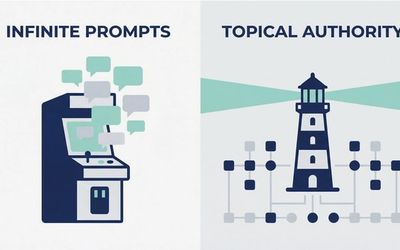
The digital marketing industry remains largely obsessed with “prompt-chasing”—the act of reverse-engineering how to force specific keywords into LLM outputs. This is the new vanity metric. While traditional SEO rewarded the optimization of single search queries, AI search engines operate on a completely different logic: topical authority.
When you focus on tracking individual prompt rankings, you ignore the fundamental shift in how AI processes information. LLMs do not “rank” a URL in the way Google’s classic index does; they synthesize verified facts from authoritative sources. By chasing prompts, brands lose sight of long-term growth. True visibility in this era requires shifting from keyword-based tactics to building a cohesive, AI-evaluated knowledge base that the model can trust as a primary source.
Identifying Your ‘Owned Subject Spaces’: A Three-Step Framework
To compete in an AI-first environment, you must stop trying to rank for everything and start dominating specific “Subject Spaces.” This is where your brand is the definitive, verifiable answer.
- Map Core Expertise: Catalog your internal knowledge—not just product features, but the unique problems your team solves. Connect these to specific, high-frequency customer pain points.
- Conduct AI Gap Analysis: Query leading LLMs on the topics you intend to lead. Analyze who the model currently cites. If your brand is absent, identify the specific information gaps where the AI relies on generic or competitor content.
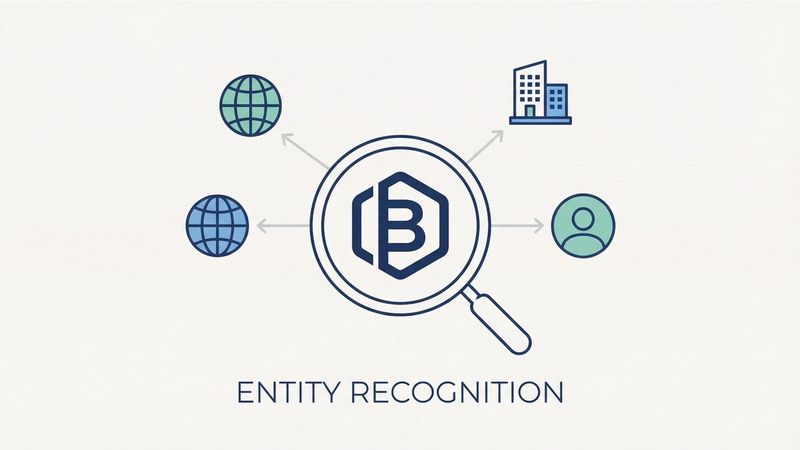
- Define Your Subject Space: Create a concentrated content mandate. Your goal is to become the “go-to” entity for these sub-topics, ensuring that whenever an AI synthesizes information on these subjects, your content is the primary reference.
Executing the Bottom-of-Funnel (BoFu) Strategy for LLMs
LLMs have become the world’s most sophisticated sales assistants. They prioritize high-intent, decision-driving content because it helps them fulfill user requests for recommendations.
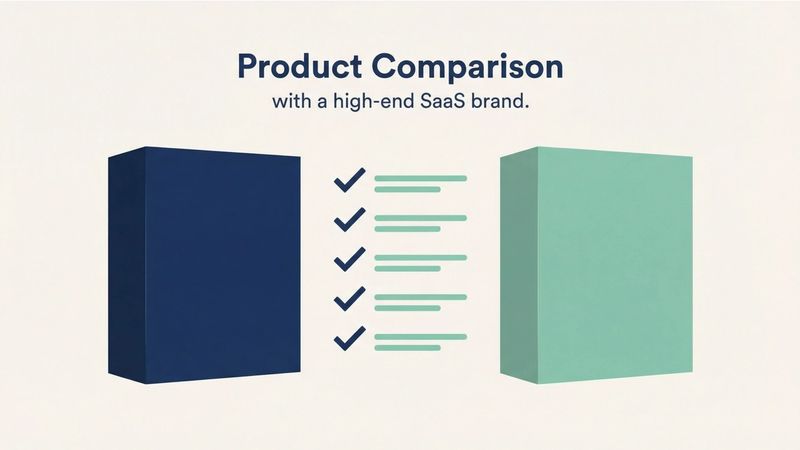
- Comparison Articles: Create direct, neutral, and data-backed “X vs Y” comparisons. LLMs look for these to resolve user uncertainty.
- Buying Guides: Structure your guides to address the “Should I choose X or Y?” query by detailing the specific use cases for each solution.
- Objective Synthesis: Unlike traditional sales copy, your BoFu content must be structured to provide a clear, factual assessment. When an AI summarizes options for a potential customer, it pulls from content that offers the most direct, evidence-based answer.
Beyond Ranking: Measuring Topical Share of Voice (SoV)
Ranking reports are becoming obsolete. To understand your brand’s true performance, you must pivot to Topical Share of Voice (SoV). This metric measures your frequency of citation relative to competitors across various LLM environments.
- Audit for Consistency: Ensure your brand’s positioning remains uniform across different AI platforms. Discrepancies in how your brand is defined can lead to “hallucinations” or lack of recognition.
- Measure Citations: Move your focus from traffic volume to “brand mentions” and “source citations” within AI responses.
- Establish Baselines: Track how often your specific content assets are synthesized into AI answers. If you aren’t appearing as a trusted source, your Topical SoV in that space is low.
Automating Authority: Building Scalable AI-Ready Content Pipelines
Achieving visibility requires a consistent flow of fresh, authoritative content. Relying on manual updates will fail to keep pace with the iterative nature of LLM updates.
- Unified Voice: Use automation to maintain brand identity across large-scale content hubs. Structural consistency is what helps AI engines categorize and “learn” your brand’s perspective.
- Continuous Distribution: Integrate your content production with automated distribution to signal that your brand is an active, evolving authority on your chosen subjects.
- Structural Integrity: AI engines prefer content that follows clear, logical hierarchies. Automated pipelines allow you to enforce these structural standards across every page, ensuring that long-term AI search visibility is built on a foundation of reliability.