How to Rank in AI Overviews: A Guide to AEO
Remember the days when searching for a quick answer meant clicking through several blue links, hoping one actually had the information you needed? That era is fading fast. Now, you likely see concise, synthesized summaries directly at the top of your search results—answers delivered in an instant without the need to hunt for the right page. If you feel nervous about this shift, you aren’t alone. Many marketers worry this evolution means their website traffic is destined to vanish.
Viewing this as the end of SEO misses the bigger picture. Instead, it marks a more helpful, user-centric phase where your content provides value exactly when people need it most. Mastering how to rank in AI Overviews on Google and beyond isn’t about losing visibility; it’s about positioning your brand as the definitive source for the questions your audience asks. By understanding these mechanics, you’ll embrace this change as an opportunity to build trust and reach a more qualified audience.
What Happens Under the Hood of an AI Overview?
To master Answer Engine Optimization (AEO), stop thinking of Google as a librarian and start thinking of it as an intelligent assistant. Modern AI models don’t just scan an index for matching keywords to retrieve blue links. They perform a complex process of information synthesis, pulling data from multiple sources to construct a unique, conversational answer for your query.
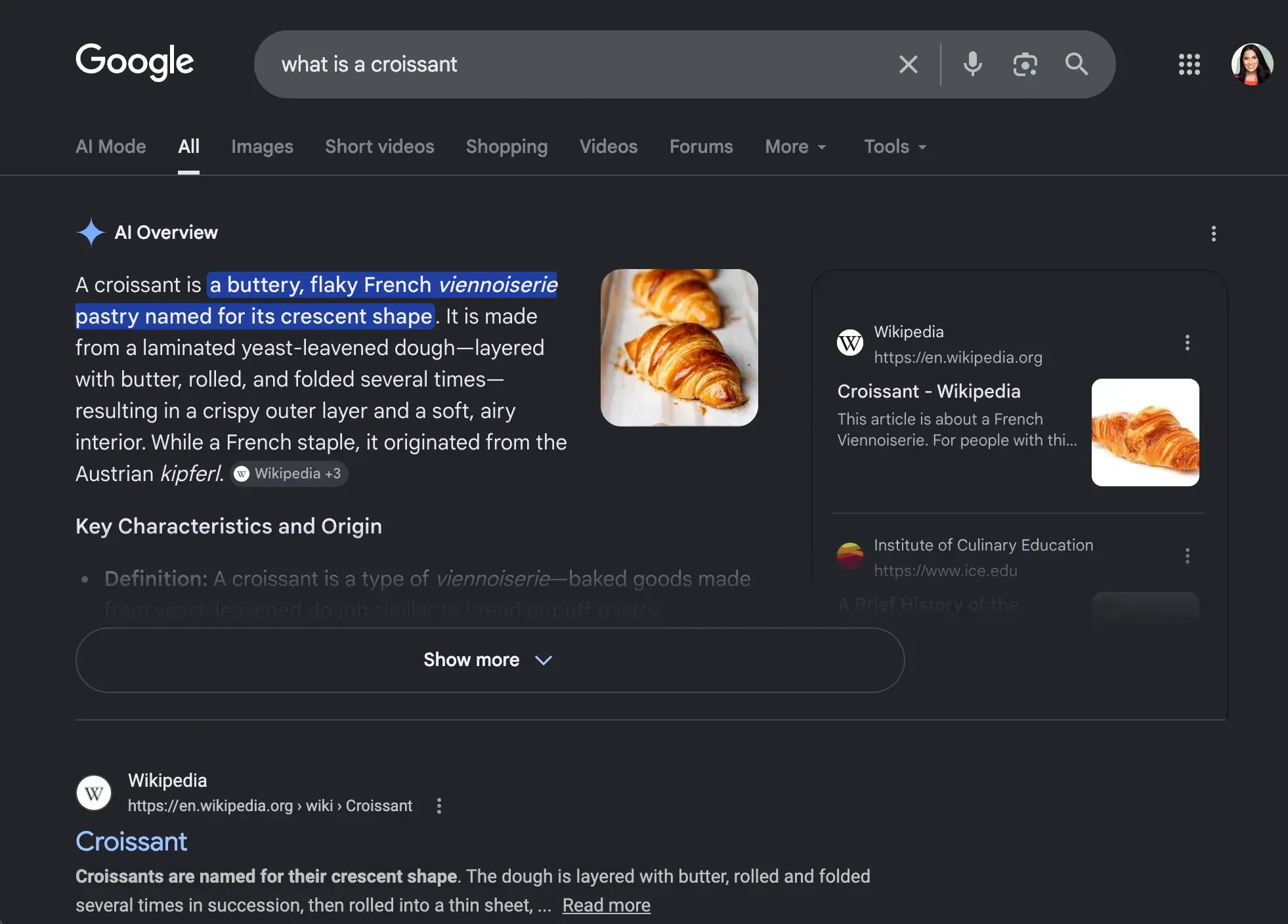
This synthesis process creates the generative search visibility we all covet. The AI evaluates content, weights it based on authority, and writes a custom summary. Your goal is to provide the high-quality, structured, and factual building blocks the AI needs to use your content as a core reference.
SEO vs. AEO: Shifting Your Focus
Traditional SEO is largely about winning the click. You rank on a Search Engine Results Page (SERP) so a user chooses your link over others.
In contrast, an AEO strategy shifts the goal toward becoming the source of truth. You are optimizing for the citation or answer snippet that appears within the AI interface. While traffic remains a potential byproduct, the metric shifts from click-through rate to brand visibility and authority building.
Traditional Search vs. AI Overviews
Understanding the differences between these ecosystems is vital to your success.
| Feature | Traditional Search (SEO) | AI Overviews (AEO) |
|---|---|---|
| Core Goal | Drive clicks to website | Secure citation/answer |
| Intent | Navigational/Commercial | Informational/Problem-solving |
| Content Format | Long-form, SEO-optimized text | Synthesized, concise facts |
| Measurement | Keyword rankings, traffic | Share of voice, brand recall |
| User Journey | User explores multiple links | User receives summarized insight |
Learning to balance these approaches ensures that your AI search ranking factors remain strong while you drive direct traffic. By providing clear, valuable information, you make it easy for the AI to cite your work. For related insights, see our guide on Content Authority.
The Answer-First Blueprint: How to Structure Content
To understand how to rank in AI Overviews on Google and beyond, stop writing for human skimmers and start writing for AI digestion. AI models don’t read long-form narratives like people do; they hunt for concise, factual data points. An effective AEO strategy relies on the Answer-First approach, where you deliver the core value immediately.

Why Your Headings Need to Ask Questions
Generative search is intent-driven. Users ask specific questions like, “How does compound interest work?” If your headings state “Financial Concepts,” you miss the opportunity to match that intent.
Transform your headings into the actual queries your audience types. When a heading mirrors a user’s search, you signal that your paragraph is the ideal candidate for an AI-generated snippet.
The Direct Answer Protocol
Once you have an intent-driven heading, the first sentence must contain the direct answer. Think of it as a journalist’s inverted pyramid style.
- State the fact: Provide a one-to-two sentence summary that answers the question.
- Explain the why and how: Use the remainder of the paragraph to elaborate.
- Avoid fluff: Cut out filler phrases.
By front-loading your content, you give the AI a high-confidence segment to pull into its summary, increasing your generative search visibility.
Checklist for Maximum Scannability
AI models prioritize content that is easy to parse. Use this structural checklist to optimize:
| Feature | Best Practice for AEO | Why It Matters |
|---|---|---|
| Paragraph Length | 2–3 sentences max | Prevents content bloat |
| List Usage | Bullets or numbers | Helps AI index distinct steps |
| Hierarchy | Strict H2 to H3 flow | Defines topical relationships |
| Data Tables | Markdown format | Creates structured snippets |
When you present data, prioritize clarity over style. This creates a logical structure for the AI, a core component of structured data for AI. For a complete overview of building this authority, check out our guide on Content Authority.
Beyond Text: Optimizing for Multimodal Search
AI models now process and synthesize information from images, videos, and diagrams alongside written content. If your AEO strategy relies solely on copy, you miss half the picture.
The Power of Visual Context
Think of an AI model like a librarian who looks at the maps and charts in books to confirm facts. When you provide high-quality visual data, you make it easier for the AI to categorize your expertise.
Mastering Alt Text and Filenames
AI models rely on the metadata you provide. If your image file is named IMG_9876.jpg, you waste an opportunity to inform the model.
- Descriptive File Names: Use human-readable, keyword-rich names like
how-to-fix-broken-faucet-diagram.webp. - Contextual Alt Text: Describe both the visual content and its utility.
- Surrounding Text: The AI weighs the text near the image to determine relevance.
Securing Position Zero with Rich Media
Capturing position zero in AI answers often comes down to providing the most concise, helpful visual explanation.
| Media Type | AI Benefit | Best Use Case |
|---|---|---|
| Infographics | Instant data digestion | Explaining complex processes |
| Short Video | High user engagement | Step-by-step tutorials |
| Comparison Charts | Quick feature review | Product-to-product analysis |
By integrating these elements, you build a multimodal footprint that AI engines easily extract.
Building Trust: E-E-A-T and Topic Authority
When an AI engine constructs an answer, it evaluates the reliability of its sources. In this landscape, E-E-A-T (Experience, Expertise, Authoritativeness, and Trustworthiness) becomes your strongest asset for securing generative search visibility. To rank in AI overviews, prove that your brand is a definitive authority.
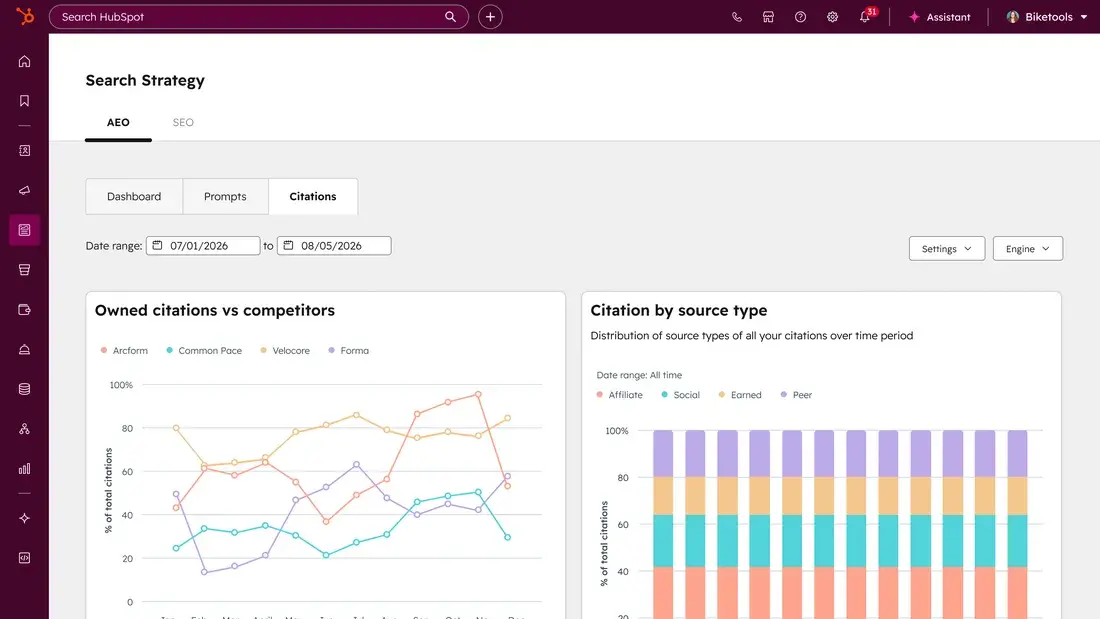
The Power of Topical Clusters for AI Expertise
AI models thrive on context. By building topical clusters, you create a web of interconnected content that signals depth. A cluster consists of a pillar page covering a broad topic and several satellite pages that dive into specific sub-questions.
Leveraging Structured Data for AI Clarity
Even the smartest AI needs a helping hand. This is where structured data for AI becomes essential. By using Schema markup, you provide a roadmap for crawlers.
| Schema Type | Purpose | Impact on AI Visibility |
|---|---|---|
| FAQ Schema | Direct questions/answers | High probability of being pulled |
| HowTo Schema | Step-by-step instructions | Helps AI extract sequential processes |
| Article Schema | Defines author/publisher | Establishes the credibility |
By implementing these tags, you reduce the cognitive load on the AI when it evaluates your page.
Consistent Entity Recognition
Finally, consider your brand as a single entity. AI search ranking factors rely on the ability to recognize that your website, social profiles, and author profiles belong to the same entity. Ensure your brand identity is consistent:
- Maintain Consistent NAP: Keep your Name, Address, and Phone number identical everywhere.
- Utilize SameAs Schema: Use this markup on your website to link your official profiles.
- Earn Meaningful Mentions: Get mentioned by recognized experts in your industry.
The transition from keyword-matching to answer-driven search is an invitation to refine how you connect with your audience. Modern Answer Engine Optimization prioritizes providing value that AI models find indispensable. By consistently creating high-quality, structured content, you signal that your brand is the go-to resource in your industry.
Your journey toward mastering AI search ranking factors starts with a single, helpful update. You have the expertise—now make sure the AI knows it too. Lean into the process, stay consistent, and watch your brand grow in this exciting era of discovery. For a complete overview of optimizing for the future of search, check out our guide on Content Authority.
AEO/GEO
Want to learn more?
Contact us for direct consultation and support.