How to Optimize for AI Overviews: 2026 Playbook
You wake up, check your analytics, and see the same unsettling trend: your organic traffic is stalling, despite your content holding steady. The culprit? Increasingly sophisticated AI summaries pushing your hard-earned links down the fold. It’s natural to feel frustrated when the landscape you’ve mastered feels like it’s shifting. You might even worry that the visibility you’ve built is becoming obsolete.
The good news: this transition isn’t an existential threat; it’s a recalibration of what search truly means. When you know How to optimize for AI overviews (AIOs): A complete 2026 playbook, you stop fighting the technology and start building deeper authority. By shifting your perspective from chasing clicks to providing definitive, machine-readable answers, you position your brand as a primary source for the AI agents driving tomorrow’s traffic. You’re not just surviving; you’re learning how to thrive in an era where being the best answer is rewarded.
The New Rules of Search: Why AI Overviews Aren’t Just SEO 2.0
The digital search landscape has fundamentally shifted. For years, we focused on ranking blue links to drive traffic directly to our websites. Today, that model is evolving into answer engine optimization, where the goal is earning citations within synthesized AI answers. Instead of just competing for the highest position, you are now competing to provide the most accurate, concise, and trustworthy information that an AI model selects to construct its summary.
Understanding Query Fan-out
One of the most critical concepts to grasp in this new era is query fan-out. When a user types a complex question into an AI-powered search engine, the system doesn’t just look for a single matching document. It triggers multiple sub-queries to gather comprehensive data from various high-authority sources.
Think of it like this: if a user asks for a guide to sustainable gardening, the engine might simultaneously query sub-topics like best soil for organic gardens, beginner-friendly vegetables, and water conservation. Your content must address not just the core intent, but the surrounding sub-queries the AI explores to build its holistic answer. If your article only hits the main topic but misses these smaller, granular sub-queries, you risk being left out of the synthesis entirely.
Shifting from Keywords to Complex Answers
To succeed with Generative Search Optimization, you must move beyond targeting individual keywords. Traditional SEO often pushed us to create content focused on a single term, repeating it until the page felt optimized. That approach no longer works. Modern AI models prioritize nuance and depth, favoring content that answers complex, multi-faceted questions in a conversational and authoritative way.
This requires a change in mindset:
- Focus on User Intent: Instead of asking what keyword to rank for, ask what specific problem the user needs to solve.
- Embrace Breadth: Structure your content to naturally incorporate the sub-queries identified through query fan-out.
- Prioritize Quality: A single, well-structured piece that answers an entire topic’s ecosystem is more valuable than ten thin, keyword-stuffed pages.
By aligning your strategy with these realities, you position your brand to lead in the age of AI.
Technical Essentials for AI Visibility
Getting your site ready for the era of generative search requires technical precision. Think of your website’s code as the instruction manual for search engines and AI models. If the manual is missing pages or written in a language the AI can’t interpret, you vanish from the citation pool.

The Technical Foundation Checklist
To ensure your content is eligible to be synthesized by an AI model, you must meet basic technical standards. Use the table below to audit your current setup.
| Requirement | Why it Matters for AI | Action Item |
|---|---|---|
| Crawlability | AI bots must reach your page to process it. | Audit your robots.txt to ensure you aren’t blocking major search bots. |
| Indexability | If it isn’t in the index, the AI doesn’t know it exists. | Check for noindex tags on high-value content. |
| Site Speed | Fast rendering improves successful bot crawls. | Minimize bloated scripts and optimize image delivery. |
| Mobile-First | Most AI search happens via mobile interfaces. | Ensure your responsive design maintains integrity on small screens. |
| Bot Access | Blocking bots stops AI from ingesting your data. | Avoid disallowing AI-specific user agents. |
Why Blocking Bots Means Zero Visibility
A common mistake in current AEO strategy is the aggressive use of bot-blocking directives. While some brands fear their content being scraped, using directives like noai, noimageai, or generic robots.txt blocks is a double-edged sword. When you block these crawlers, you opt out of the new search experience entirely.
If an AI cannot crawl your page, it cannot verify the accuracy of your claims or recognize your expertise. Consequently, you will never be included in the synthesized AI answer. According to AEO/GEO, if you want to be a source, you must allow access.
Structured Data: The Signal Amplifier
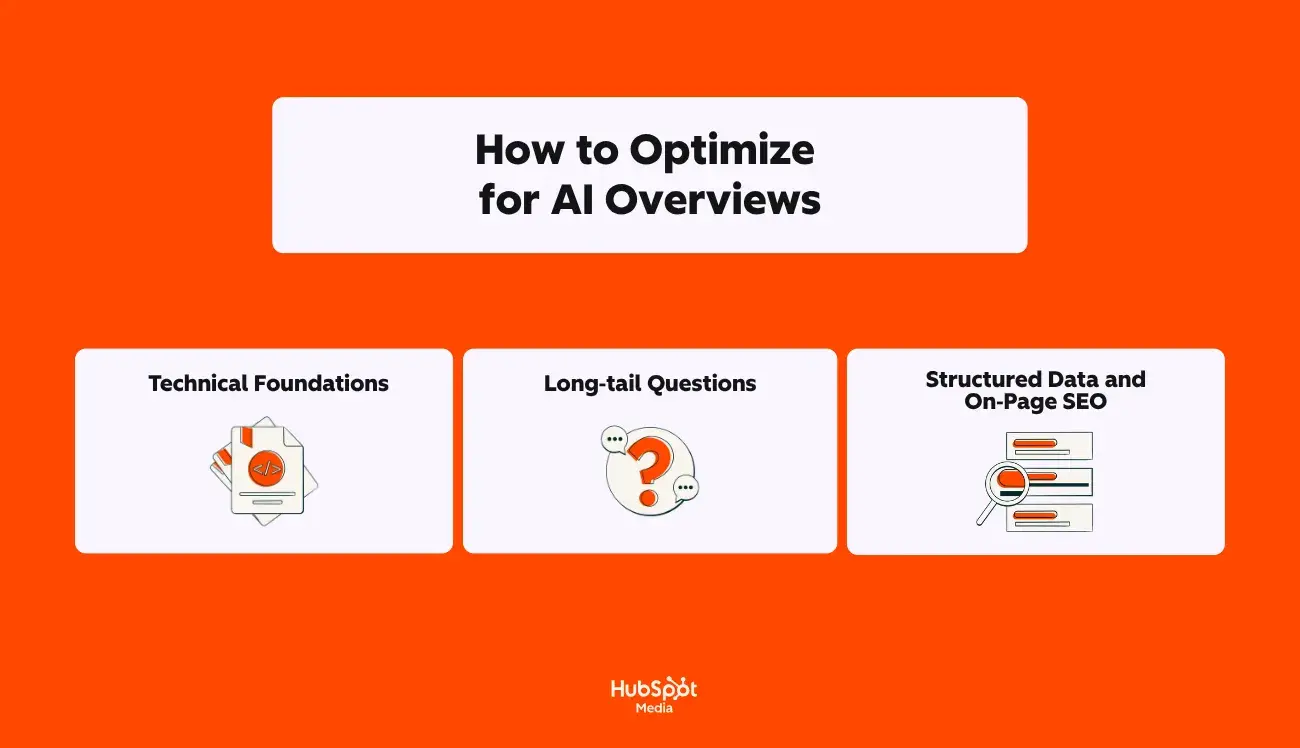
If crawlability is the door, structured data (JSON-LD) is the concierge service. AI models are masters of patterns, and schema markup provides a standardized, machine-readable language that defines your content. To amplify your signals, prioritize these specific schema types:
- Article Schema: Helps AI distinguish between your main content, the author, and publication dates.
- FAQ Schema: This is a powerhouse for AI overview optimization. By explicitly mapping questions to answers, you make it easy for models to extract direct answers.
- HowTo Schema: Perfect for tutorials. It provides a structured, step-by-step format that aligns with the multi-step reasoning often performed by large language models.
Crafting Content that AI Loves to Cite
To win in the era of generative search, you must prioritize the Answer-First method. This approach requires placing the direct, extractable answer to a query within the first 50 words of every section. By doing this, you provide AI models with a concise, high-quality snippet that they can easily digest and cite in an AI Overview.
Mastering the Definitional Paragraph
AI models thrive on clarity. A Definitional Paragraph follows a strict pattern that minimizes ambiguity. Use this simple template: [Term] is [Concise Definition]. It functions by [Primary Mechanism or Benefit]. Specifically, it [Action/Value Proposition].
For example, if you are explaining what is local SEO, do not start with a flowery introduction. Write: Local SEO is the process of optimizing a business’s online presence to attract more customers from relevant local searches. It functions by signaling location relevance and prominence to search engines. Specifically, it helps brick-and-mortar stores appear in localized AI responses. This rigid format acts as a beacon for AI crawlers.
Using Question-Led Headings
Your headings are keys to Generative Search Optimization. Every H2 and H3 should mirror actual human questions or specific sub-queries related to your topic. When your heading is a direct question, the AI assumes the content immediately following is the authoritative answer. Instead of a generic heading like Product Benefits, use How can [Product Name] help your team save time? This alignment is a critical component of a successful AEO strategy.
Comparing Content Structures
The transition from legacy search tactics to answer engine optimization requires a pivot in how you organize information.
| Feature | Traditional Content Structure | AI-Ready Content Structure |
|---|---|---|
| Lead-in | Slow, narrative buildup | Answer-First (direct response) |
| Heading style | Broad/Thematic | Question-led/Specific |
| Paragraph goal | Engaging the reader’s emotions | Providing clear, definable data |
| Data presentation | Long-form explanation | Structured (tables/bullets) |
| Citation signal | Keyword density | Topical authority & clarity |
Measuring Success Beyond Traditional Rankings
Traditional SEO metrics like keyword rankings have lost their precision. Because AI overview optimization doesn’t trigger a standard click-through like a blue link, search consoles often fail to isolate AIO traffic. You’re no longer just chasing a position; you’re chasing influence within an algorithmic summary.
Tracking Your Citation Rate
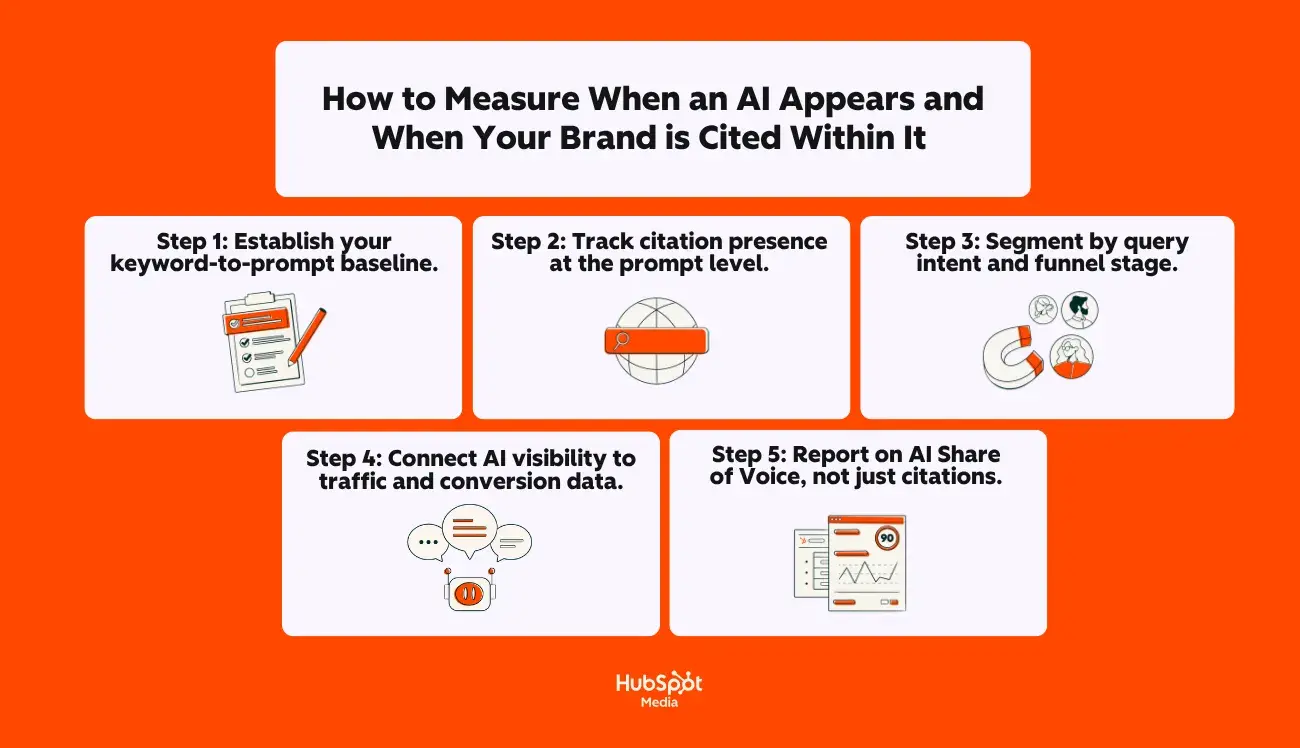
To gauge your performance, pivot toward measuring AI citation strategies. A practical workflow is tracking your Citation Rate—the percentage of times your brand is cited as a source when a target keyword triggers an AI overview.
- Define Priority Prompts: Identify the top high-intent questions your brand must answer to remain relevant.
- Audit Periodically: Check these prompts across different geographic locations and devices.
- Log Citations: Maintain a spreadsheet tracking the total number of searches versus the number of times your site appears in the Sources box.
- Calculate: Divide your total citations by the total number of AI overviews generated for those specific prompts.
The Power of AI Share of Voice
While citation rate gives you tactical feedback, AI Share of Voice (AISoV) is the metric that matters most for leadership reporting. AISoV is the proportion of total AI-generated visibility captured by your brand compared to your direct competitors within a specific topical cluster. It tells you exactly how much mental real estate your brand occupies within the AI’s synthesized responses.
Common Misconceptions and Future-Proofing Your Brand
It’s tempting to look for an off switch, but trying to opt-out of AI overview optimization is a strategic mistake. Preventing AI bots from accessing your content simply ensures your brand remains invisible to the very systems powering the next generation of search.
The Power of Brand Entity Strength
Rather than retreating, focus on building a robust brand entity. In the eyes of an AI, an entity is a recognized, unique concept with a clear set of attributes. By consistently establishing your brand across authoritative platforms, you create a knowledge graph footprint that machines can easily verify. The more evidence AI models have that your brand is a primary source, the more likely you are to be cited.
Topical Authority as Your Defense
Building topical authority through well-structured content clusters is the ultimate hedge against volatile algorithms. When you comprehensively cover a specific niche, you provide AI models with a depth of information that fragmented, standalone articles cannot match. This creates a gravitational pull for search engines. By consistently answering related sub-queries, your content signals that you own the conversation, making your brand a high-priority citation.
Adopting an actionable mindset is your greatest competitive advantage. By focusing on answer engine optimization, you aren’t just chasing algorithm tweaks; you’re building a brand that AI models recognize as trustworthy. Success won’t happen overnight, but consistency is your secret weapon. When you prioritize clarity, structure your data effectively, and proactively answer the multi-faceted questions your audience asks, you transition from a faceless website to a go-to information source. View AI overview optimization as a long-term investment in your brand’s digital footprint. Your brand has a seat at the table in the future of search—you just have to claim it.
AEO/GEO
Want to learn more?
Contact us for direct consultation and support.