What Is a Content Brief and Why It Matters
A content brief is a concise document that serves as the single source of truth for any content project. It acts as a blueprint, outlining exactly what needs to be created, who is responsible for it, and how success will be measured. While it might seem like just another administrative step, a well-crafted brief is actually a productivity multiplier. It eliminates the guesswork for writers and designers, ensuring that the final output aligns with your brand’s voice and strategic goals from the very first draft.


In an era where information moves quickly and teams are often distributed, clarity is not just a nice-to-have; it is essential. Without a clear brief, projects tend to drift. Writers may miss the target audience, designers might choose the wrong tone, and stakeholders could end up requesting endless revisions. A content brief anchors the project. It anticipates questions before they are asked and provides a reference point for everyone involved, from the internal marketing manager to external freelancers.
The difference between a content brief and a creative brief is often misunderstood. A creative brief typically outlines a broader campaign, including high-level messaging, multiple deliverables, and various contributors. In contrast, a content brief focuses on a specific asset—a blog post, a video script, or an email sequence. If you are using a platform like Content Hub, the brief becomes the foundational document for each individual piece of content, ensuring consistency across your entire content ecosystem.
The Cost of Ambiguity
Working without a brief is like building a house without a set of plans. You might get the walls up, but the rooms could be in the wrong places. I once worked on a project with several external partners where no standardized brief existed. We relied on scattered Slack messages and Google Docs. The result was frustration, missed deadlines, and a final product that felt disjointed. When we finally implemented a generic content brief template, the shift was immediate. The team had a single document with approved messaging, asset links, and clear deadlines. The relief was palpable.
For freelancers, a detailed brief is a lifeline. Writing for a new client involves learning a new style guide, understanding a new audience, and adapting to a new voice. When a client provides a one-page brief with all the necessary context—target word count, publication details, style guides, and contact info—it removes the intimidation factor. It allows the writer to focus on crafting quality content rather than chasing down logistical details.
Essential Elements of a High-Quality Content Brief
Creating an effective content brief requires balancing detail with conciseness. You want to provide enough information to guide the creator without overwhelming them. The goal is to answer all top-level questions about the content, format, and communication protocols. Here are the absolute essentials that every brief should include.
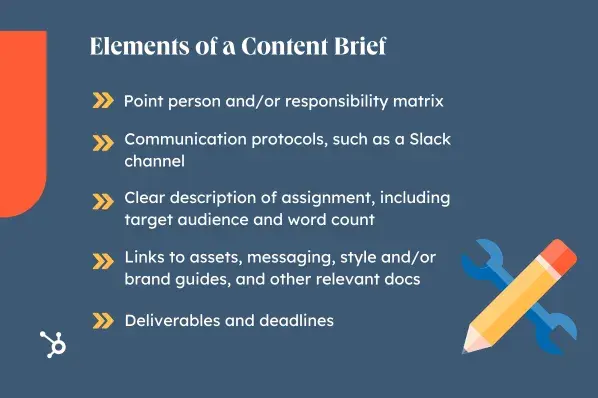
First, clearly identify the point person and the responsibility matrix. Who is the primary contact for questions? Who needs to approve the final draft? Second, establish communication protocols. Specify which channels to use for updates, such as a dedicated Slack channel or a specific email thread. This prevents important information from getting lost in general inboxes.
The assignment description is the core of the brief. It should include a clear statement of purpose, the target audience, and the desired word count. Explain what the content is trying to achieve. Is it a blog post designed to capture demand for a specific keyword? Is it ad copy for a new product launch? Providing context helps the writer understand the strategic intent behind the words.
Supporting Assets and Guidelines
Links to relevant assets are crucial. This includes brand guidelines, style guides, and any previous content that can serve as a model. If there are specific messaging requirements from stakeholders, include them here. For example, if a partner organization has specific language requirements for how their brand is described, list those approved phrases. This ensures consistency and avoids the need for major rewrites later.
Deadlines and deliverables must be explicit. Specify the due date and time, including the time zone, especially if your team is distributed. List all expected outputs, such as the main article, meta descriptions, social media captions, and alt text for images. If there are specific formatting requirements or file types, state them clearly. Don’t assume everyone uses the same software; specify if you prefer Google Docs, Microsoft Word, or a specific CMS format.
| Element | Description | Example |
|---|---|---|
| Point Person | Primary contact for queries | Jane Doe, Marketing Manager |
| Communication | Preferred channel for updates | #project-x Slack Channel |
| Audience | Who is reading this? | Small business owners, 30-45 |
| Word Count | Target length | 1,500 words |
| Deadline | Due date and time | Oct 15, 2025, 5 PM EST |
SEO and Strategic Context
For digital content, SEO requirements are non-negotiable. List the primary and secondary keywords. Mention any terms to avoid to prevent content cannibalization. If you have specific on-page SEO strategies, such as required H2 or H3 subheadings, include them. This helps the writer structure the content for both readers and search engines.
In the current landscape, E-E-A-T (Experience, Expertise, Authoritativeness, and Trustworthiness) is critical. If the piece requires input from subject matter experts, specify this in the brief. Provide contact information for these experts and clarify what kind of insights are needed. This adds depth and credibility to the content, which is increasingly important for ranking in AI-driven search results.
How to Write a Content Brief Step-by-Step
Writing a content brief doesn’t have to be a time-consuming process. The key is to create a reusable template that you can adapt for different projects. Start by setting up a one-page document with a two-column layout. In the left column, list the basic elements: point person, communication protocols, assignment description, assets, and deadlines. In the right column, fill in the specific details for each project.
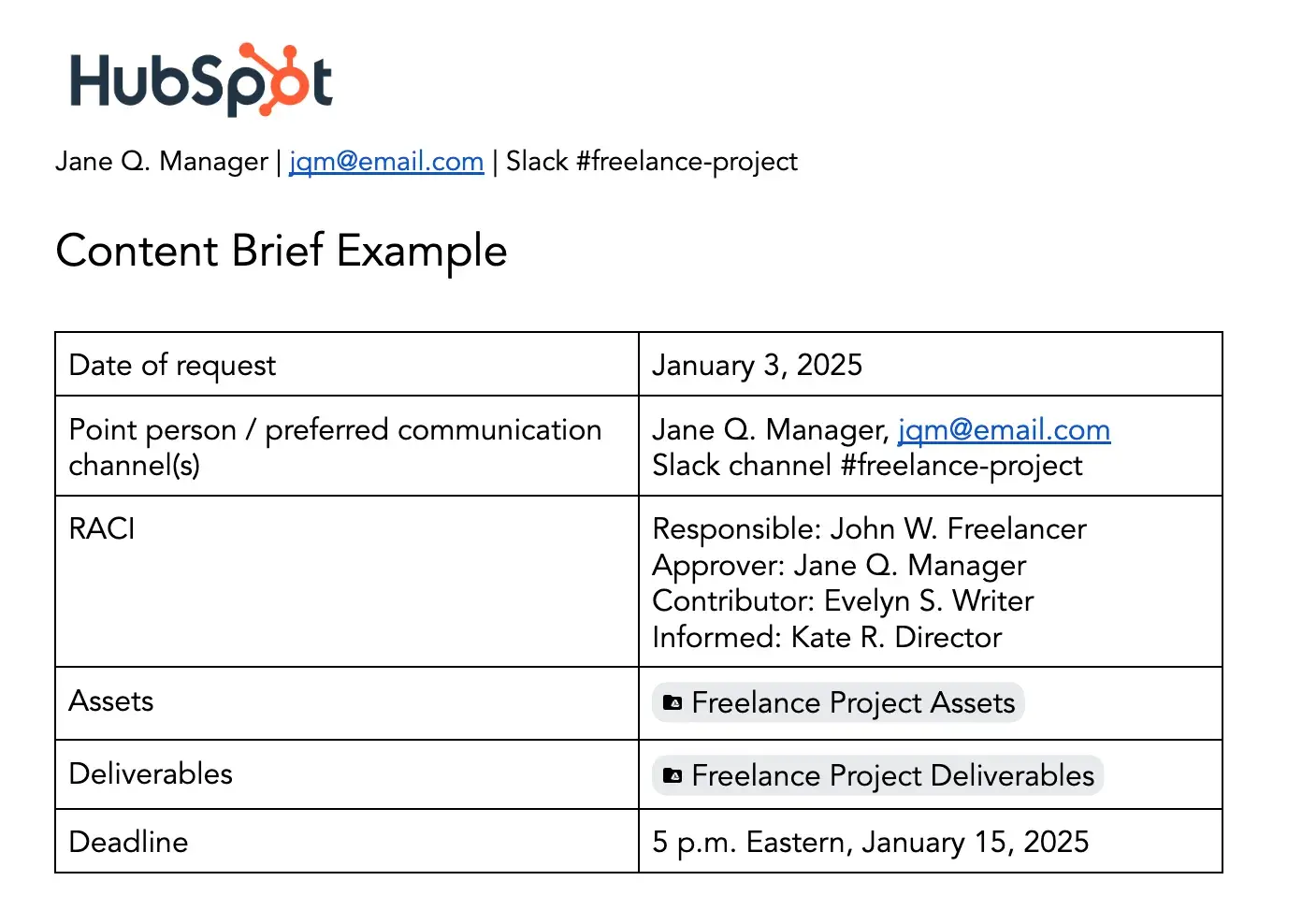
Place communication information at the top of the brief. This immediately answers the most common questions: Who is in charge? Where do I send questions? Having this front and center helps new freelancers and team members get up to speed quickly. It reduces friction and sets a professional tone from the start.
Consider creating two versions of your template: one for in-house writers and one for freelancers. In-house writers likely have access to your style guide and brand assets, so their brief can be more concise. Freelancers, on the other hand, need more context and links to all necessary resources. Tailoring the brief to the audience ensures that you provide the right level of detail without overwhelming anyone.
Crafting the Assignment Description
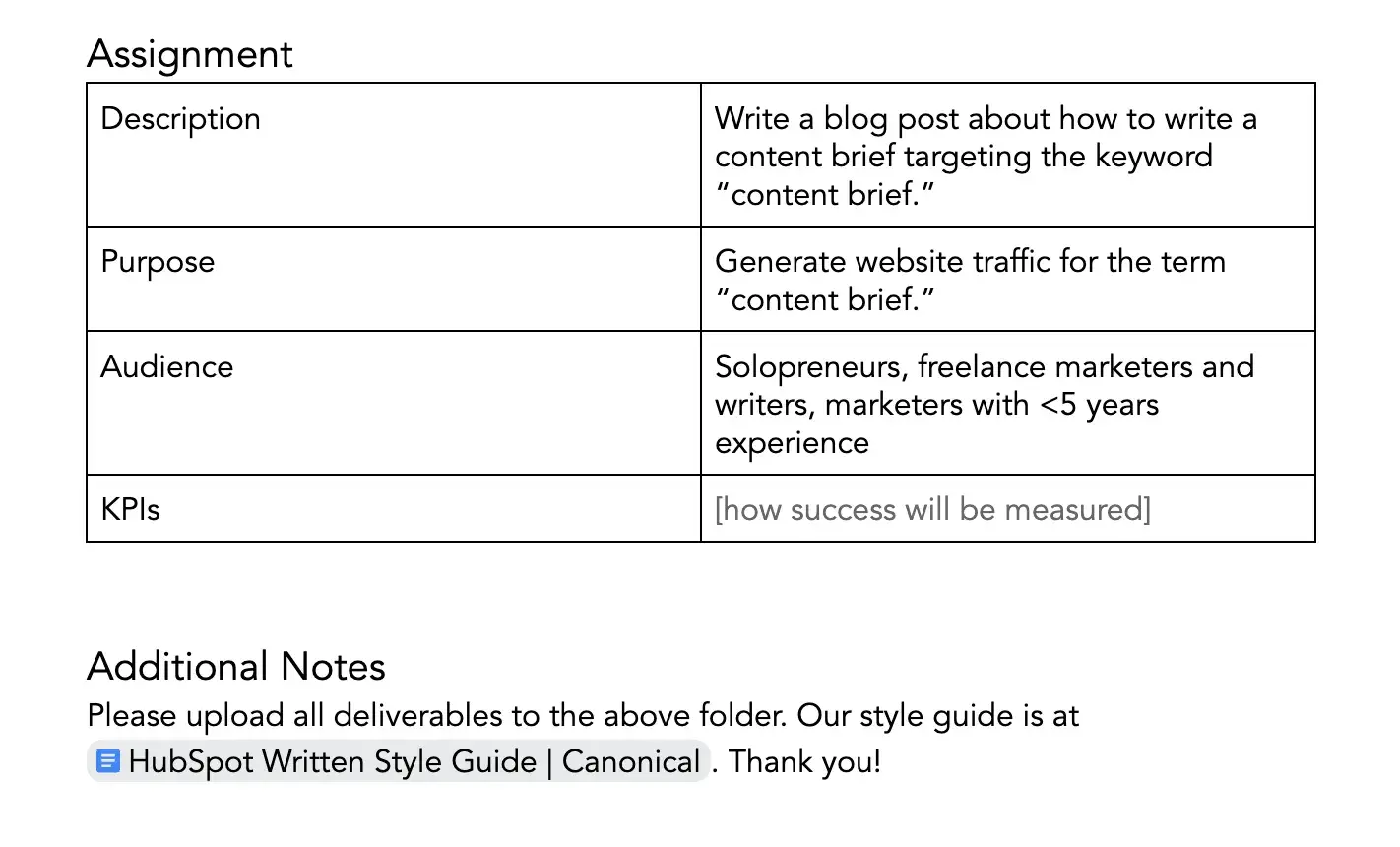
The assignment description should be clear and actionable. Start with the purpose. Why are we creating this content? What problem does it solve for the reader? Then, define the audience. Who are they? What are their pain points? What language resonates with them? This context helps the writer adopt the right tone and perspective.
Include specific instructions on structure. If you have a preferred outline or required subheadings, list them. This helps the writer organize their thoughts and ensures the final piece meets your editorial standards. If there are specific calls to action (CTAs) or conversion goals, make them explicit. For example, if the goal is to drive newsletter sign-ups, specify where the CTA should appear and what the offer is.
Incorporating SEO and Conversion Data
If your content has specific SEO or conversion requirements, present them in a table for easy reference. This makes it simple for the writer to check off each requirement as they go. Include the monthly search volume for target keywords, required CTAs, and any specific on-page SEO strategies.
| Metric | Detail | Strategy |
|---|---|---|
| Primary Keyword | content brief | Use in H1, first 100 words, meta |
| Secondary Keywords | content strategy, editorial calendar | Use in H2s, body text |
| Target Word Count | 1,500 | Balance depth with readability |
| CTA | Download Template | Place after intro and conclusion |
| E-E-A-T | Expert Quotes | Interview 2 industry leaders |
This structured approach ensures that no critical detail is missed. It also makes the brief easier to scan, which is helpful when writers are juggling multiple projects.
Optimizing Briefs for AI and Generative Search
As search evolves, so too must our content strategies. The rise of AI-driven search and generative AI means that content needs to be structured differently to capture visibility. A content brief is no longer just about keywords and word count; it’s about creating content that is optimized for AI interpretation and citation.
To maximize visibility in generative search, your brief should include specific instructions for AI optimization. This means structuring content with clear headings, bullet points, and concise answers to common questions. AI models favor content that is well-organized and easy to parse. By specifying these structural elements in your brief, you ensure that the final output is ready for the AI era.
Focus on Extractable Answers
One key strategy is to include “extractable answers” in your brief. These are 2-3 sentence paragraphs that directly and completely answer a core question. AI chatbots often cite these concise, authoritative statements. Instruct your writers to define key terms clearly and provide direct answers early in the content. This increases the likelihood that your content will be featured in AI-generated responses.
For example, if the topic is “what is a content brief,” the writer should include a clear definition: “A content brief is a concise document that outlines the goals, audience, and structure of a content project.” This type of clarity is invaluable for both human readers and AI systems.
Emphasize E-E-A-T and Authority
AI search engines prioritize content that demonstrates Experience, Expertise, Authoritativeness, and Trustworthiness. Your brief should explicitly require the inclusion of expert quotes, data from reputable sources, and firsthand experience. If you have subject matter experts on your team, include their contact information in the brief. Encourage writers to interview them and incorporate their insights. This adds a layer of credibility that AI cannot replicate, helping your content stand out in crowded search results.
Common Mistakes to Avoid
Even experienced marketers make mistakes when writing content briefs. One common error is overloading the brief with unnecessary information. While context is important, too much detail can overwhelm the writer and dilute the core message. Focus on the essentials: purpose, audience, key messages, and deadlines. If something isn’t critical to completing the assignment, leave it out.
Another mistake is failing to specify the tone and voice. Every brand has a unique voice, and it’s easy for writers to miss the mark without clear guidance. Include examples of your brand’s voice in the brief, or link to a style guide. If there are specific words or phrases to avoid, list them. This ensures consistency across all your content.
Finally, don’t neglect the post-assignment process. Specify how the writer should submit the final draft, who they should share it with, and what the feedback loop looks like. If there are specific naming conventions for files, include them. These small details can save hours of administrative hassle and ensure a smooth workflow.
Final Thoughts on Content Briefs
A content brief is more than just a task list; it’s a strategic tool that aligns your team and ensures high-quality output. By taking the time to create a clear, detailed brief, you save time in the long run. You reduce revisions, improve collaboration, and produce content that resonates with your audience. Whether you’re working with in-house teams or external freelancers, a well-crafted brief is the foundation of successful content creation.
In the age of AI and generative search, the importance of structured, clear content is only growing. By optimizing your briefs for AI visibility and emphasizing E-E-A-T, you position your brand to win in the new search landscape. Start by building a template, refining it over time, and sharing it with your team. The result will be content that is not only readable and engaging but also primed for discovery in the evolving digital world.
What’s one element you’ve added to your content briefs that has made the biggest difference in your workflow?





