What Is Brand Association and Why It Matters
Brand association is the collection of thoughts, feelings, and memories that surface in a consumer’s mind when they hear your company’s name. It is not just about logo recognition or product features. It is the emotional and conceptual shorthand that people use to categorize you in a crowded market. When you think of a major athletic brand, you might immediately think of performance or resilience. When you think of a search engine, you might think of speed and answers. These are brand associations.

These mental connections form quickly and often stick for years. They are shaped by a wide range of factors, including your brand identity, visual assets, customer service interactions, product quality, and even third-party word of mouth. The good news is that most of these factors are within your control. You are not at the mercy of random chance. You have the power to shape the narrative.
If your brand is currently linked to negative traits or vague concepts, it can feel difficult to shift that perception. However, understanding the mechanics of association allows you to intervene. By deliberately crafting the signals you send out, you can guide consumers toward the specific qualities you want them to remember. This process is foundational to building long-term trust and differentiation.

The Components of Perception
To manage these associations, you first need to understand what builds them. Your brand identity and messaging set the initial frame. Your visual assets, like colors and typography, trigger immediate emotional responses. But the most powerful drivers are often experiential. How a customer is treated when they have a problem, the reliability of your service, and the consistency of your social media presence all feed into the mental map consumers create.
Consider well-known examples. A toilet paper brand might be associated with softness and a specific animal character. A design platform might be linked to ease of use and templates. These associations are not accidental. They are the result of repeated, consistent exposure to specific traits. Your goal is to ensure that the traits linked to your brand are both accurate and favorable to your business objectives.
Mapping Your Current Position
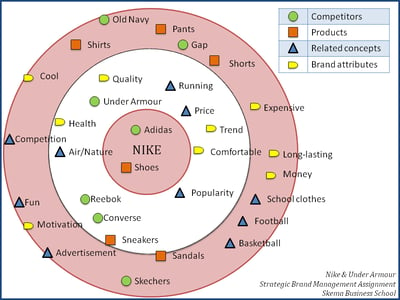
A useful tool for visualizing these connections is a brand association map. This is a diagram that places your brand at the center and surrounds it with the words consumers use to describe you. The closer a word is to the center, the stronger the association. You might find that your brand is closely linked to “affordable” but only loosely linked to “premium” or “innovative.”
Creating this map requires data. You can start by surveying your existing customers, leads, and even competitors’ audiences. Ask them to list the first three words that come to mind when they think of your company. Then, have them rank those words by relevance. Once you aggregate this data, you can plot it out. This visual representation helps you identify gaps. If you want to be seen as a leader in sustainability, but that word is far from the center of your map, you know where to focus your efforts.
Crafting a Cohesive Brand Strategy
A strong branding strategy is the backbone of positive brand association. Without a clear plan, your messaging becomes fragmented, and consumers are left to fill in the blanks with their own assumptions. Those assumptions are rarely in your favor. You need to define who you are before you can tell anyone else who you are.
Start with the fundamentals. Clarify your mission, your core values, and your unique positioning. What problem do you solve, and why does it matter? Your brand personality should reflect these answers. Are you authoritative and serious, or friendly and approachable? This personality must translate into your brand voice. Your voice is the tone of your writing, the style of your customer support, and the attitude of your social media posts. It is one of the most concrete factors in shaping association.
Defining Your Voice and Assets
Your brand voice should be consistent across every channel. If your brand is known for being warm and helpful, your error pages should reflect that tone, not just your marketing emails. Your visual assets must align as well. Colors, logos, and imagery should tell the same story as your words. If you claim to be innovative, your website design should feel modern and clean. If you claim to be rugged and durable, your imagery should reflect strength and resilience.
Messaging is where you articulate your value. It is not enough to say you are good. You must explain how you benefit the user. Differentiate yourself from competitors by highlighting what you do differently. This clarity helps consumers anchor their thoughts to specific, positive traits. When your identity, assets, and messaging all point in the same direction, the association becomes stronger and more resilient.
Auditing for Consistency
Inconsistency is the enemy of association. If one part of your team uses a casual tone while another uses formal jargon, the brand feels disjointed. Conduct regular audits of your content. Look at your website copy, your social media captions, and your ad creatives. Do they sound like they come from the same source? If not, you need to tighten your guidelines. Provide your team with clear examples of what your voice sounds like and what it does not sound like. This alignment ensures that every interaction reinforces the same positive traits.
Optimizing Customer Touchpoints
Every interaction a customer has with your brand is an opportunity to strengthen or weaken an association. These touchpoints include your website, social media profiles, email newsletters, customer service calls, and even physical store visits if you have them. The quality of these interactions directly impacts reputation.
Think about the journey. When a user lands on your site, is the experience smooth and intuitive? When they reach out with a question, is the response timely and helpful? How do you handle complaints on public platforms like social media? These moments are high-stakes. A negative experience can quickly become a defining association, overshadowing years of positive marketing.
Training for Service Excellence
Customer service is often the most direct link to brand perception. Train your support teams not just on technical solutions, but on empathy and tone. They should understand the brand’s voice and embody it in every conversation. Empower them to resolve issues efficiently and kindly. When a customer has a problem, they are watching to see if your brand cares. A resolution that goes above and beyond can turn a detractor into a promoter.
Monitoring Online Presence
Online communities and review sites are where associations are often solidified. People trust peer reviews more than advertising. Monitor these platforms closely. Respond to positive reviews with gratitude and to negative ones with professionalism and a desire to fix the issue. This public display of care signals to potential customers that you are responsive and responsible. It builds a reputation for reliability, which is a powerful positive association.
Managing Partnerships and Alliances
The brands and individuals you associate with reflect back on you. Consumers are increasingly aware of social and political issues, and they expect brands to take stands or at least act with integrity. When you partner with an influencer or another company, their reputation becomes part of your own.
This means you must be selective. Vet your partners thoroughly. Look beyond their follower count or sales volume. Consider their values, their audience, and their past behavior. A partnership with a figure who later becomes involved in controversy can cause significant damage to your brand’s image. It can lead to negative associations that are difficult to shake.
Aligning Values
Choose partners who share your mission and values. If you are focused on sustainability, partner with eco-friendly organizations. If you are focused on innovation, collaborate with tech-forward brands. These alliances reinforce your core associations. They signal to your audience that you are serious about your commitments. It also helps you tap into new audiences who already value those traits.
Navigating Social Responsibility
Be prepared to act if a partner’s behavior conflicts with your brand’s values. In today’s digital age, silence can be interpreted as endorsement. If a partner exhibits behavior that is socially unacceptable, you may need to sever ties publicly. This decision can be difficult, but it protects your brand’s integrity. It shows that you prioritize your values over convenience or profit. This stance can strengthen positive associations with trust and accountability.
Protecting Your Brand from Threats
Even with a strong strategy, threats to your brand’s reputation can emerge. These can range from small-scale issues like a negative review to large-scale crises like a product recall or internal misconduct. Being proactive is essential. You cannot wait for a problem to happen before you think about how to handle it.
Use social listening tools to monitor mentions of your brand. Look for patterns in feedback. Are customers complaining about a specific feature? Is there a misunderstanding about your pricing? Address these issues early. Small problems can escalate into major crises if ignored. By staying alert, you can neutralize threats before they gain momentum.
Developing a Crisis Plan
A crisis management plan is not optional. It is a necessity. This plan should outline who is responsible for communication, what channels will be used, and how decisions will be made. When a crisis hits, every minute counts. You need to control the narrative to prevent misinformation from spreading. A clear plan allows you to respond quickly and consistently.
Repairing Relationships
If a crisis does occur, focus on transparency and resolution. Acknowledge the issue, apologize if necessary, and explain the steps you are taking to fix it. Avoid defensive language. Show that you are listening and that you care. Once the immediate issue is resolved, continue to monitor sentiment. Rebuilding trust takes time. Consistent, positive actions over the long term are required to restore positive associations. Remember, building a positive brand association is an ongoing process. It requires constant attention, adjustment, and commitment.
Key Takeaways for Decision-Makers
Building positive brand association is not a one-time task. It is a continuous effort that involves every department in your organization. From marketing to customer service, every team plays a role in shaping how your brand is perceived. By focusing on a clear strategy, optimizing touchpoints, choosing partners wisely, and preparing for threats, you can guide consumers toward the associations you want.
The most important factor is consistency. Your brand must deliver on its promises at every turn. When your actions match your words, trust grows. And when trust grows, positive associations follow. This leads to stronger customer loyalty, better word of mouth, and a more resilient brand.
Actionable Steps to Start Today
- Audit your current brand associations using surveys and social listening.
- Review your brand voice guidelines and ensure they are up to date.
- Train your customer service team on brand tone and empathy.
- Vet your current partners for value alignment.
- Draft or update your crisis management plan.
These steps provide a solid foundation. As you implement them, monitor the results. Adjust your approach as needed. The goal is to create a brand that is not only recognized but also respected and liked. That is the true power of positive brand association.





